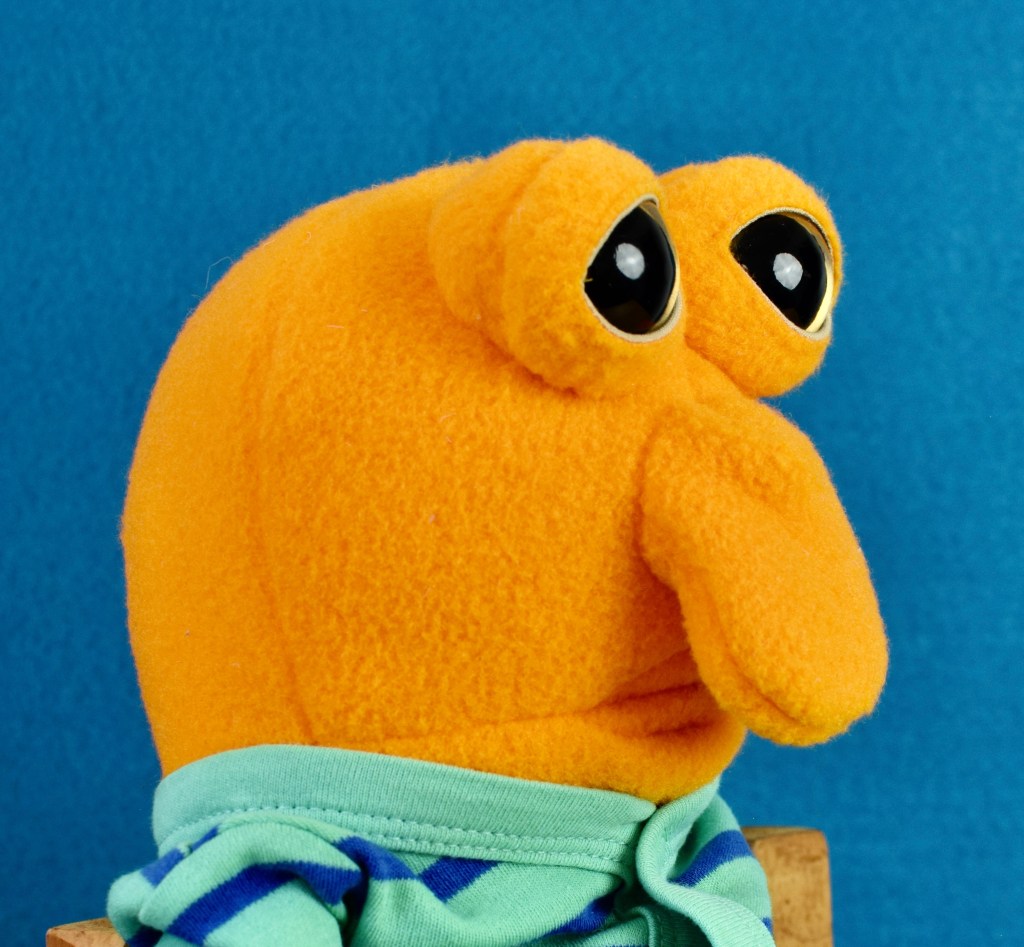
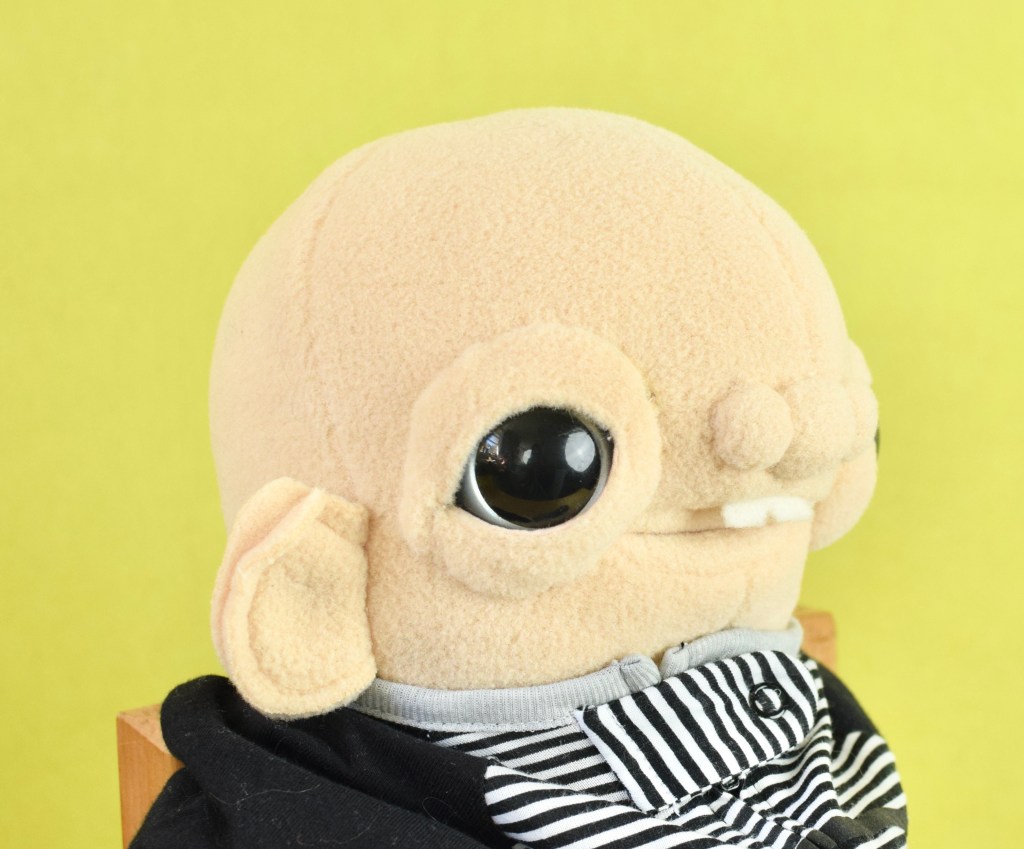
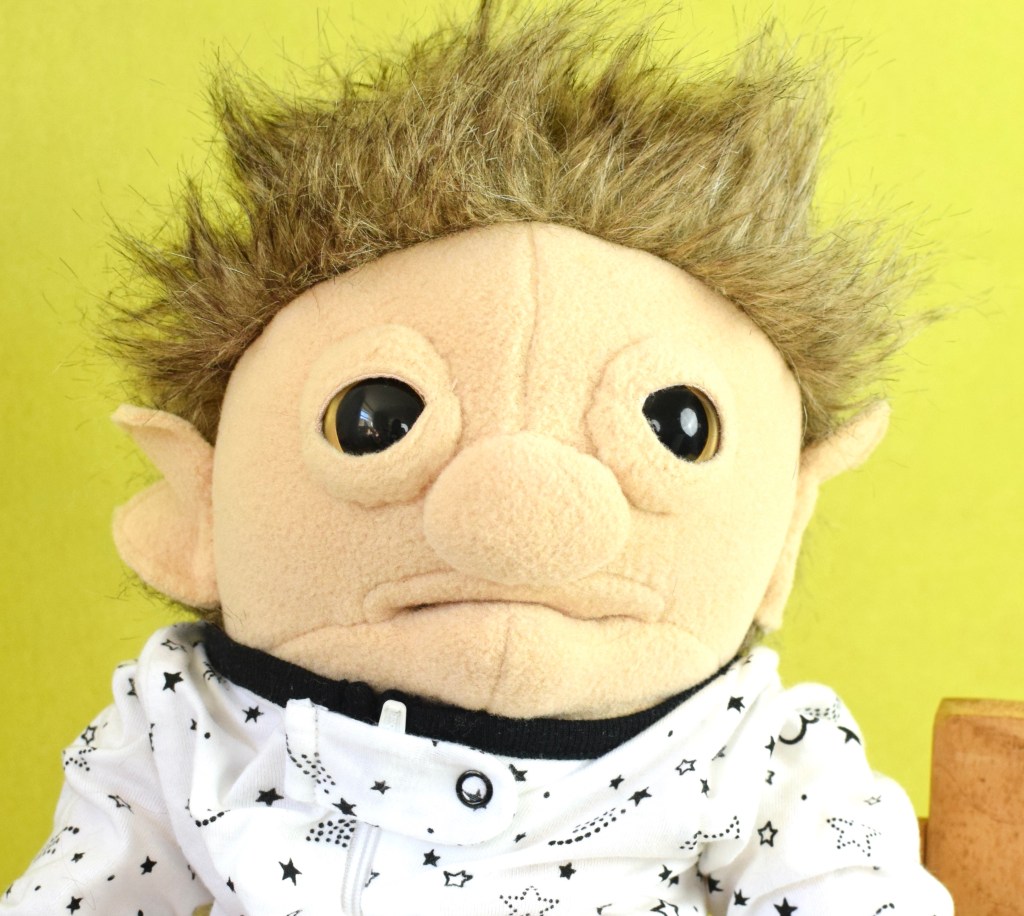
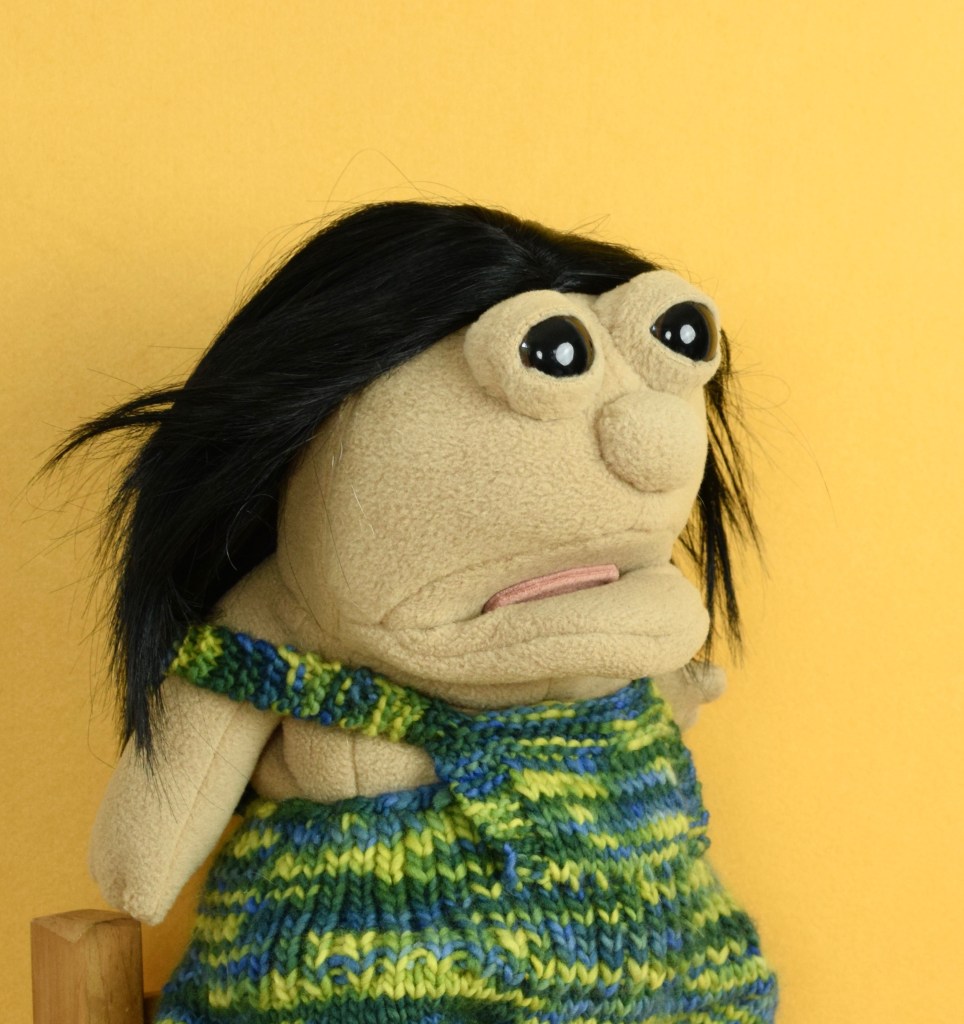
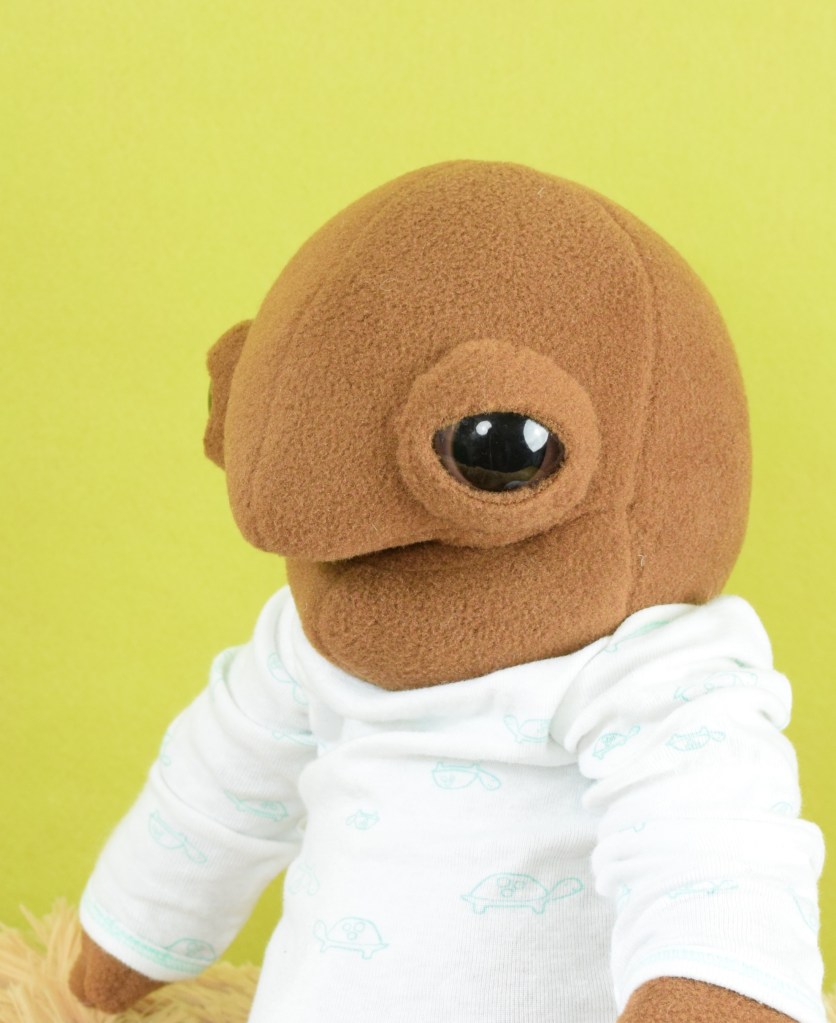
When plush toys have open mouths, it can really add to their personality, expression and play value. You can do an open mouth for a puppet or for a regular doll/plush. You can insert teeth or a tongue and make the mouth smiley or frowny.
There are a few different ways to make open mouth, and I am still refining my process. It does get a bit tricky when working with thicker fabrics, and the mouth lining can tend to pop out or thrust forward once stuffed. You can fix this by sort of tethering the inner mouth to the back neck or somewhere inconspicuous, but I am also working on some other techniques that I think will help with this.
Give this post a like if you would be interested in a more in-depth tutorial about drafting and sewing open mouths!
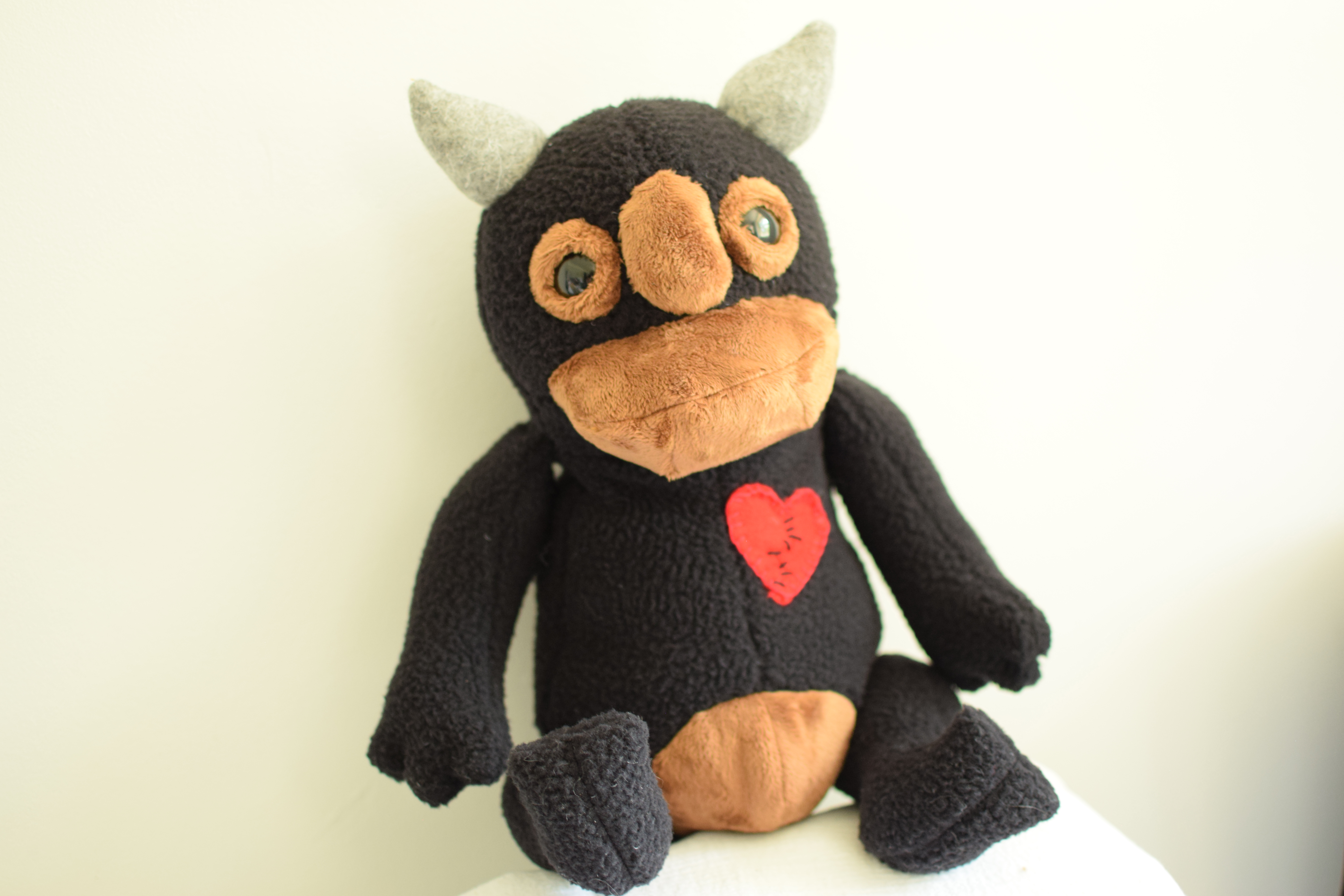
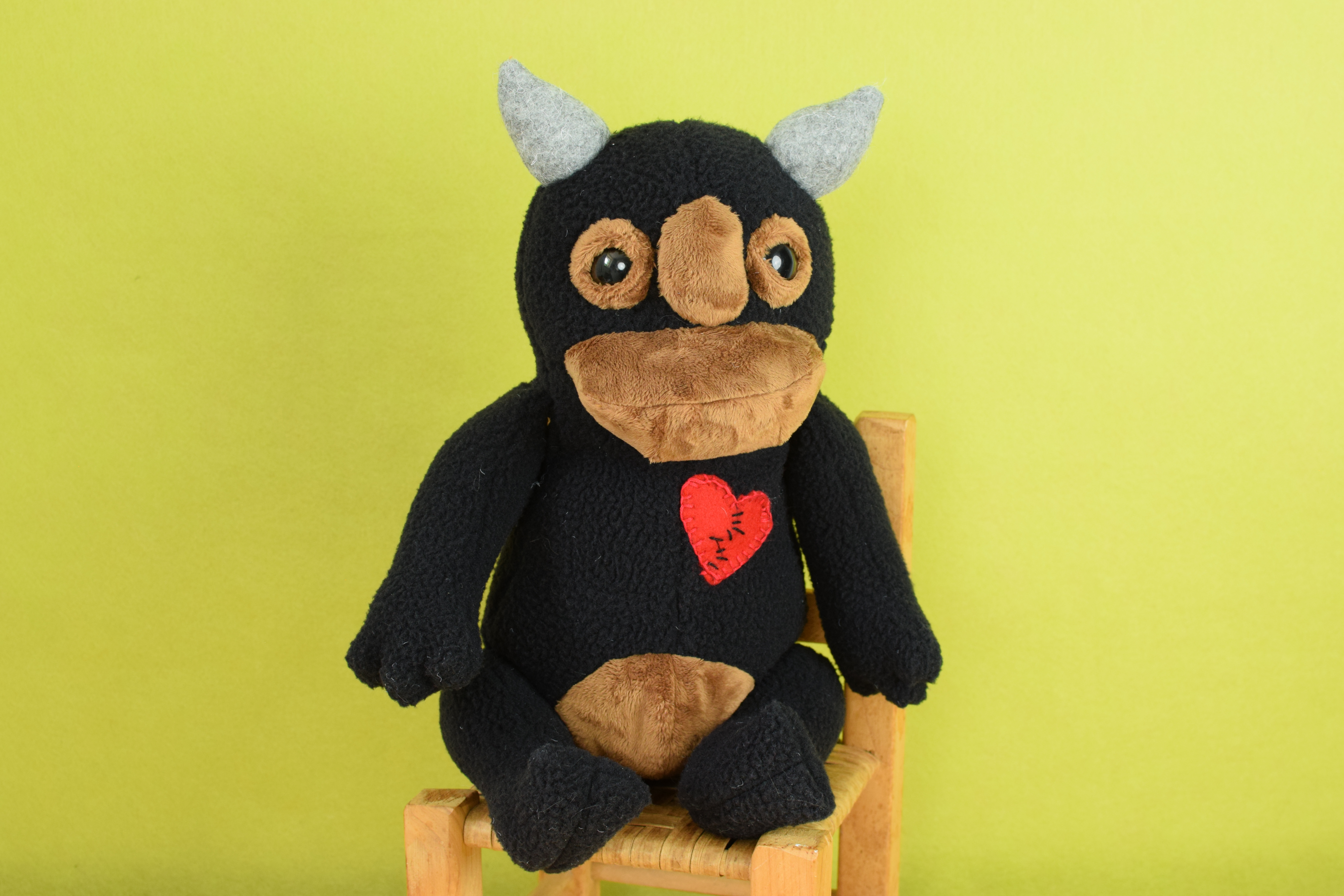
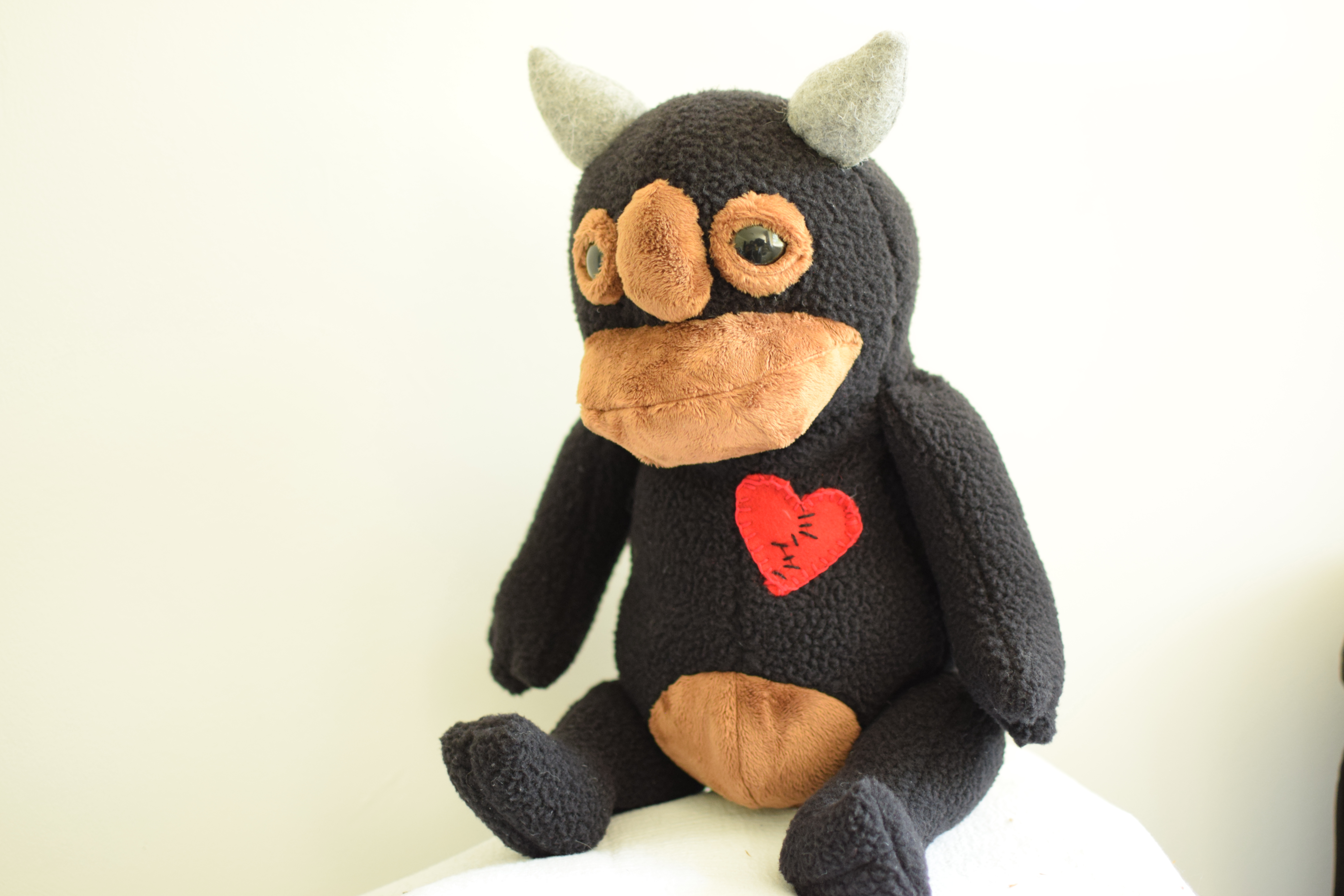
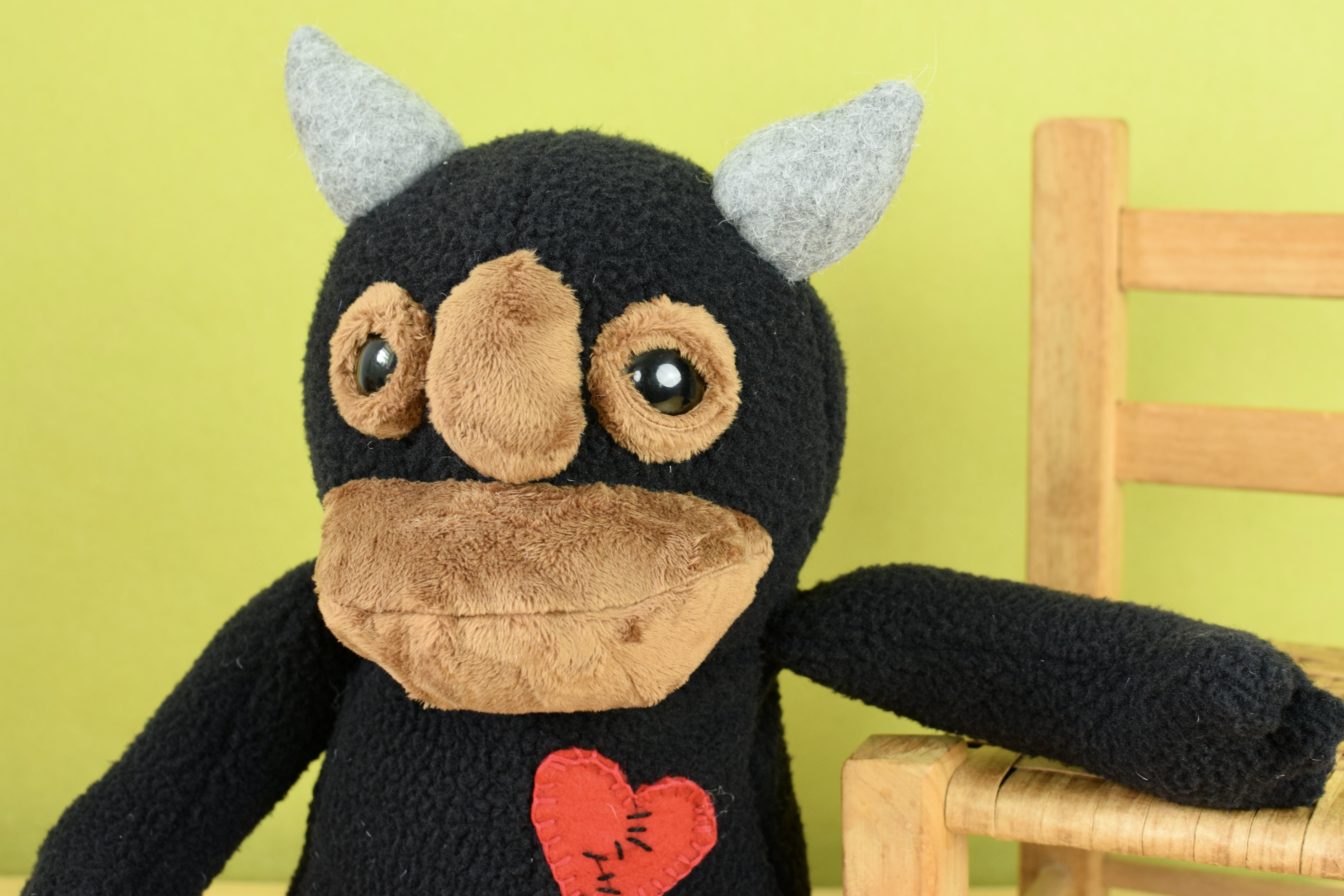
I was working on this monster mouth pattern (really, with the goal of it coming out looking differently, but decided to just move on and make something with it, in the spirit of not having rigid ideas about how things should look and not overworking my dolls). I decided to pair a more textural plush (this black sherpa) with minky and see how it turned out. I couldn’t have predicted at all how it would look, but I loved the result. The horns really tie it together.
I knew I wanted to give it some kind of applique in the upper torso as the piece de la resistance. On a whim, I took a red felt heart that I’d cut out at some point over the past three months and put it on the chest. I loved the way it looked but immediately thought, “No, only a few people would like that. No, people might find that weird.” But I didn’t give up on the idea. Even before my IG polls came back at 100% in support of putting the heart on, I’d decided it was the right choice.
I’ve always loved the idea of heavy-handed emotional symbols, like hearts, on plush. I’m an emotional person and my continuing emotional development and growth is something I take really seriously. I also take mental health of others seriously. I got the idea (not sure if it was before or after I thought of the Velvet Underground song, Sweet Jane, and it’s line, “anyone who ever had a heart/wouldn’t turn around and break it”) to break the heart and stitch it back together–like a friendship necklace.
Neuroplasticity and resilience aren’t necessarily terms you associate with monster plushies, but they’re related. By playing and cuddling with soft toys, we repair wounds. This monster shows us that our heartaches can be repaired, eventually. I call it the Mendy Monster–because his heart is mended–with the scars for all to see. Mendy Monster will be available in my Etsy shop soon–be sure to sign up for my mailing list to be notified when.
It isn’t difficult to understand the role that soft toys and dolls play in the lives of children. They help facilitate pretend play, offer a safe and neutral place to act out feelings and provide sensory comforts and companionship. Play is serious business for children and is integral to their development.
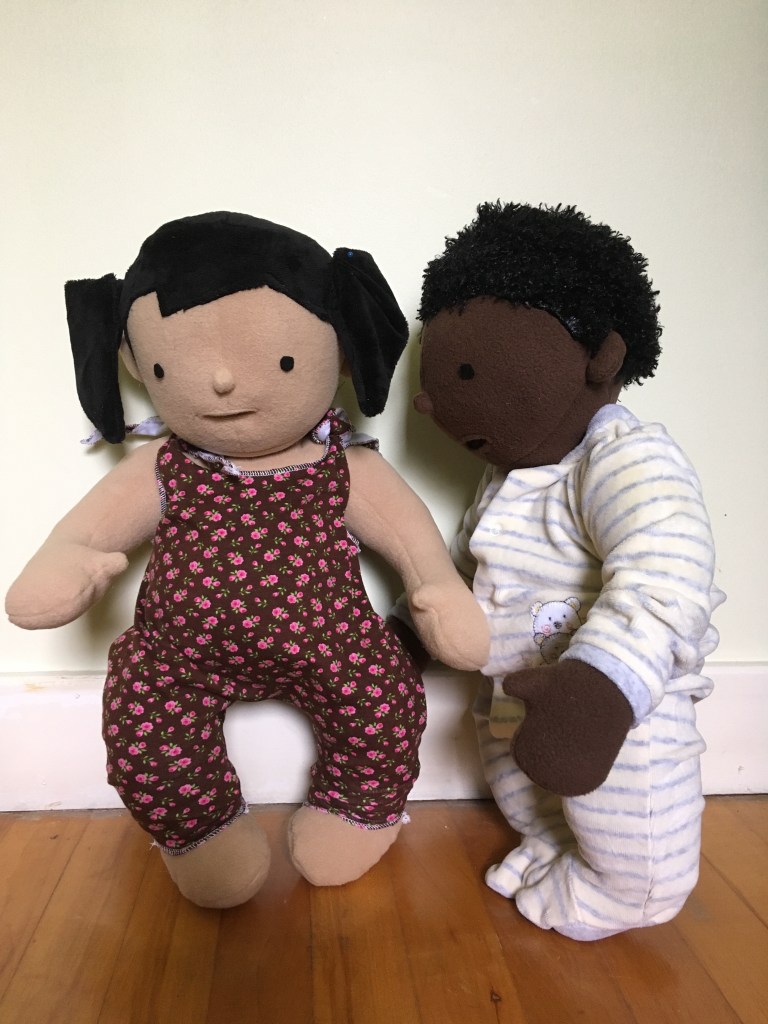
But what about adults? All of my customers have been adults who collect soft toys and dolls. My dolls have been considered art dolls, but they’re still soft and fun to hold and pose, which makes them different from a totally rigid doll that you would refrain from handling.
An older creation of mine, Pinky the chimpanzee
It turns out that there are many reasons adults may collect or just occasionally buy plush toys and cloth dolls. There are many very valid reasons that soft toys can be important for adults, too.
Sensory Comforts
Many adults have one or many plush that they choose for the sensory comfort of the materials and/or the way the doll feels when held or squeezed. This is something that is unique to cloth/textile soft toys as compared to vinyl or rigid sculpture toys. The weight/squish-ability of the toy may be sufficient for some, while others may enjoy a soft toy that has multiple textures. For example, my dolls have a soft body fabric, a hair fabric in a few different textural options and may have a knitted outfit which offers an entirely different tactile experience. We tend to associate the need for sensory stimulation with autistic people, who often enjoy “stimming” or taking sensory breaks, but many other adults also benefit from this. Adults are so often expected to work and thrive in environments (such as a typical office) which are utterly devoid of sensory enrichment when, in fact, such stimuli can help us to regulate and focus. As such, I hear people on Instagram constantly talking about bringing their dolls to work and sometimes actively advocating to reduce the stigma around what are typically considered “childish” objects in “adult” settings.
Play
Adults benefit from play, too! While their play may not be as imitative or exploratory as a child’s, it still engages a different part of the brain and introduces spontaneity and joy into adult life which all too often lacks those things. “Play” for an adult may be a little less colorful than for children and may simply be putting their dolls in funny outfits or taking pictures of their collections. This may seem odd to those who can’t relate, but consider the fact that many adults collect other objects, such as shoes, cars and bags. But adults also collect other toys that have been somewhat arbitrarily elevated to a more mature status (e.g. collectible figurines or antiques). Why? Perhaps if they’re worth more money and are more fragile, we can deem them appropriate toys for adults. Why can’t adults feel equally comfortable with toys that are actually meant to be played with?
“Adults have been convinced, to our great detriment, that simply because we’ve stopped growing larger, we have stopped growing at all. But the expanse of your emotional life is never fully surveyed, and with a stuffie friend you are free to play in the uncharted space.” -Max Genecov
Two Everybuddies having a chat
Trauma and Recovery
Unique from but related to the benefit of play for adults is the topic of trauma. Many adults have experienced trauma in some form. When Adverse Childhood Experiences (ACES) occur, one consequence may be a chronic “fight or flight” state of mind. Sadly, while play can be one of the most healing experiences for those who have experienced ACES, it’s also often overlooked as an offering to survivors in their healing journey. For adults in recovery from various childhood traumas, rediscovering toys and play which others may have had the benefit of enjoying as children can be part of the healing process. A customized handmade doll has even more potential to offer a powerful conduit to recovery. Adults in recovery from trauma may also benefit from the sensory relief as described above as a way of grounding and relaxing. For many adults who may not have had a stable home environment in which to keep and care for toys, the opportunity to pick out cherished items, with no risk of them being taken away or mistreated, may be highly comforting. A “do-over” of sorts.
Grief, loss and memory
Finally, I would be remiss if I didn’t point out the therapeutic role that dolls and plush can play in the process of grief and loss as well as issues such as Alzheimer’s. For mothers who have experienced miscarriages or who are unable to have children, dolls can be extremely comforting. For Alzheimer’s patients, dolls are often used as comforts and to trigger comforting memories. Many people will have customized plush made after the loss of a beloved pet.
All of this being said, you don’t need to have a trauma history, autism or a recent loss to rationalize your love for plush and dolls. It’s not only okay, but more common than most people realize for adults to play with dolls and plush. If you don’t believe me, simply reference (just for starters) the following information from this article: 43 percent of adults still engage with a stuffed animal. 84 percent of men, and 77 percent of women own at least one!
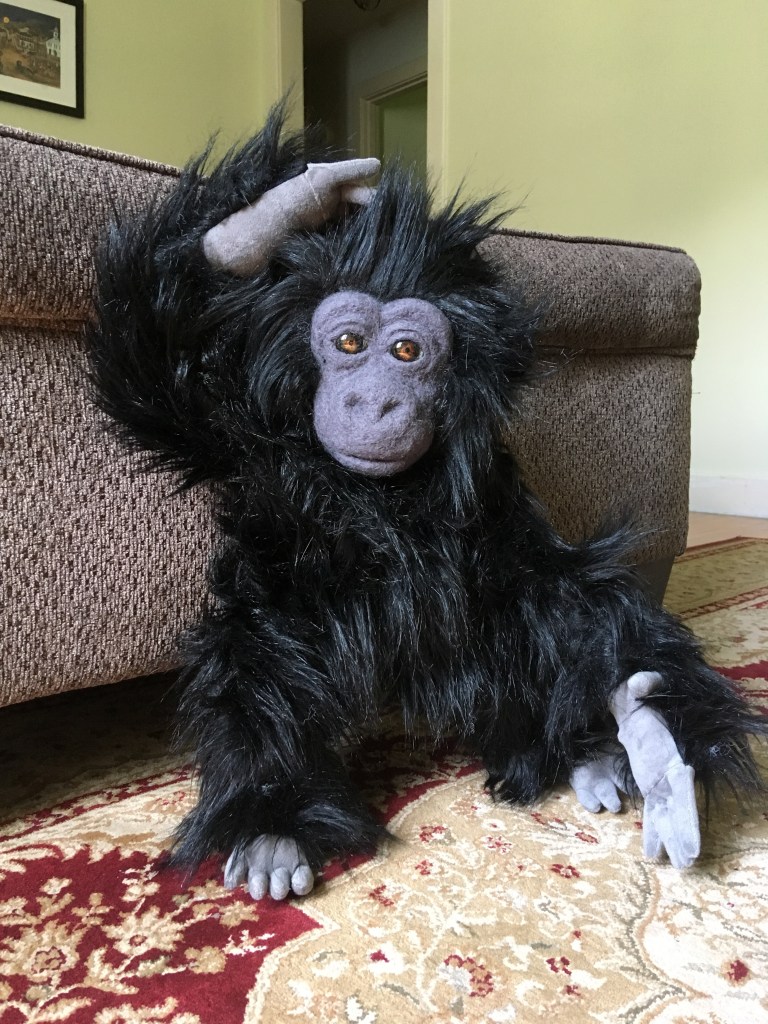
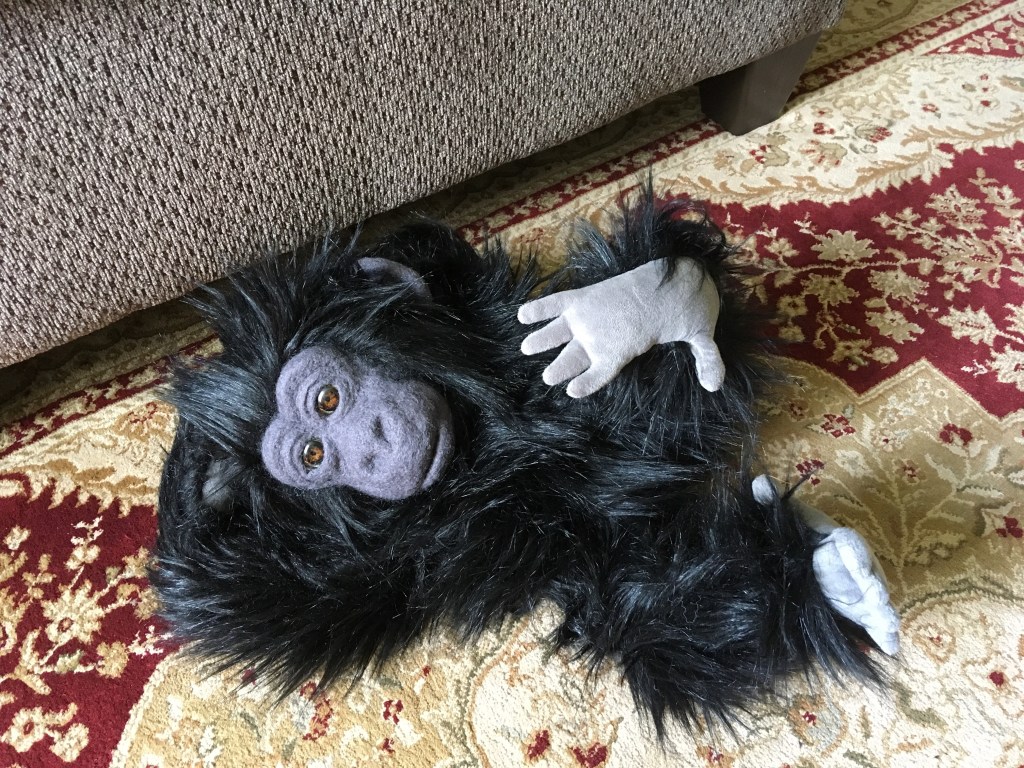
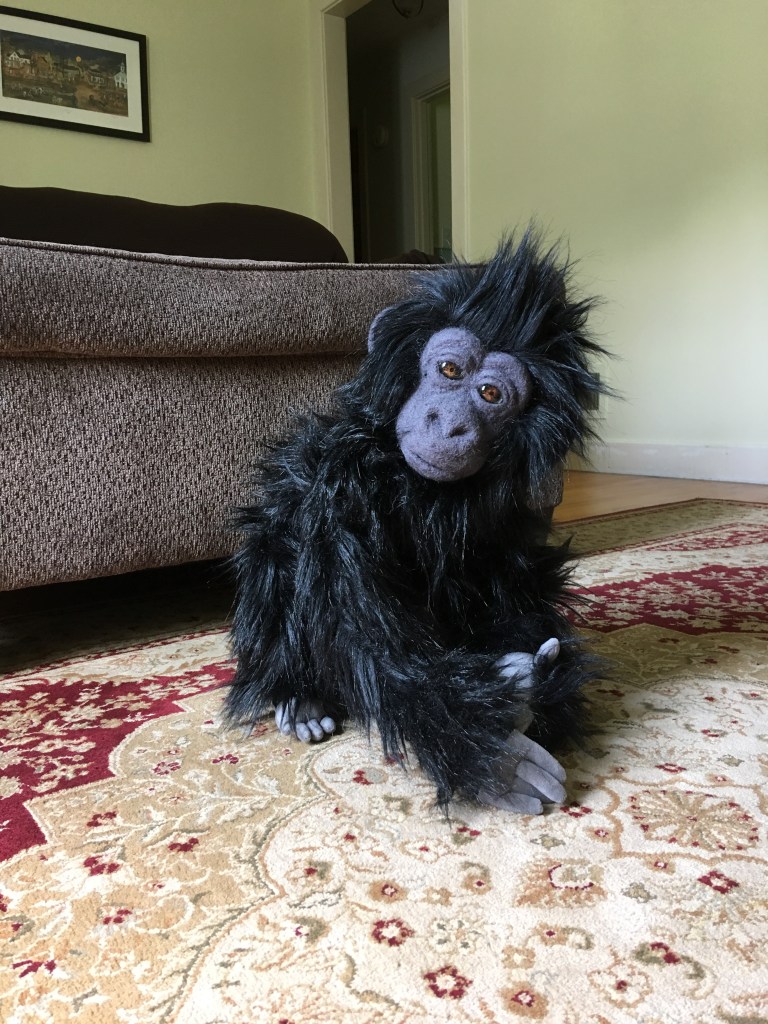
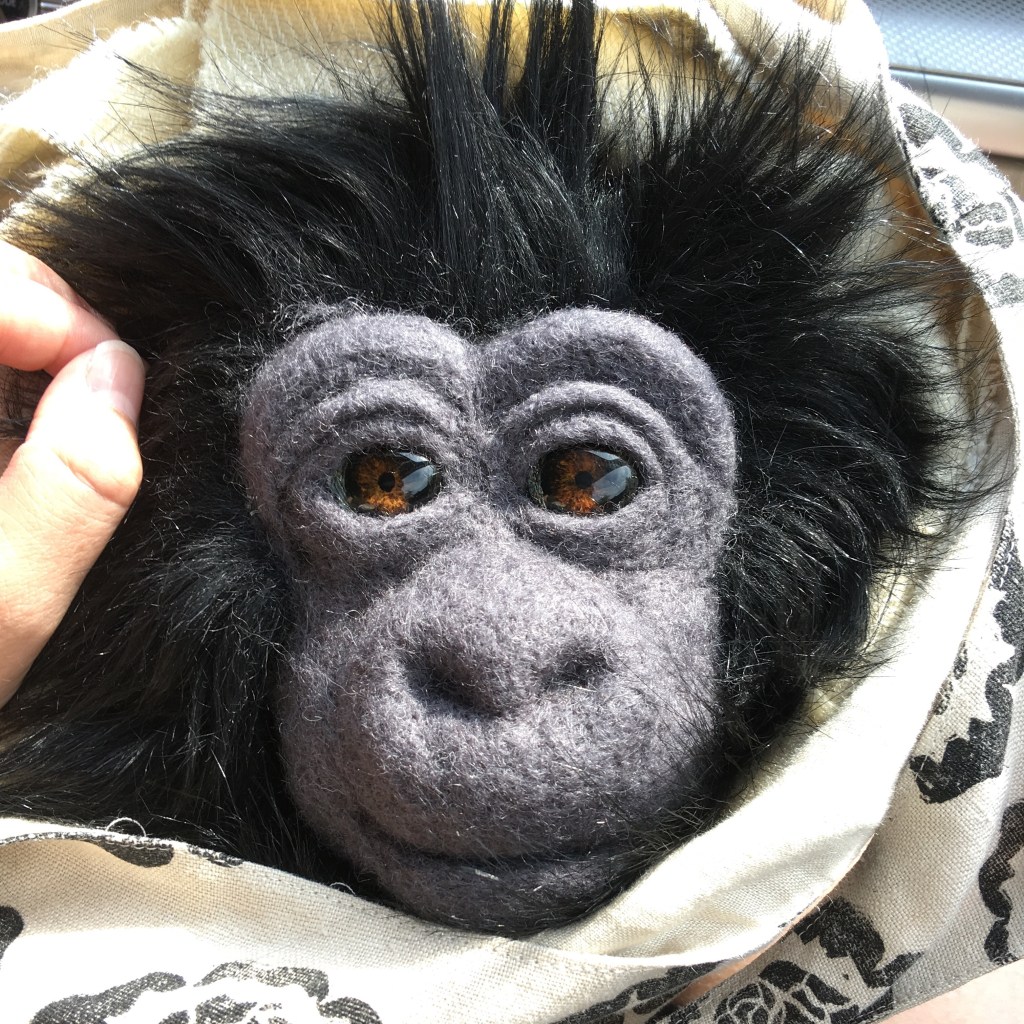
I’ve been working on this sweet baby mountain gorilla. He’s made in the same basic style as my other needle felted and plush apes, but with fabric hands and feet. I also put a new kind of armature in him that I’ve not used before. It makes him totally pose-able which is ever so fun! He’s not quite finished, but I couldn’t wait to share.
He is about 18-20″ tall from head to foot. When he is finished and available to purchase, I will send updated photos and purchase information to the mailing list. I am not taking reserves or pre-orders for him, but subscribers will be the first ones given an opportunity to buy!
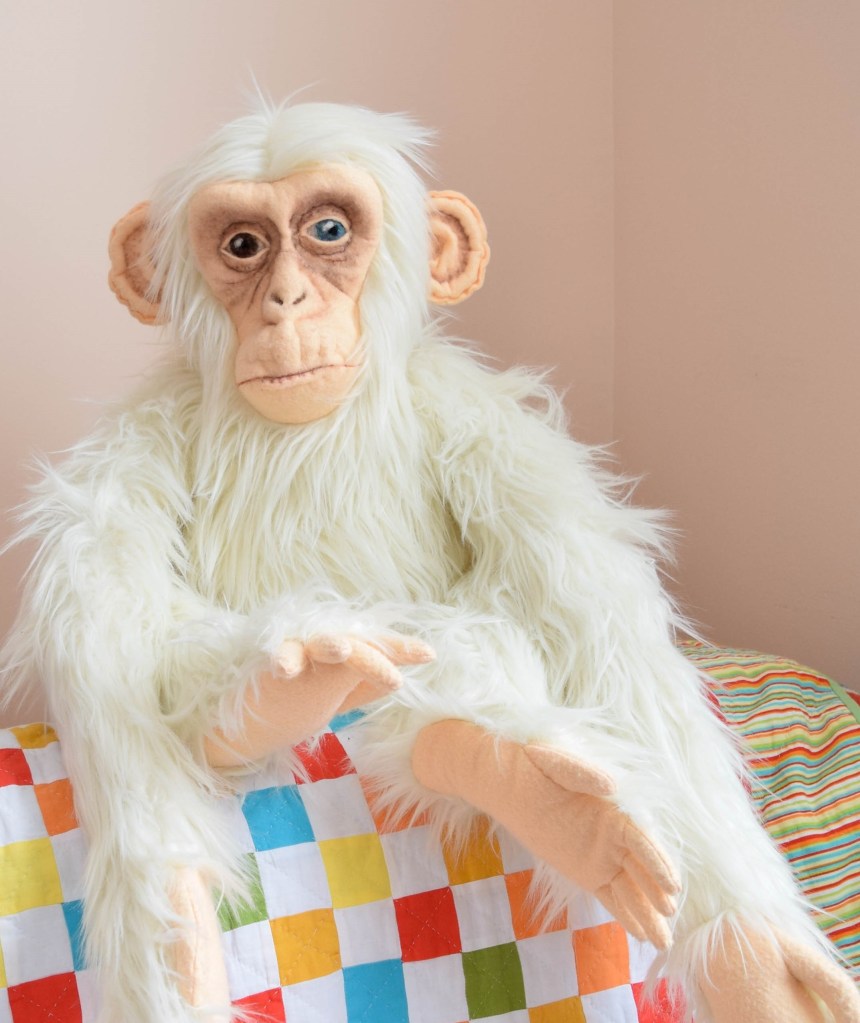
Next on my list after this gorilla baby is another ape in the same style–either an albino gorilla, albino chimp or albino orangutan–I can’t decide!
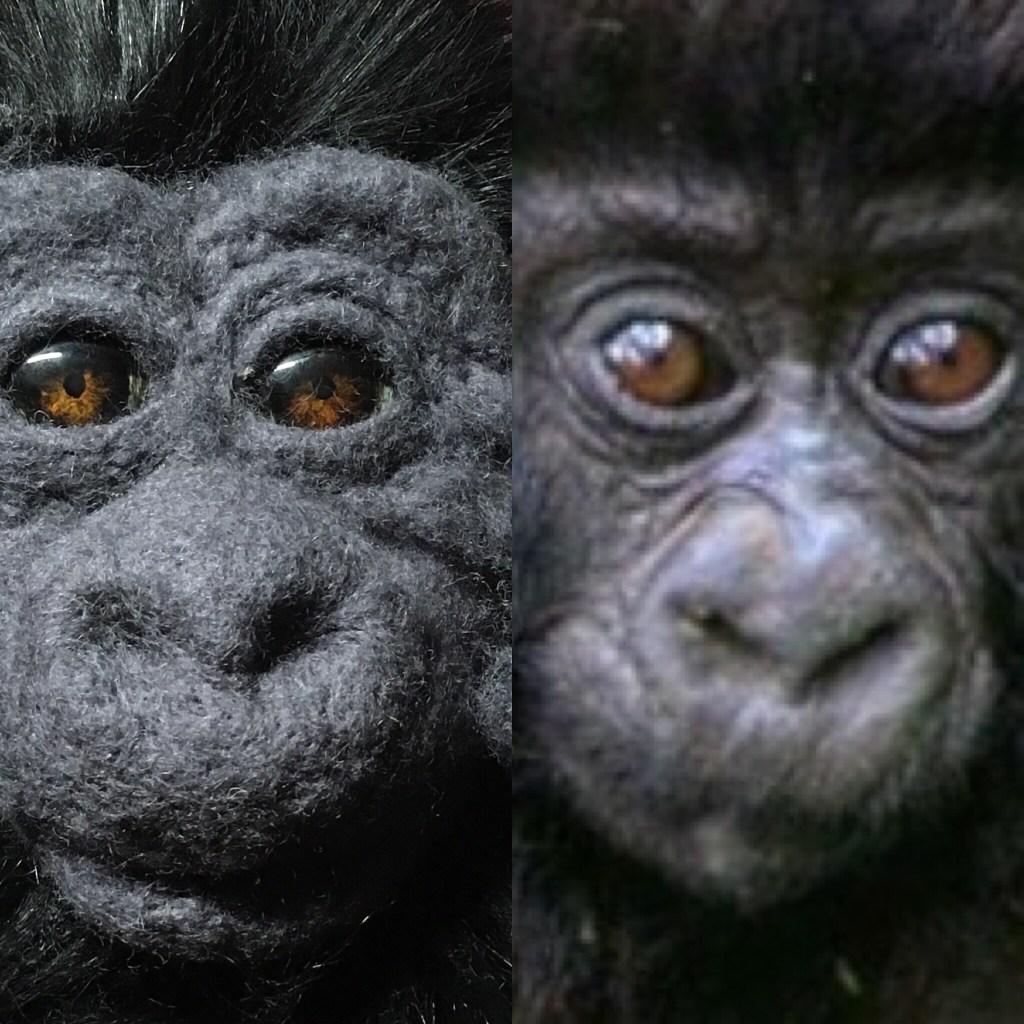
An earlier progress shot next to a photo of the inspirational photo of a real gorilla baby
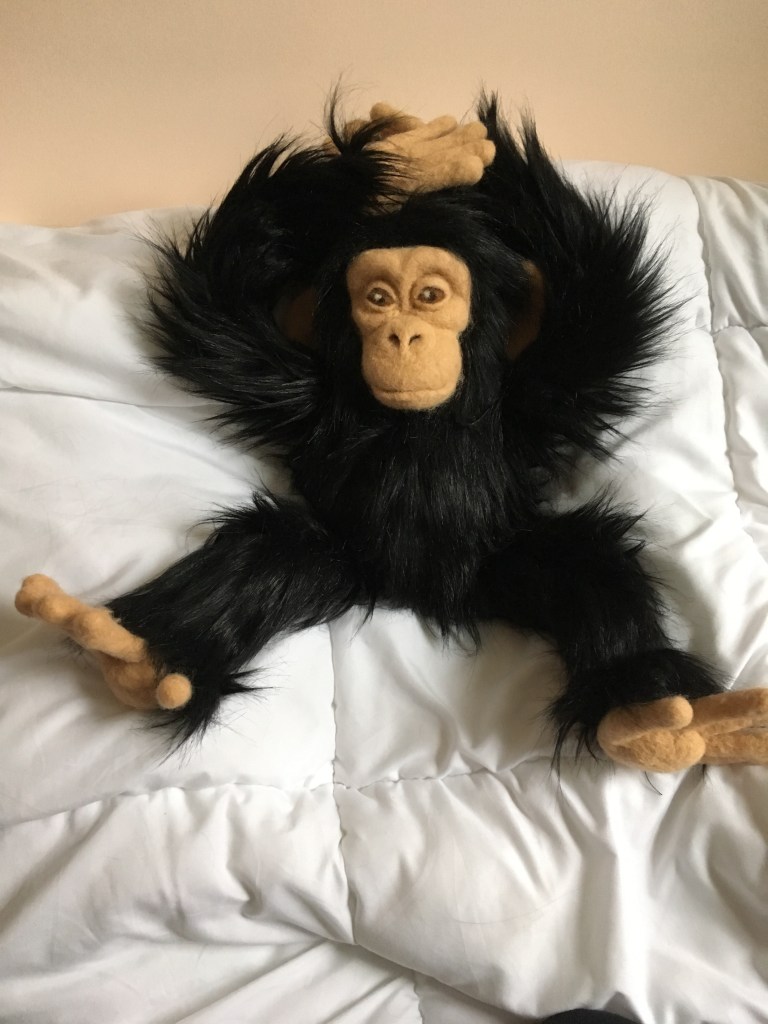
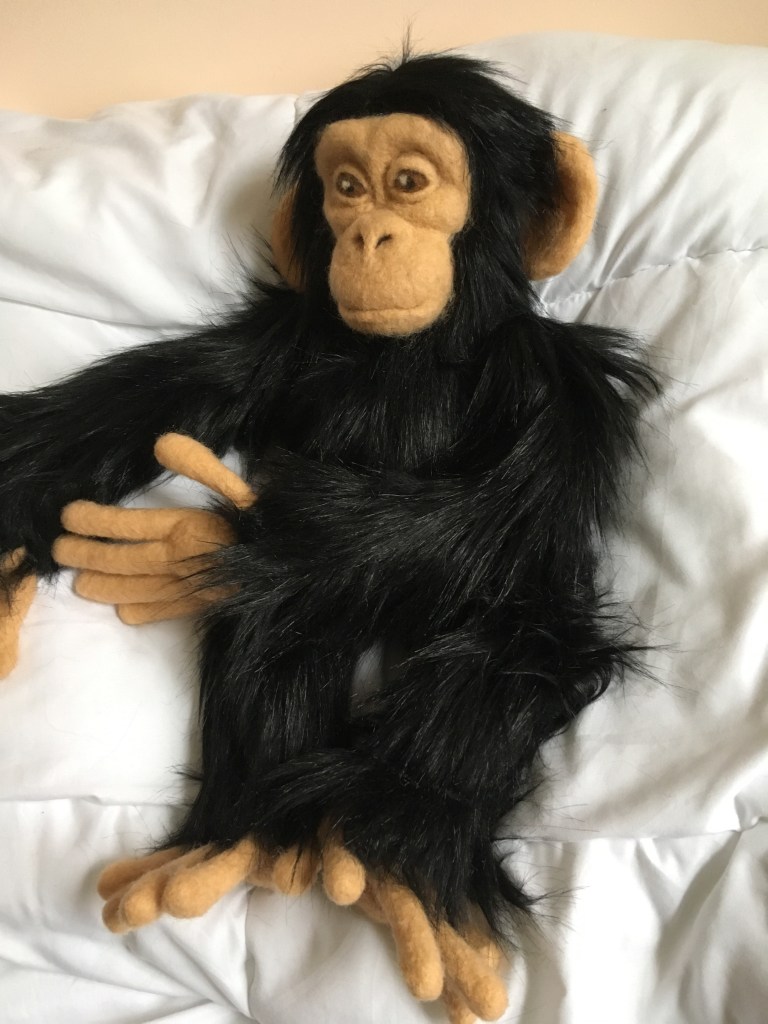
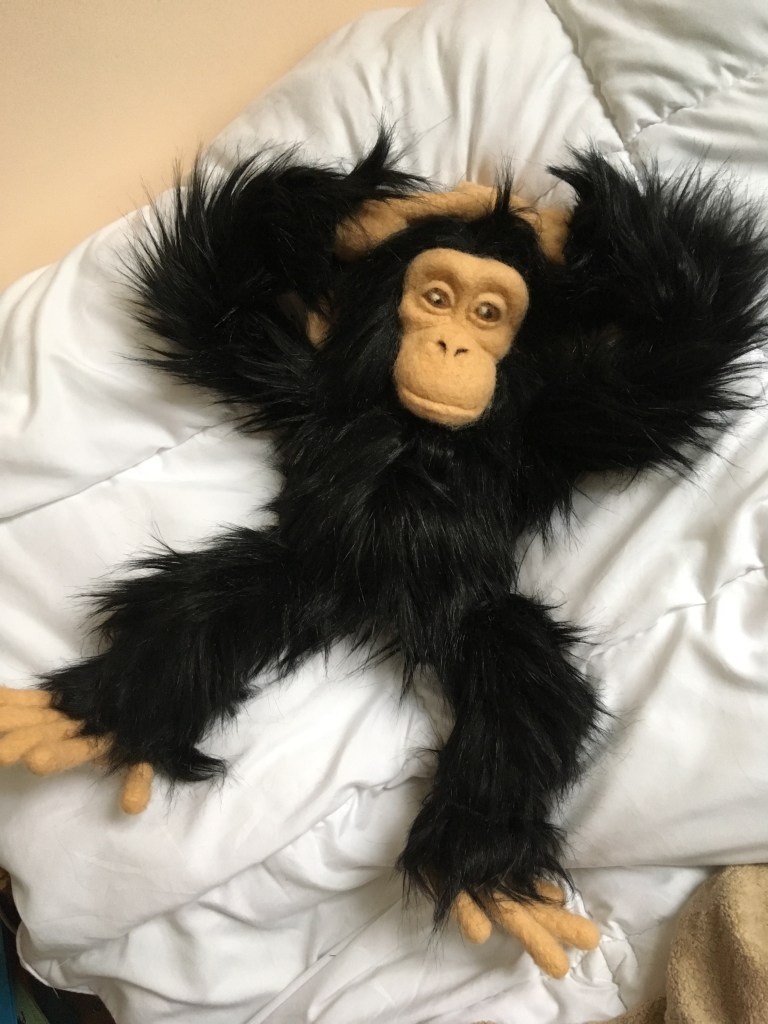
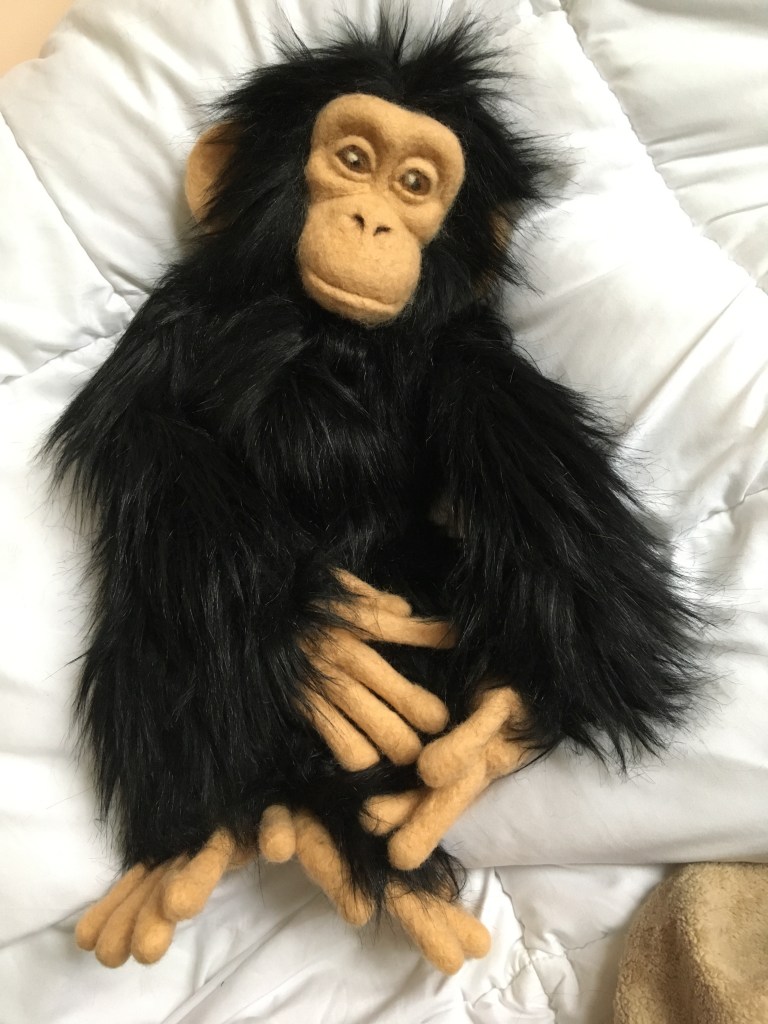
I wanted to take a moment to highlight one of my favorite dolls which was made to order for a lovely customer back in the spring. This is my chimpanzee baby doll, made with luxurious faux fur fabric and a highly detailed face made by hand with the needle felting technique.
The ears, hands and feet are also made with wool. The baby is the same size as a real baby chimp and is lightly weighted with floppy arms.
This is the kind of ape doll I dreamed of owning as a child. It is so fun to hold and cuddle. The techniques I use result in a doll that is not fragile and even though I don’t make these dolls for children, I feel that as an adult collector, the lack of fragility still really improves the appeal of the doll. While you won’t be dragging it around or throwing it across the room (I hope!) it’s really amazing to be able to hold and pose these dolls and not have to worry about them breaking or coming apart.
This style of doll is available in any ape species. If you’d like one of your own, make sure you’re signed up for my mailing list. Subscribers get first dibs when new babies are available and are the first notified if/when I have made to order slots available.

 Way Home Art