Willard and Willette found their mother, but the visit was a little disappointing. She was asleep when they arrived and kept talking about how she needed to be back by three o’clock to watch her show.
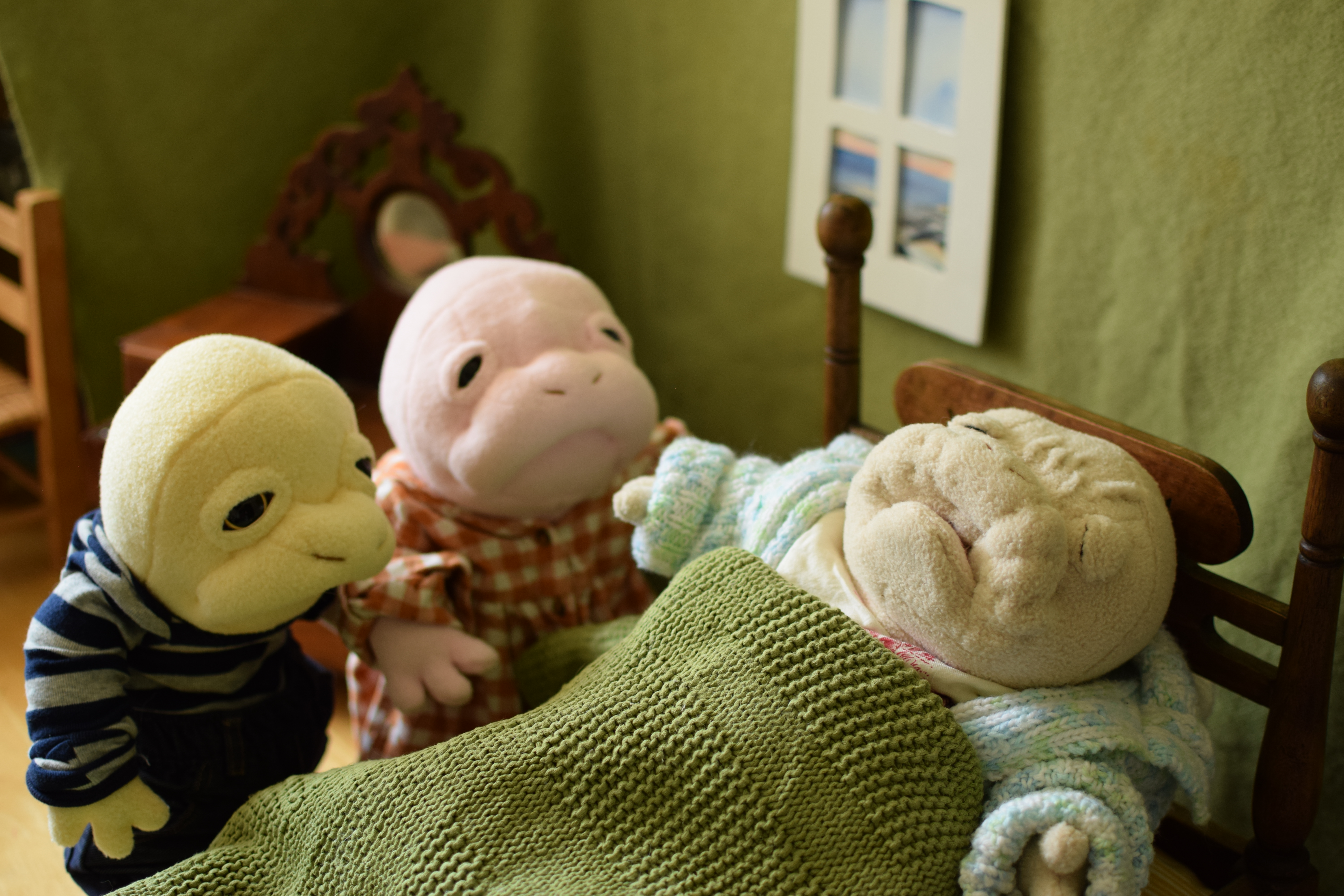

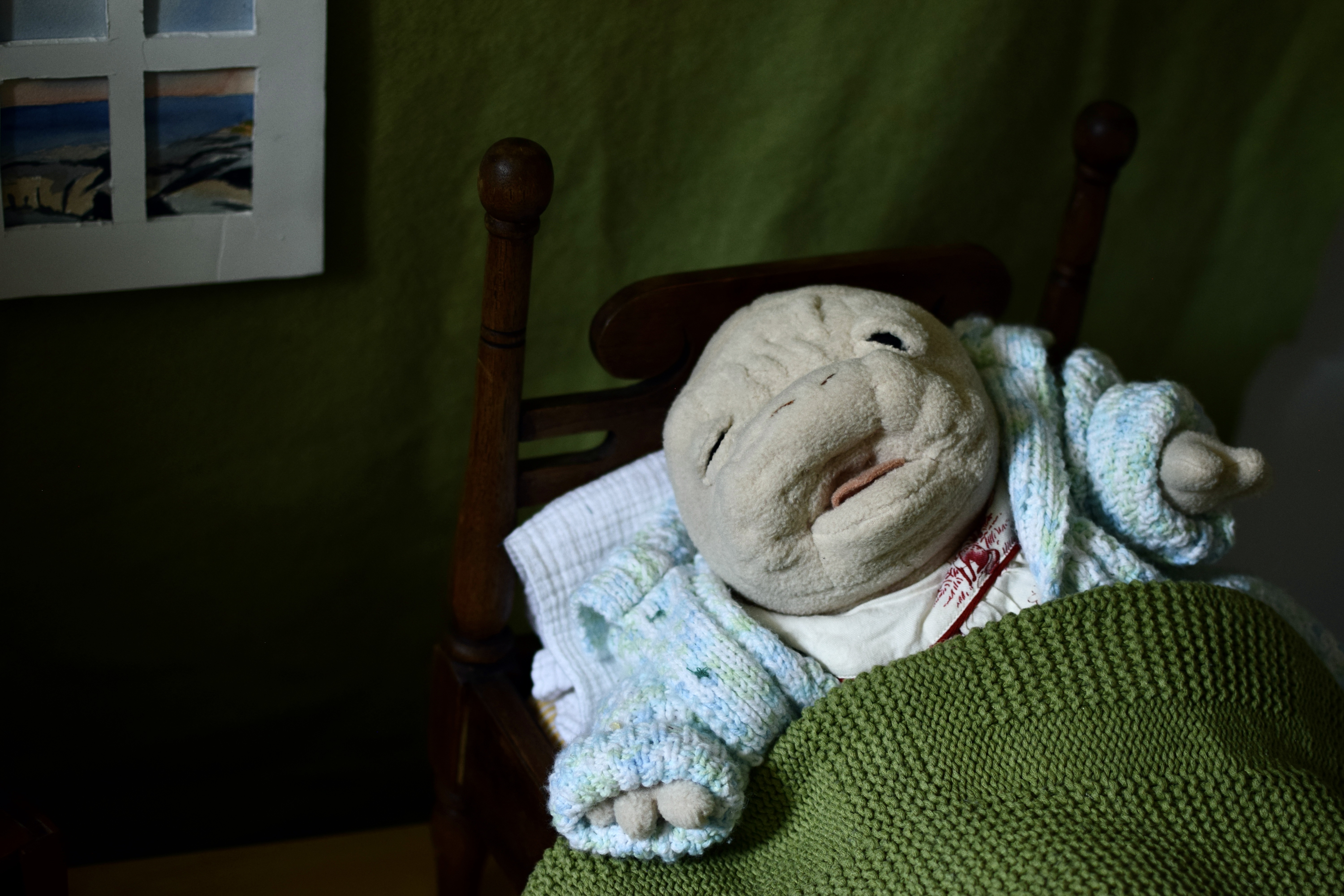
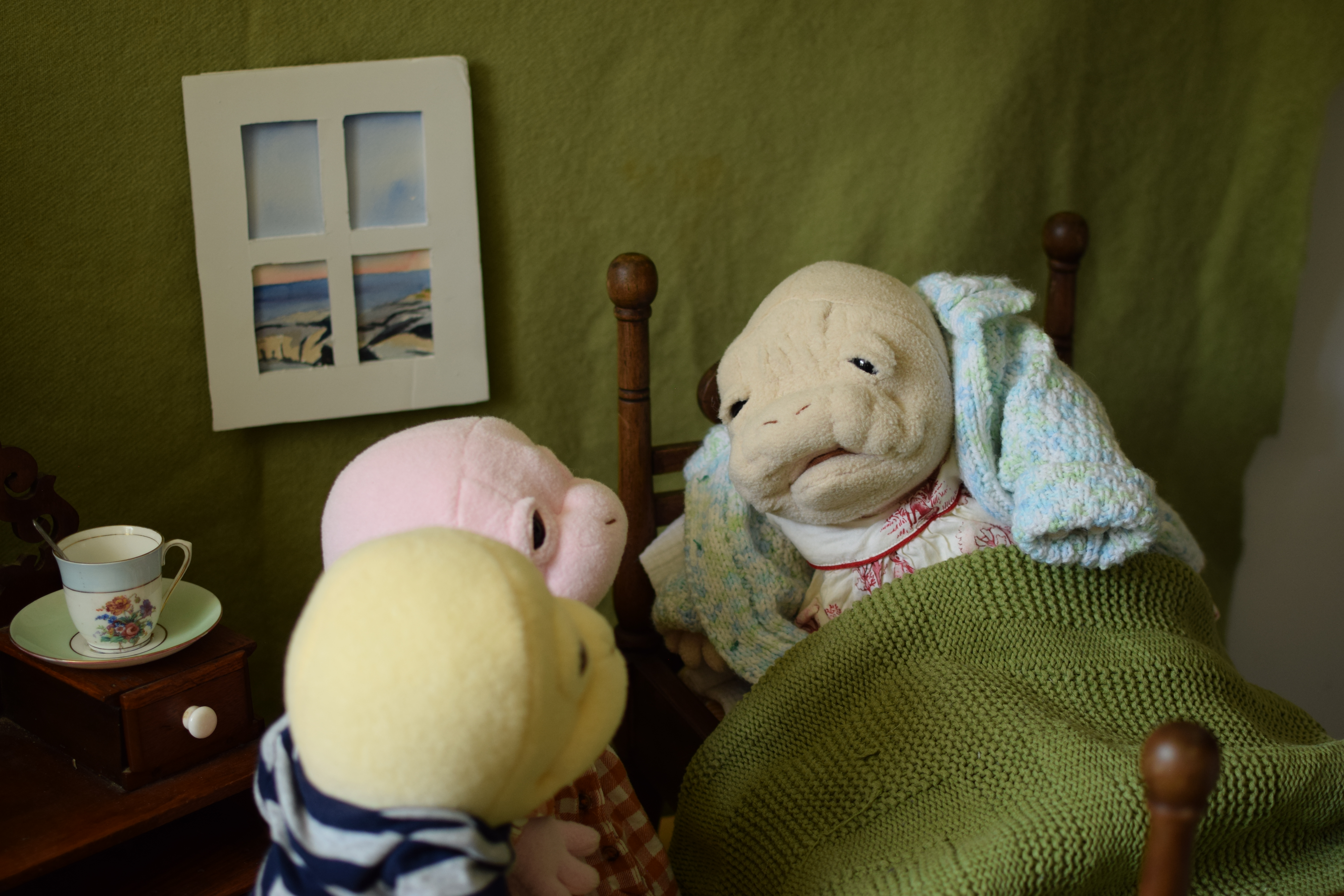
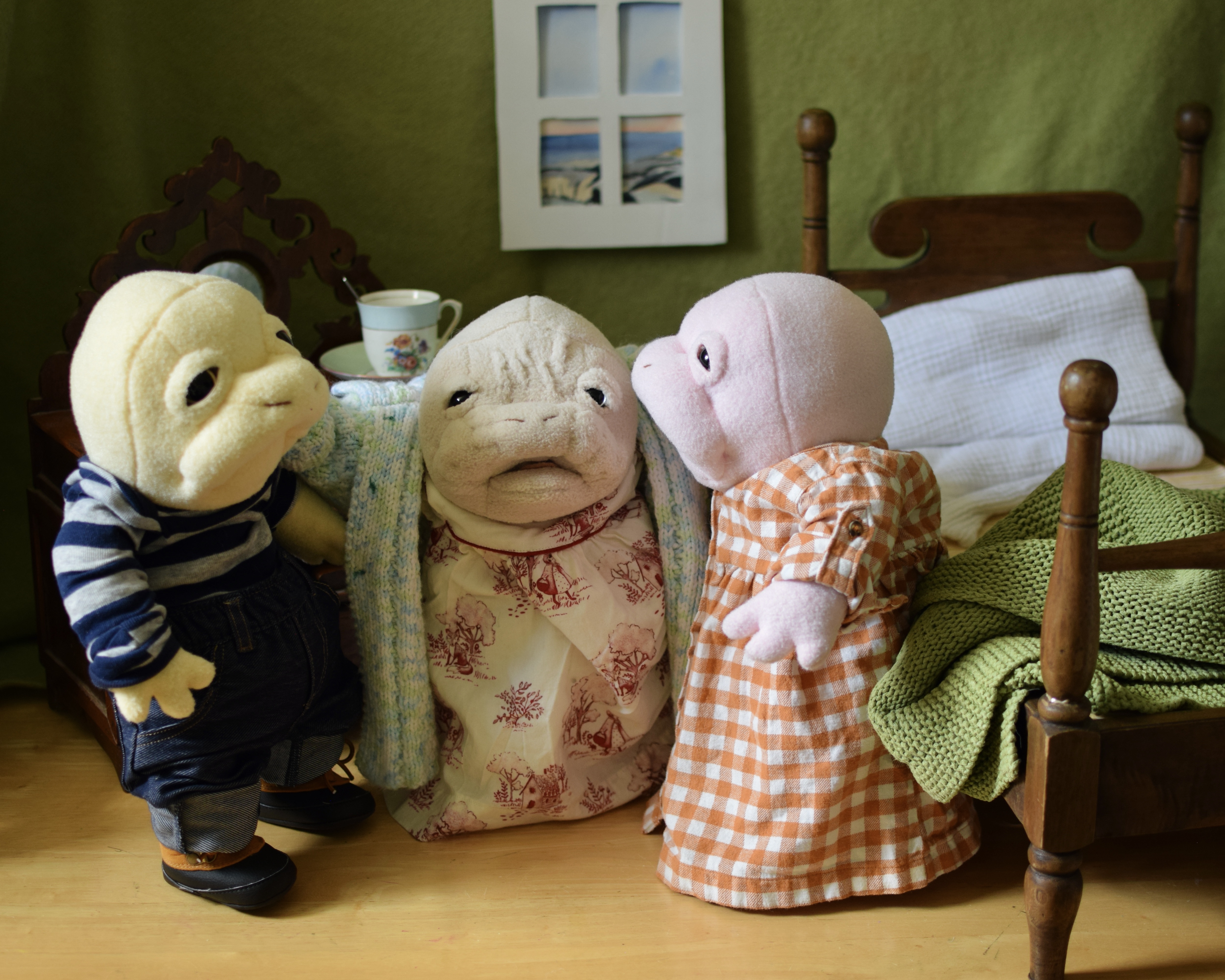
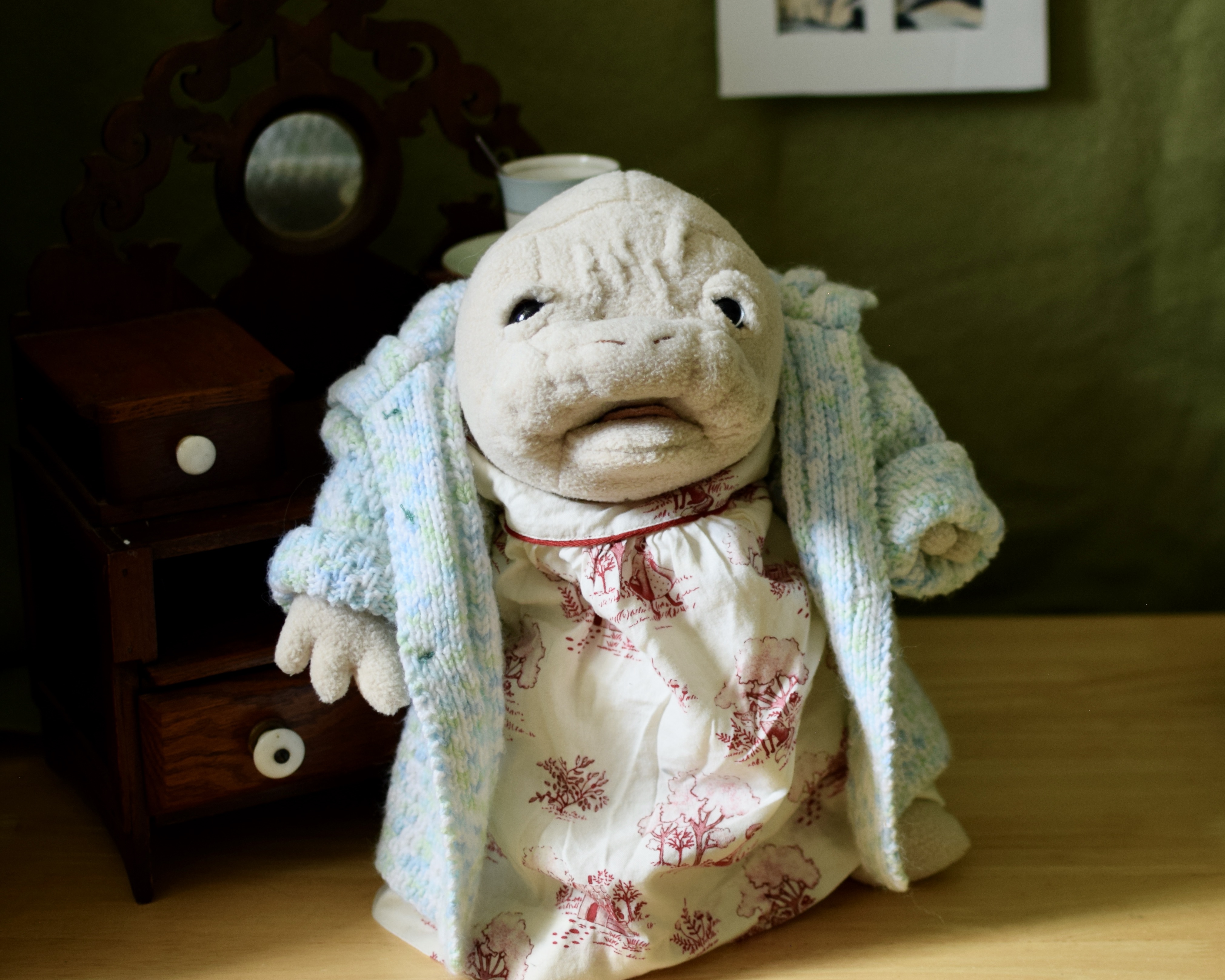
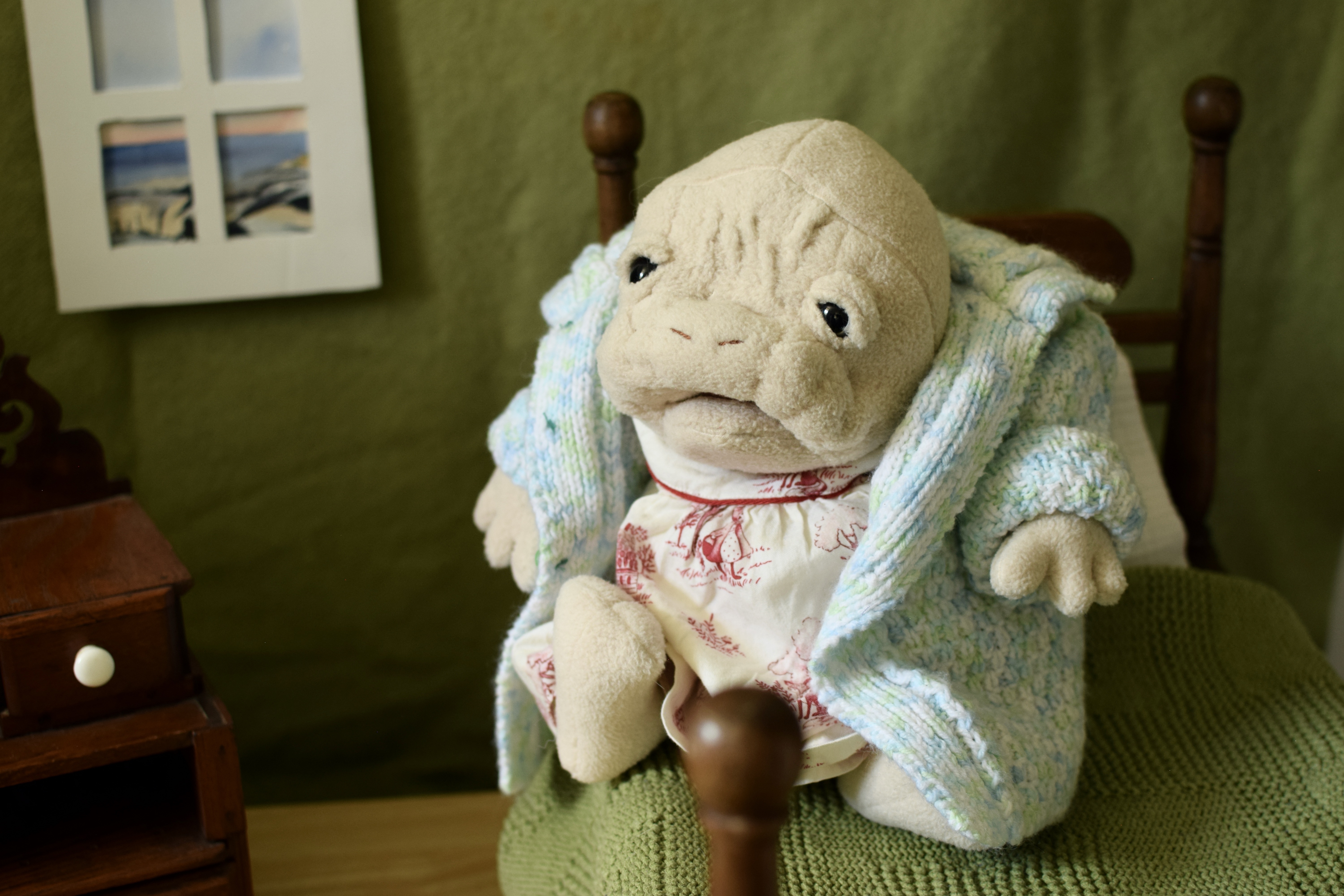
Willard and Willette found their mother, but the visit was a little disappointing. She was asleep when they arrived and kept talking about how she needed to be back by three o’clock to watch her show.

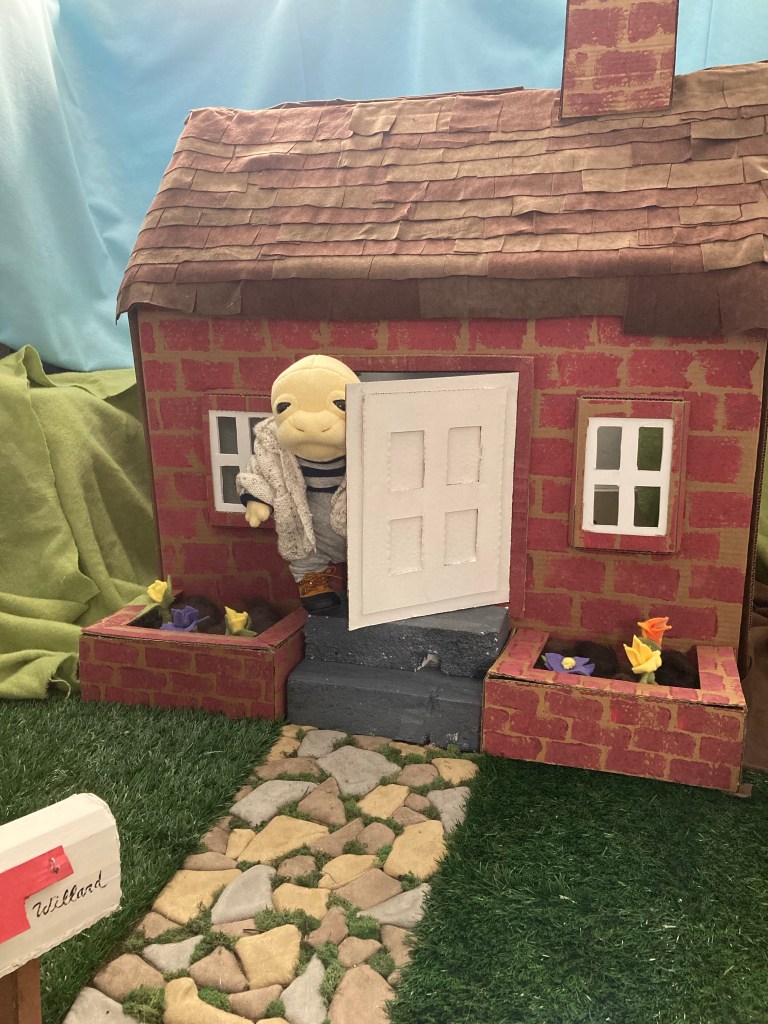
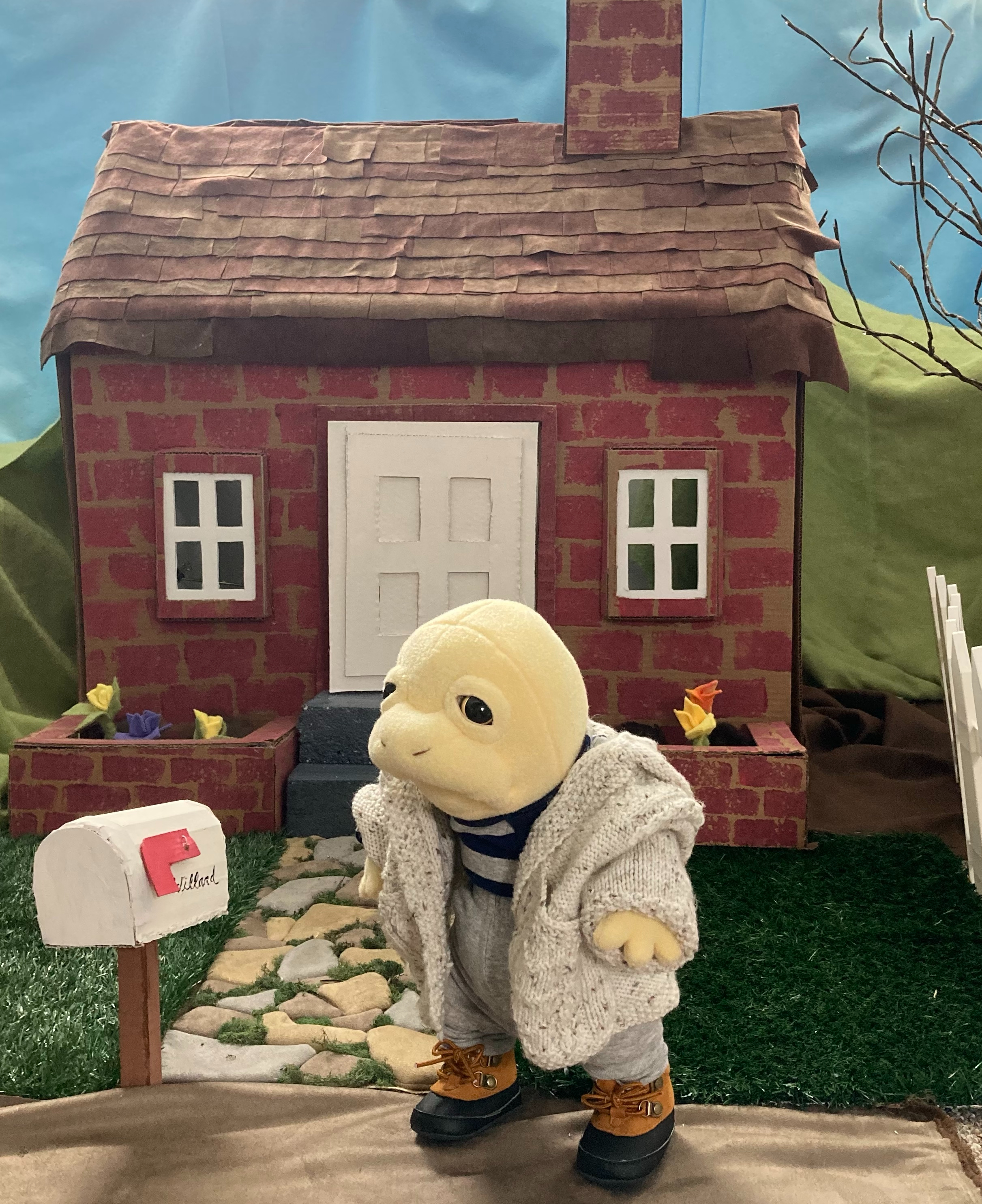
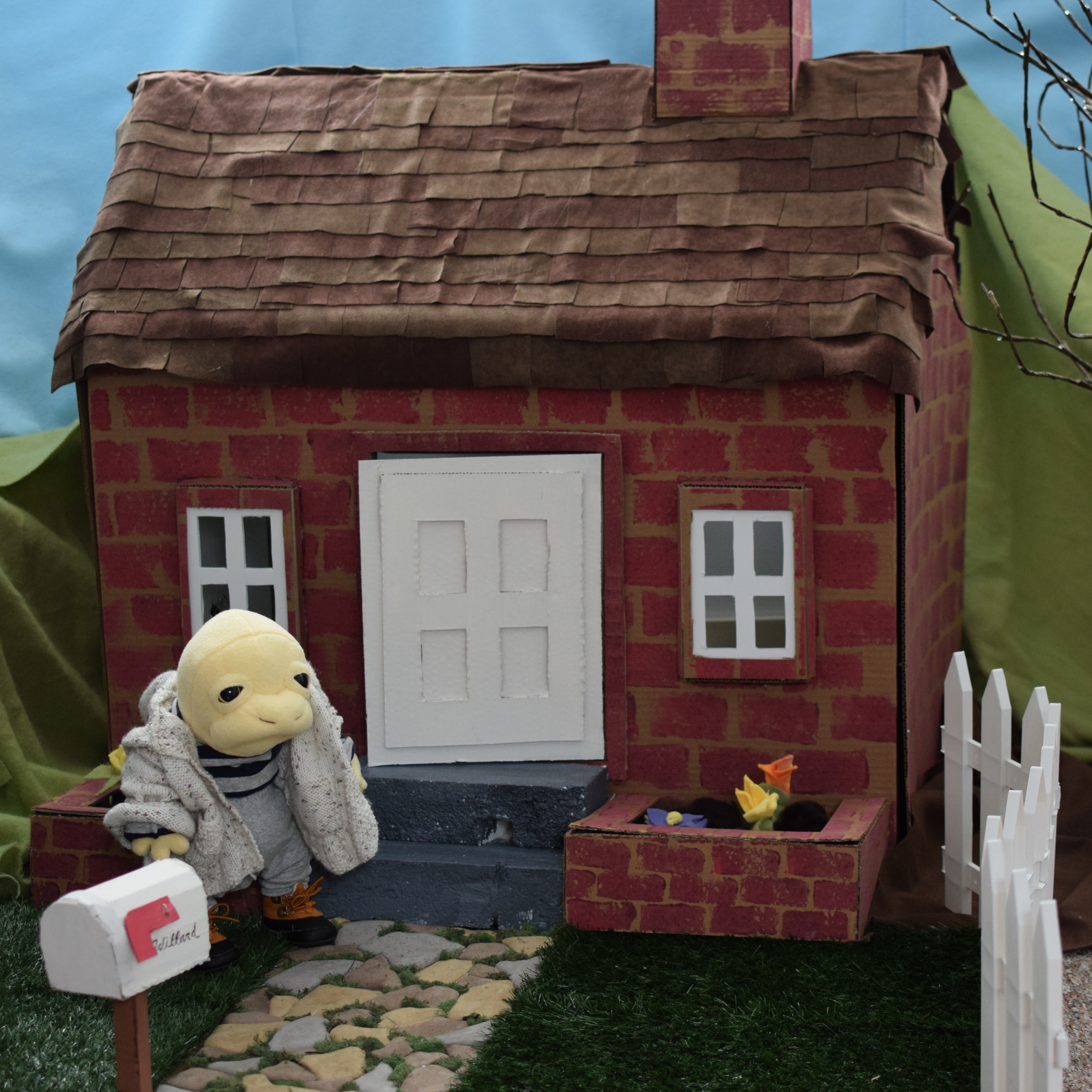
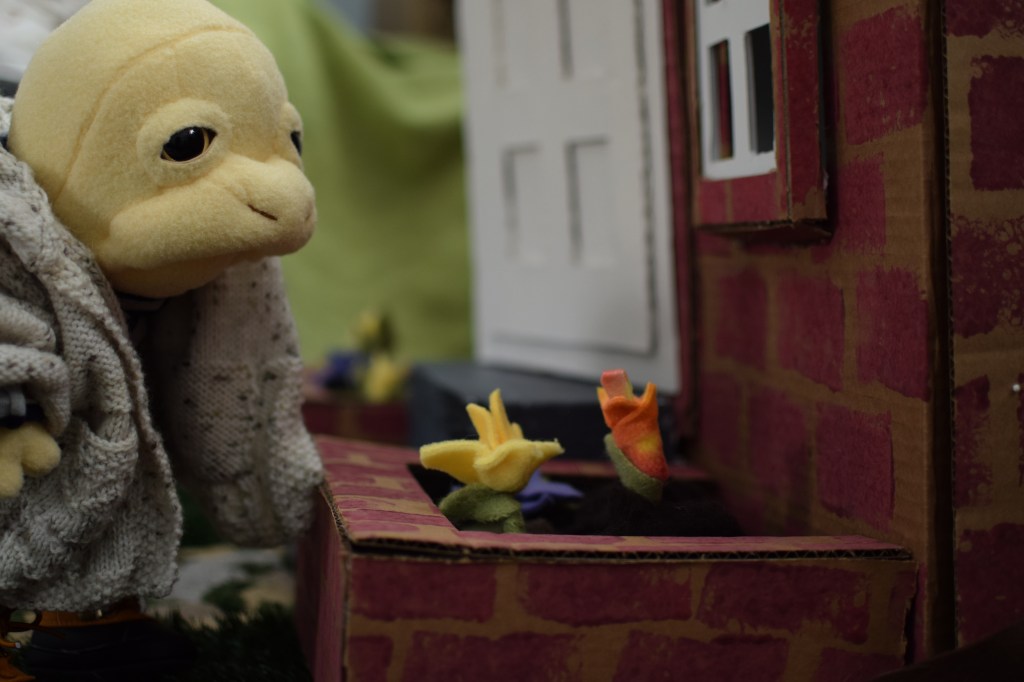
I had so much fun making Willard’s house! I have been wanting to create more of an enhanced universe for Willard and Friends for some time now, but couldn’t quite decide how I wanted to do so, and how I could do it within limited space and going too crazy.
The house comes apart if necessary and is made of found cardboard and foam. The only things I purchased were the grass and fence.
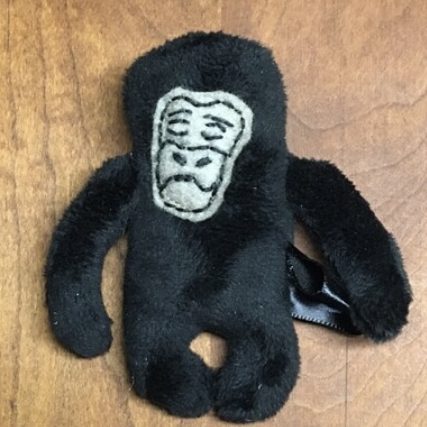
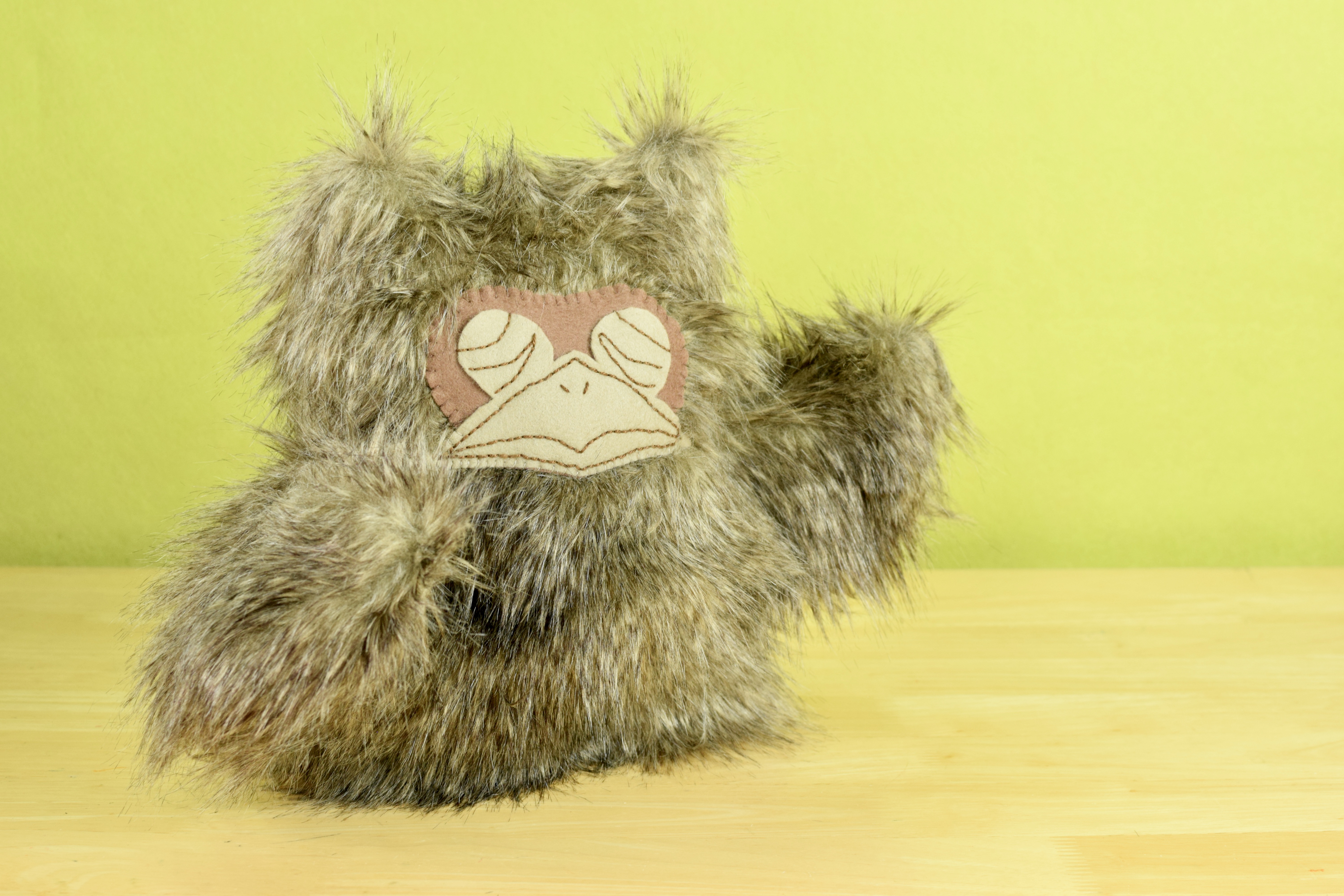
I have spent the last six years obsessed with learning how to make patterns to sew my own dolls and soft toys, and I had spent the ten or so years prior to that learning how to make my own patterns for women’s clothing. The method I primarily use is called flat pattern drafting and it helps you make three dimensional, sculptural plush (like most of the stuffed animals that you might see in the stores). I will be offering trainings on this topic soon. However, I want to spend some time on some basic concepts that don’t really require this knowledge, and one of those is what I call 2D plush.
What are 2D plush (I started using this term a long time ago but recently realized some others do, as well, so I’m not sure who coined it)? Basically, this is how I refer to plush that are created by creating one, flat shape, sewing two pieces of fabric together in that shape, (usually) turning it and then stuffing it. Of course, once stuffed, it isn’t truly two-dimensional anymore, but three-dimensional! But it doesn’t rely on the pattern to create any of that dimension. And, it’s not nearly as 3d or shapely as a more complicated pattern.
I’ll admit, I didn’t really enjoy 2D plush when handmade plush first started getting more popular. I didn’t like how flat they looked and I also have a habit of wanting things to be as complicated as possible for no good reason–while these seemed simple. I still don’t often make fully 2D plush, but I often use a combination of 2D and 3D flat pattern drafting with my dolls and soft toys. And I have really come around to some of their merits.
If you stick around long enough to learn 3D flat pattern drafting from me, you’ll see it can be a lot of work. There are some situations where 2D is truly the better choice, so why make it harder than it needs to be!
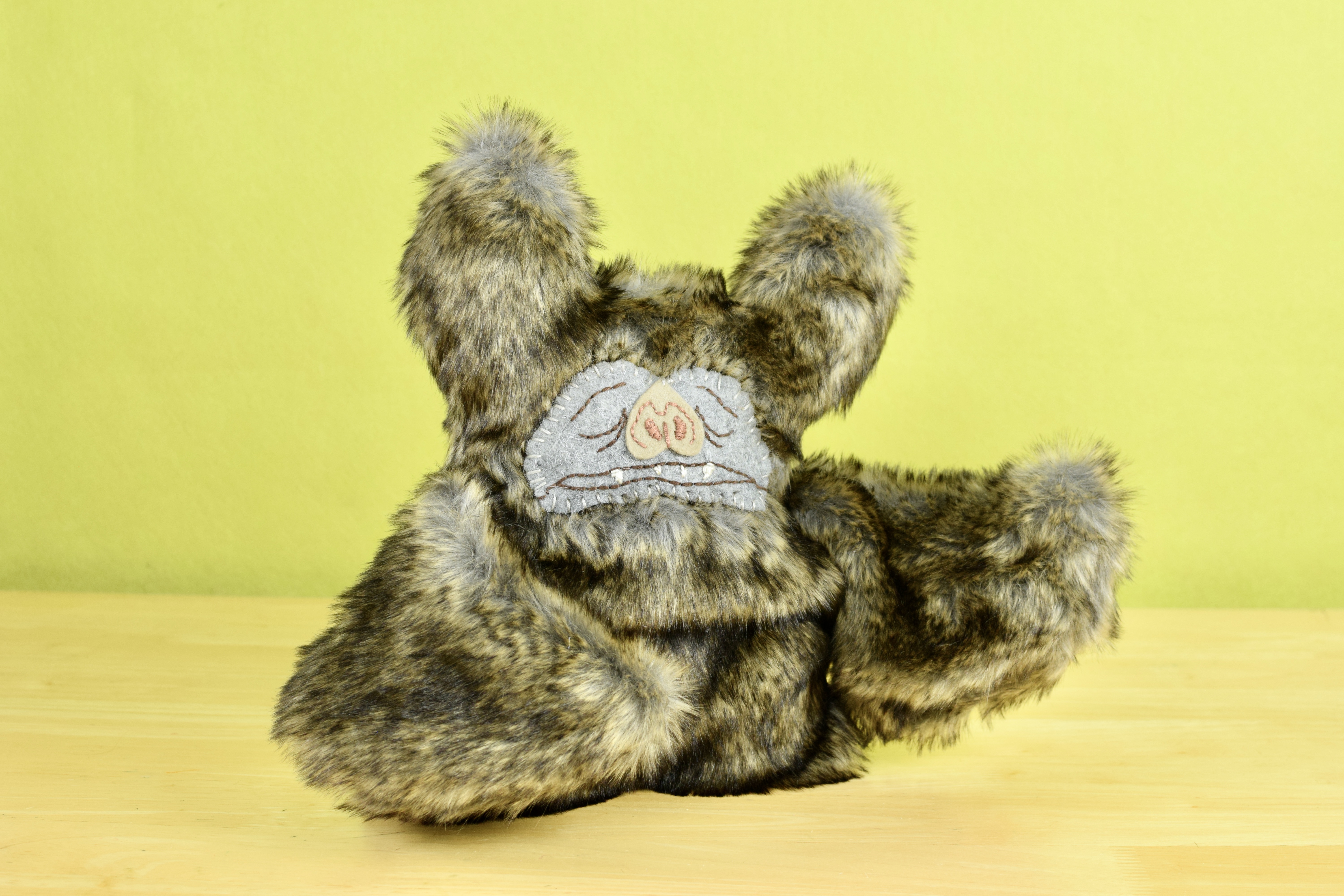
Here are some advantages of 2D:
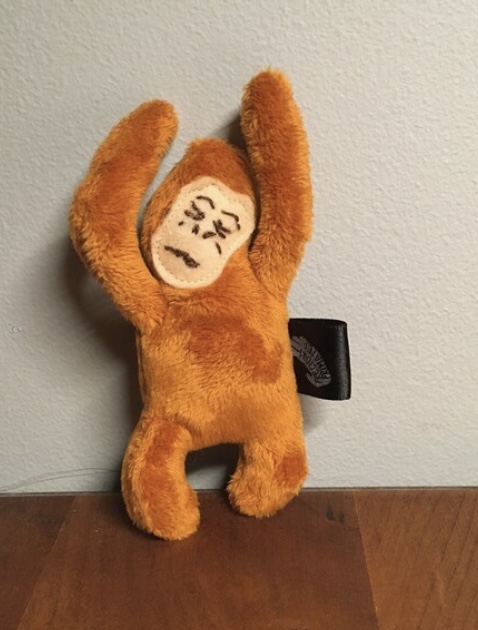
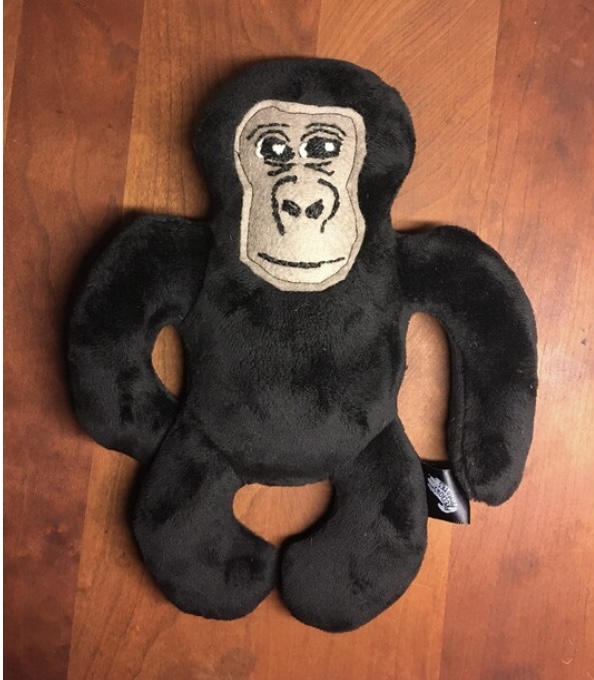
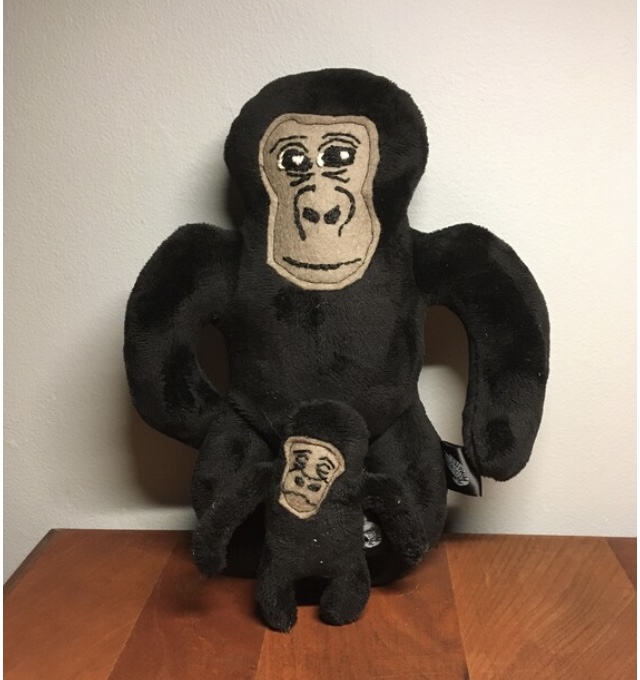
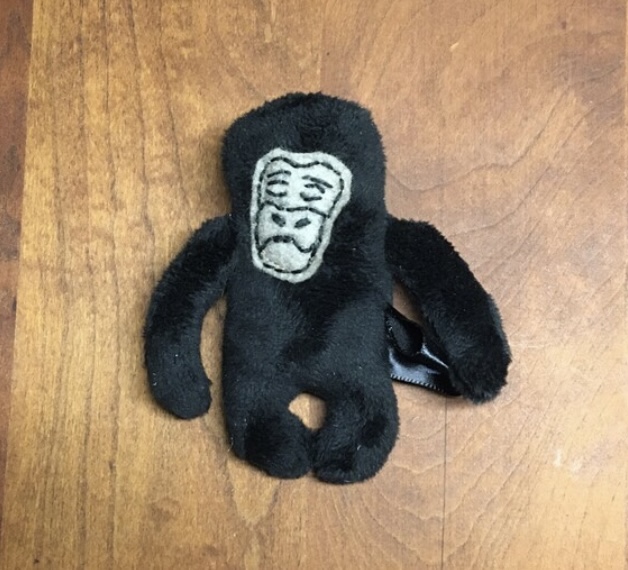
So there you have it: 2D plush has a lot of room for possibility while keeping the pattern-making and machine sewing aspect nice and simple. It also means that you can dive right in as a plush-maker newbie and familiarize yourself with the fundamentals of fabric choice, sewing, and basic patterning. What questions do you have?
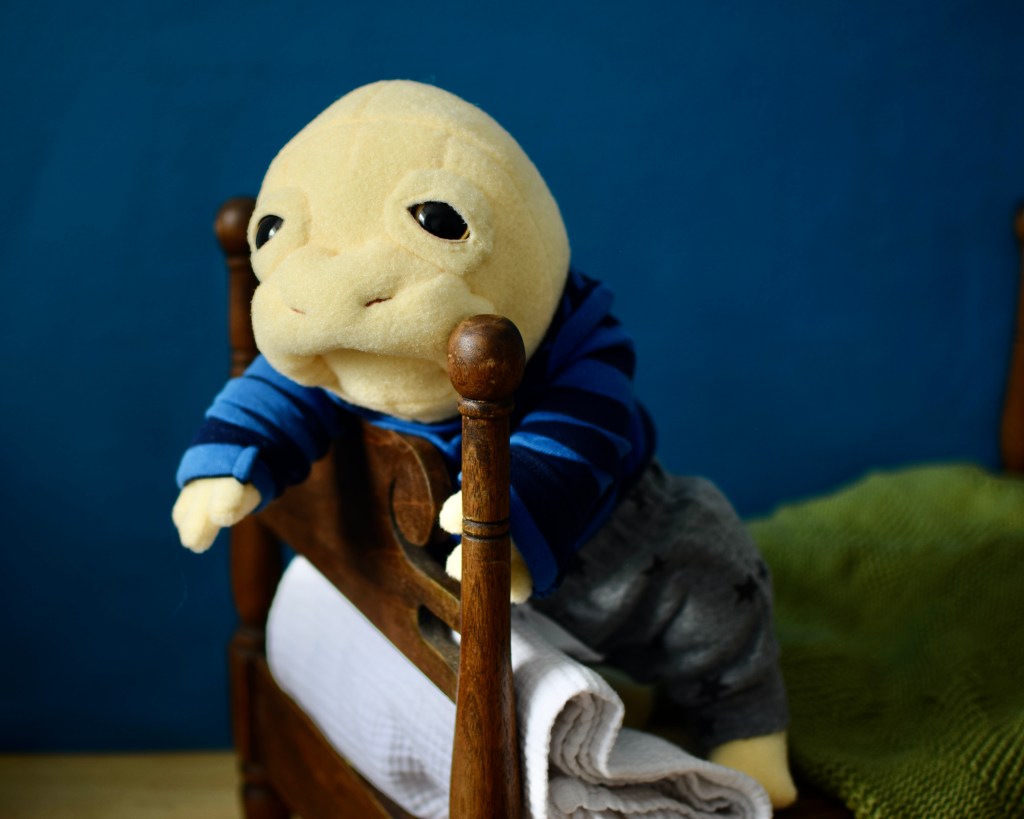
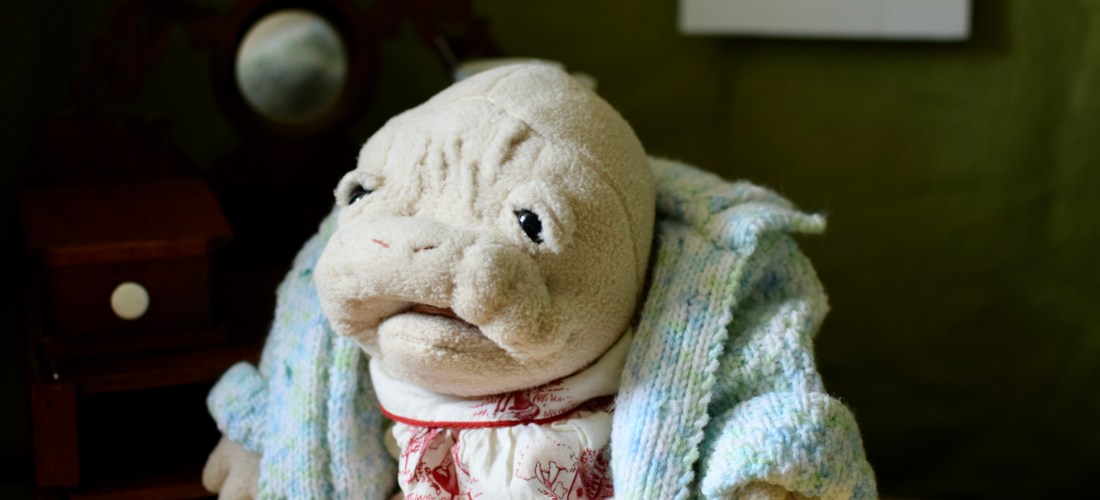
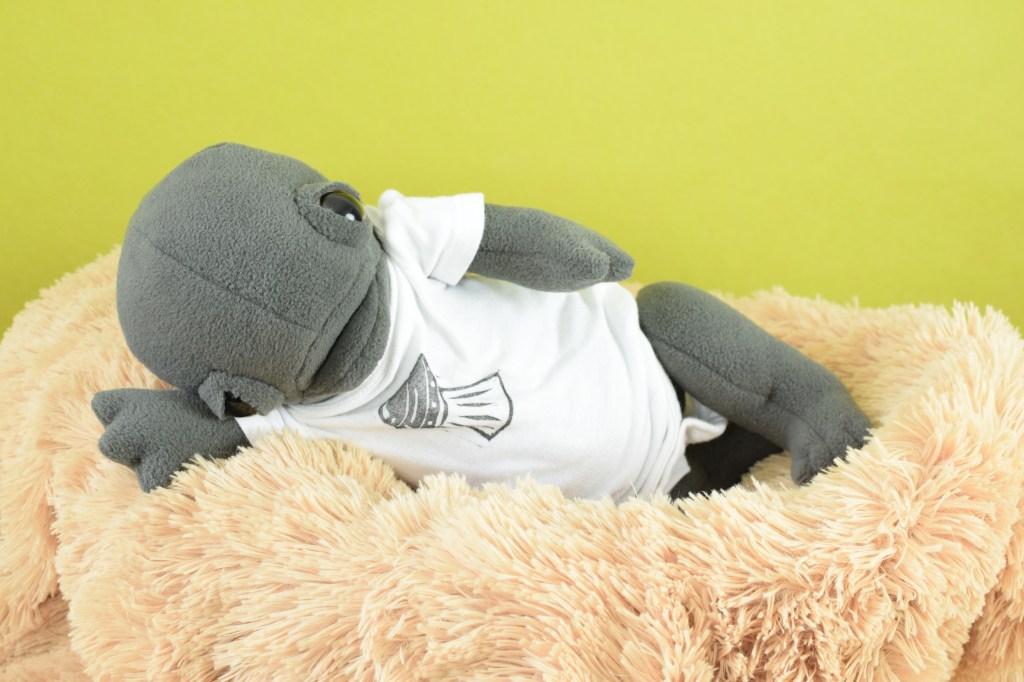
Meet Willard.
I had wanted to make a new face pattern inspired by manatees. As I neared completion of this doll, I shared him on a reel as an example of one of my many (most) creatures with eyelids rather than just eyeballs.
Much to my surprise, the reel got more than a million views in less than a week and garnered a lot of attention and comments. It seems the larger internet community is divided as to whether Willard is scary or cute, and whether giving him eyelids did in fact supply him with a soul and personality as I contended it would. Additionally, many commenters felt that Willard ran anywhere on the continuum from sleepy, to burnt out from a soul sucking retail job, to sedated (which I assure was not my intention when creating this doll!) On the whole, people were immediately obsessed and found him sad and adorable which—hello!—he is. And he’s not the first of my dolls to be these things.
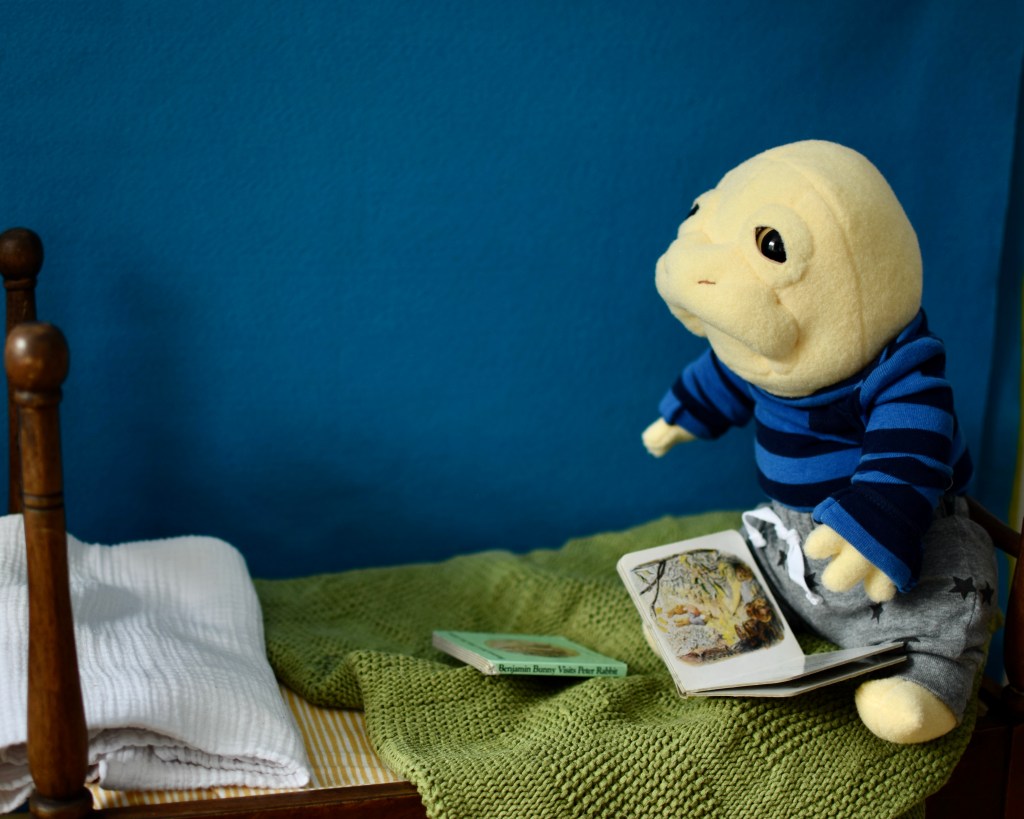
Anyway, it was quite the kerfuffle and Willard and I are exhausted! However, being an unintentional joke turned out to be a great way to reach many people who love these creatures and that was a wonderful way to wrap up 2022.
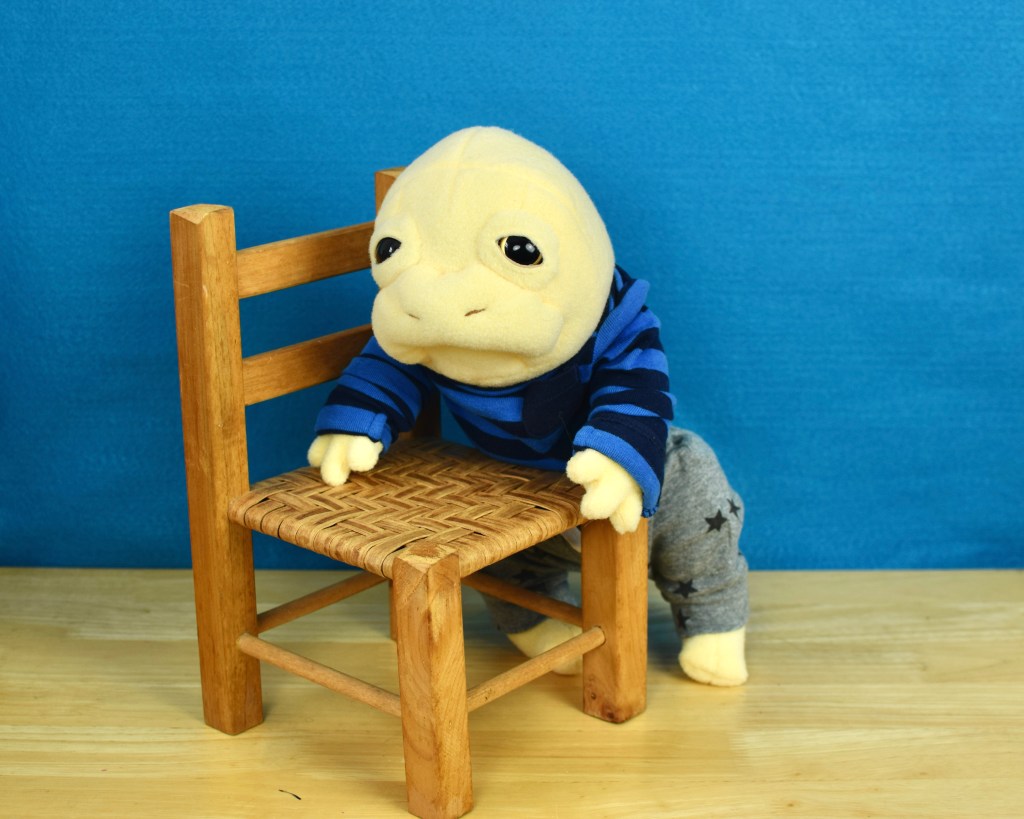
Since my shop drops were already becoming a bit of a skirmish for hopeful buyers, and given the increased interest in purchasing Willard, I will be trying an auction format this time around. Mailing list subscribers will get all of the details tomorrow.
When plush toys have open mouths, it can really add to their personality, expression and play value. You can do an open mouth for a puppet or for a regular doll/plush. You can insert teeth or a tongue and make the mouth smiley or frowny.
There are a few different ways to make open mouth, and I am still refining my process. It does get a bit tricky when working with thicker fabrics, and the mouth lining can tend to pop out or thrust forward once stuffed. You can fix this by sort of tethering the inner mouth to the back neck or somewhere inconspicuous, but I am also working on some other techniques that I think will help with this.
Give this post a like if you would be interested in a more in-depth tutorial about drafting and sewing open mouths!
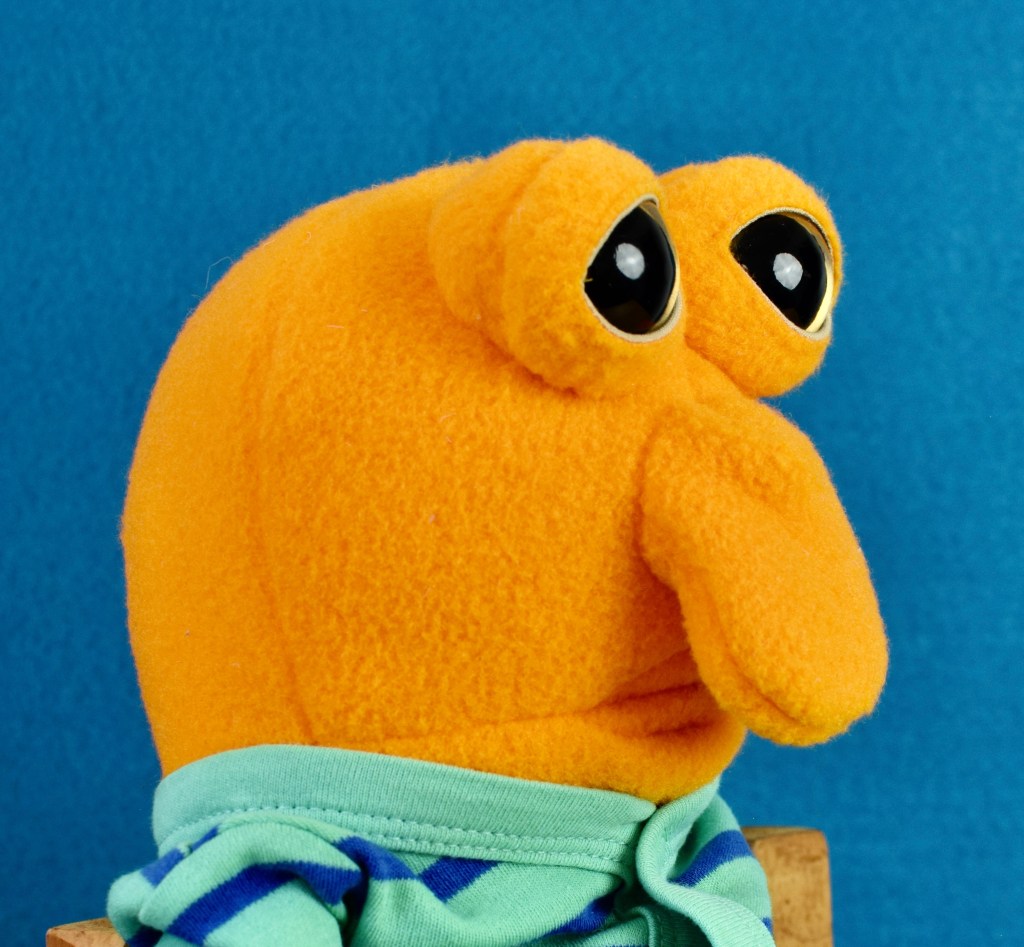
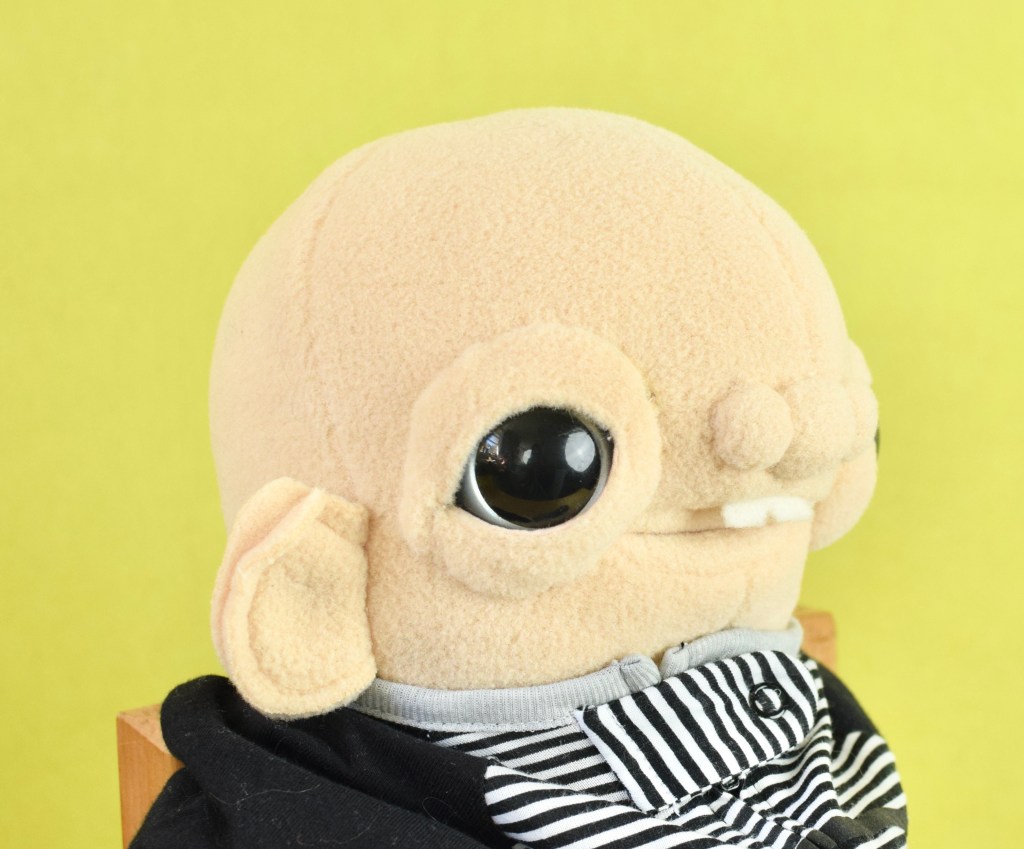
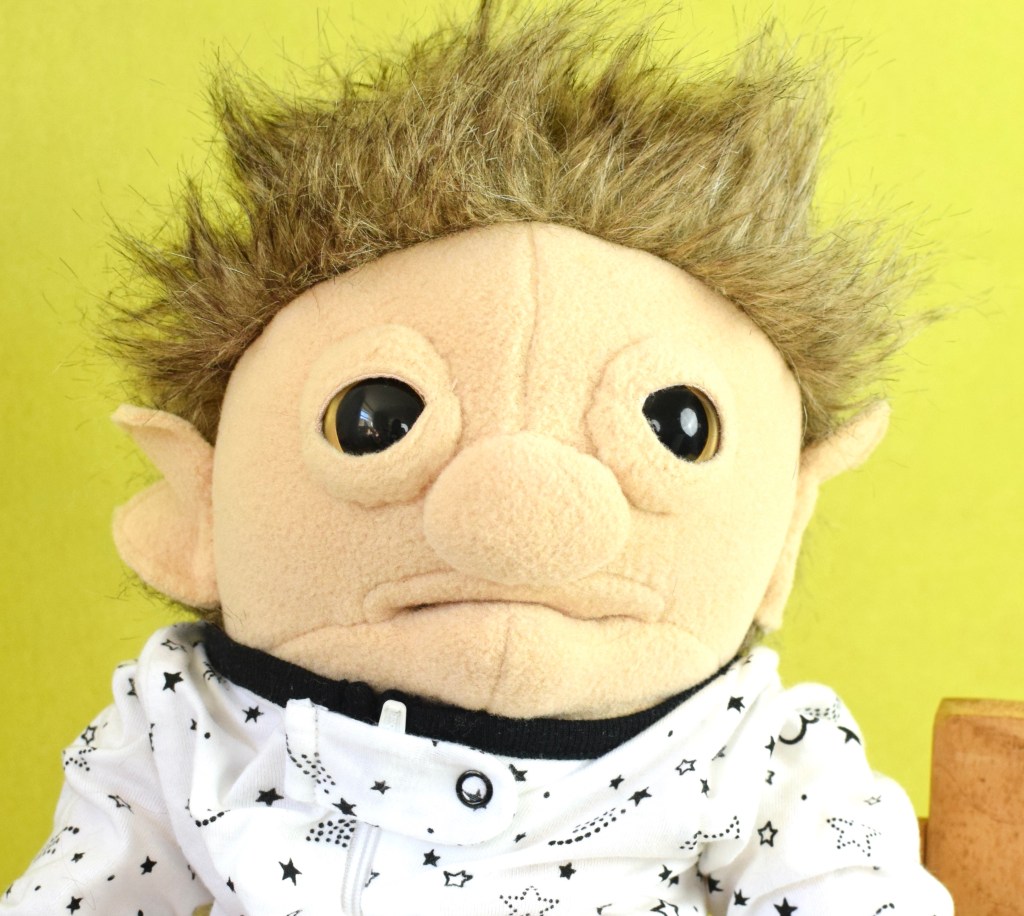
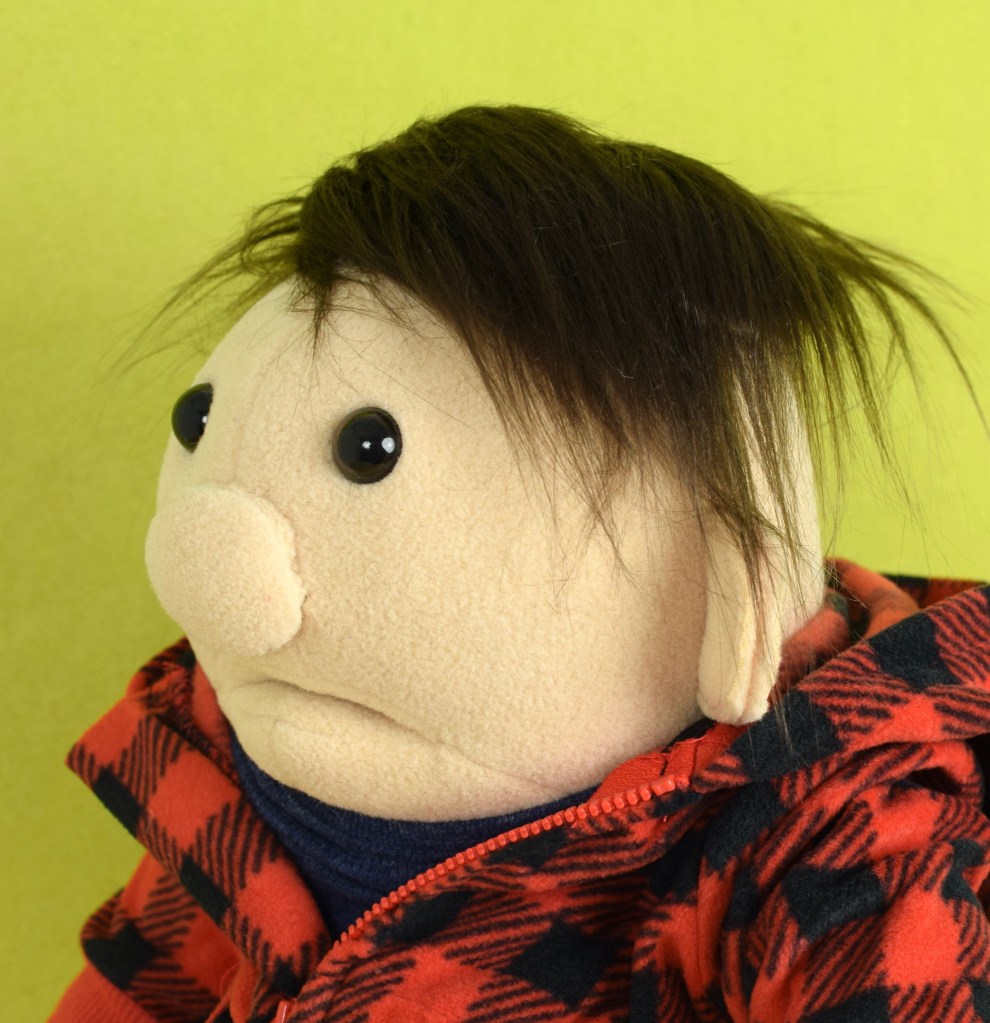

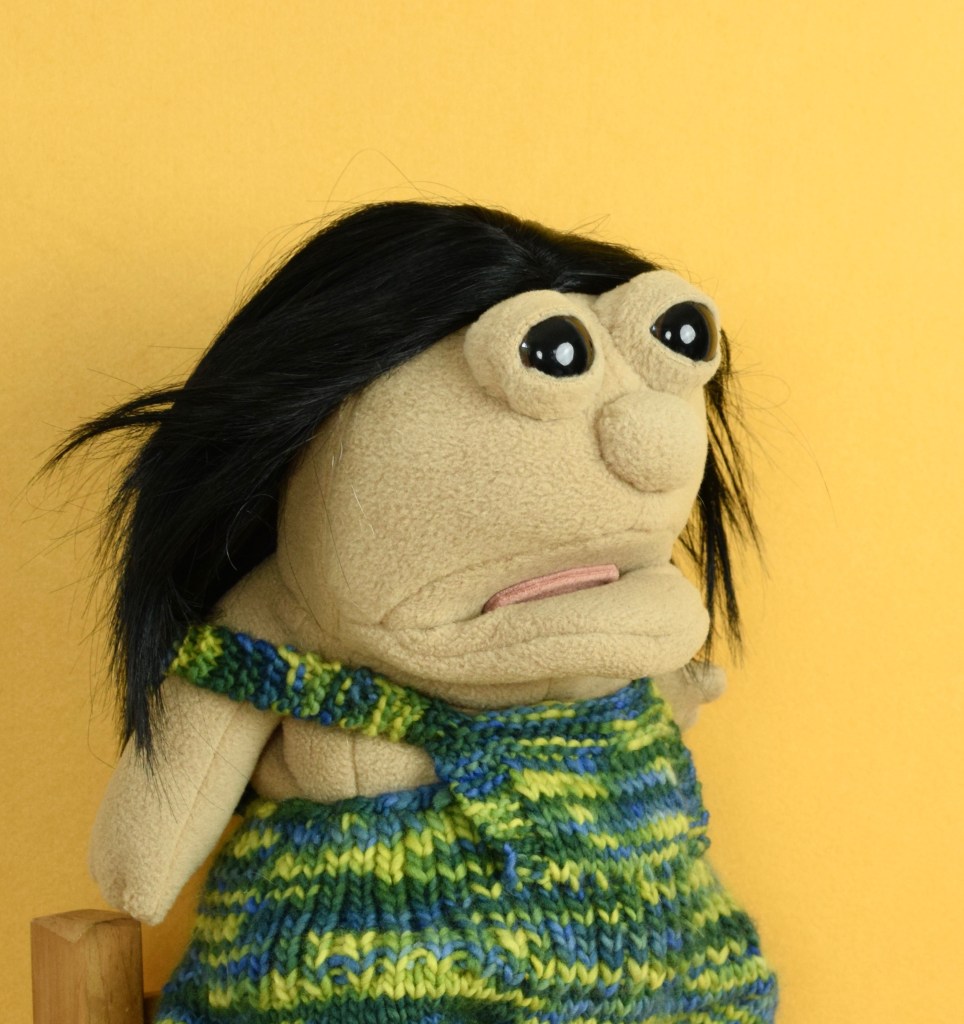
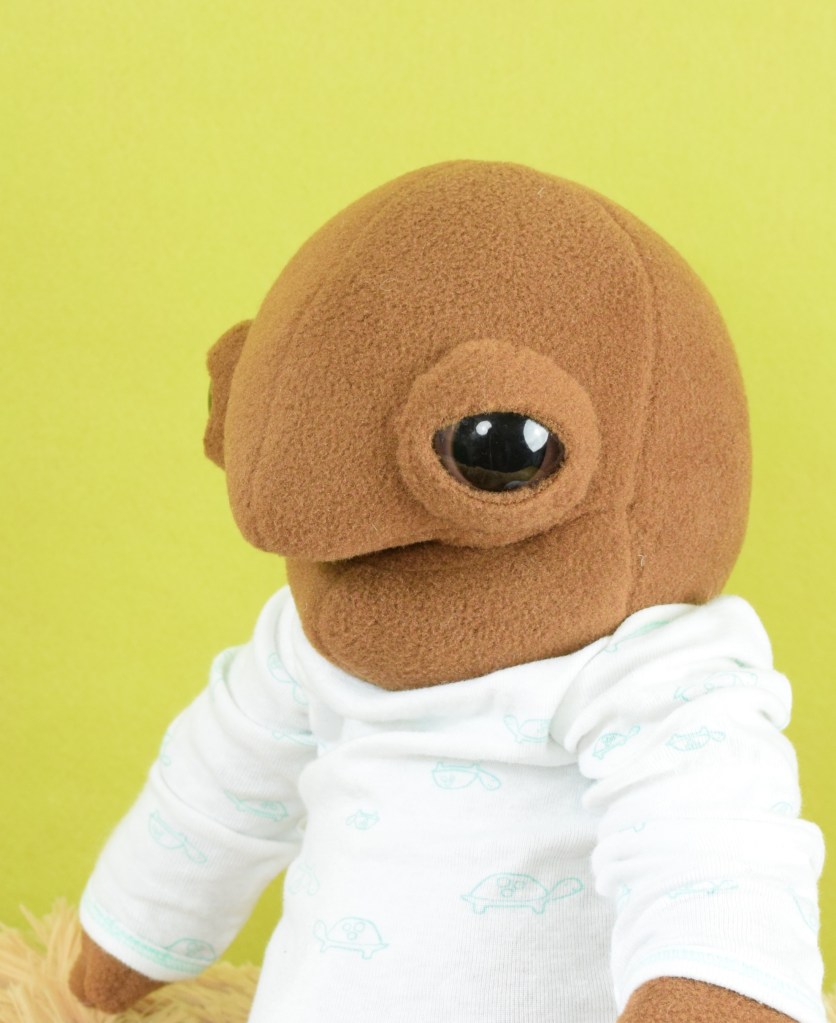
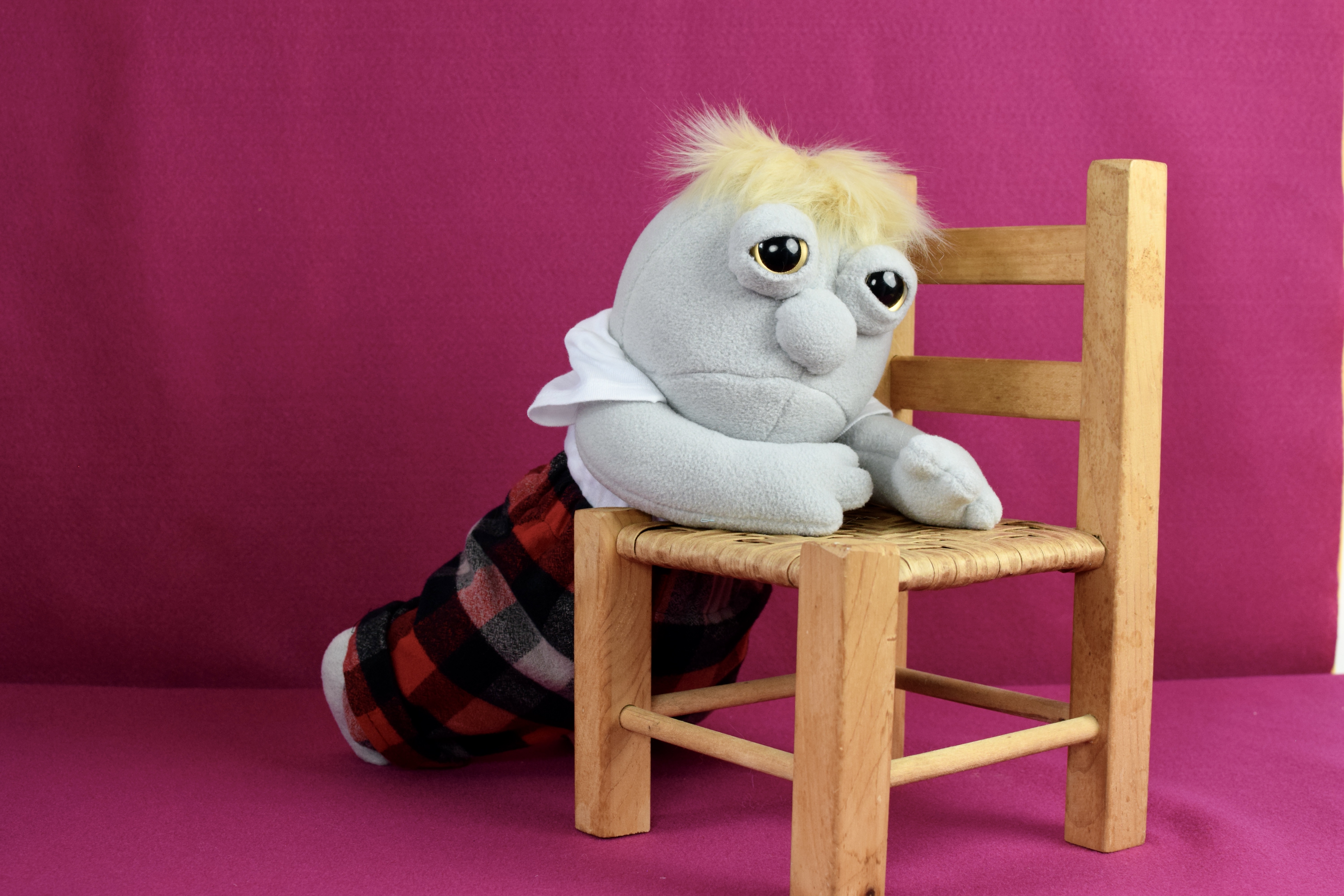
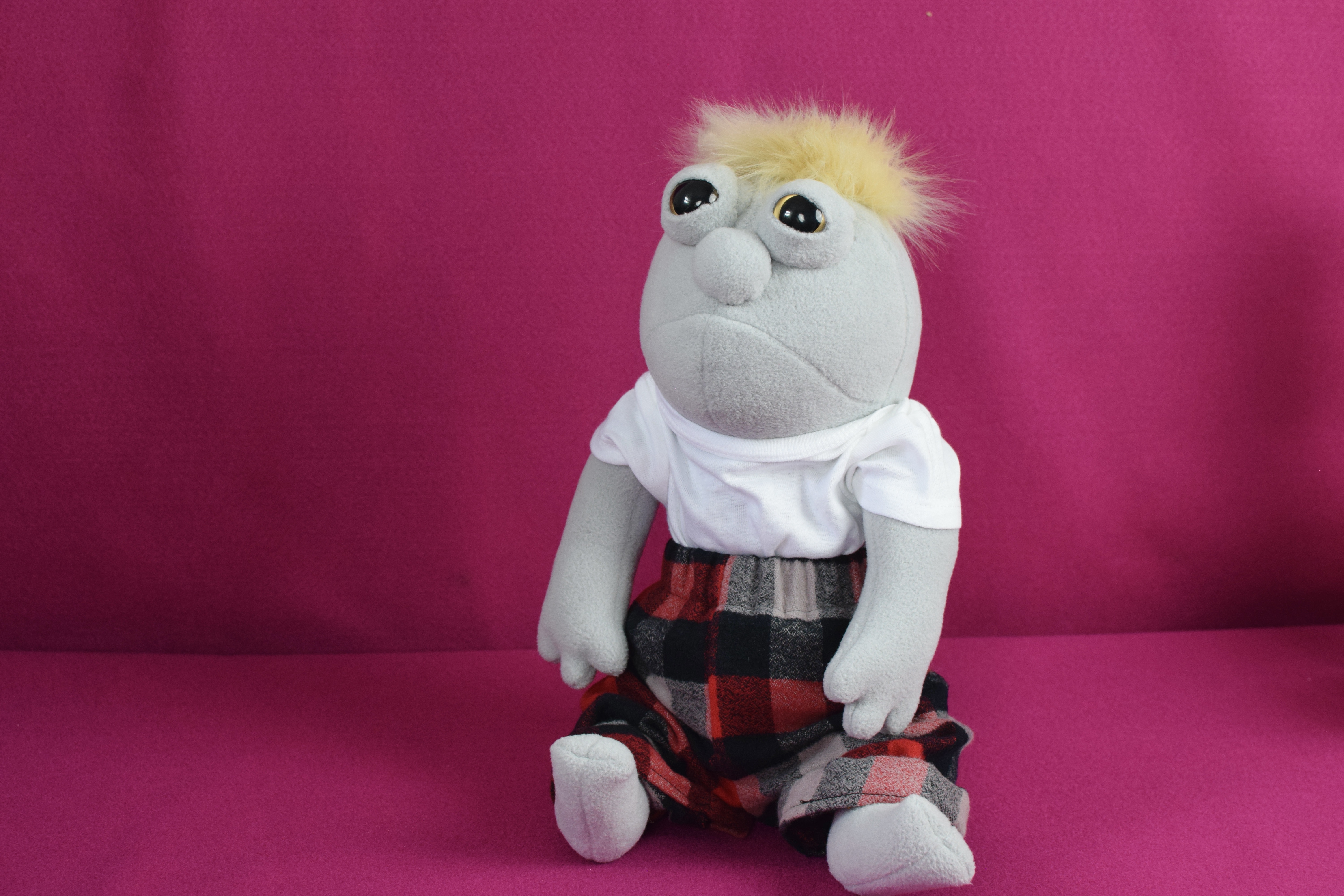
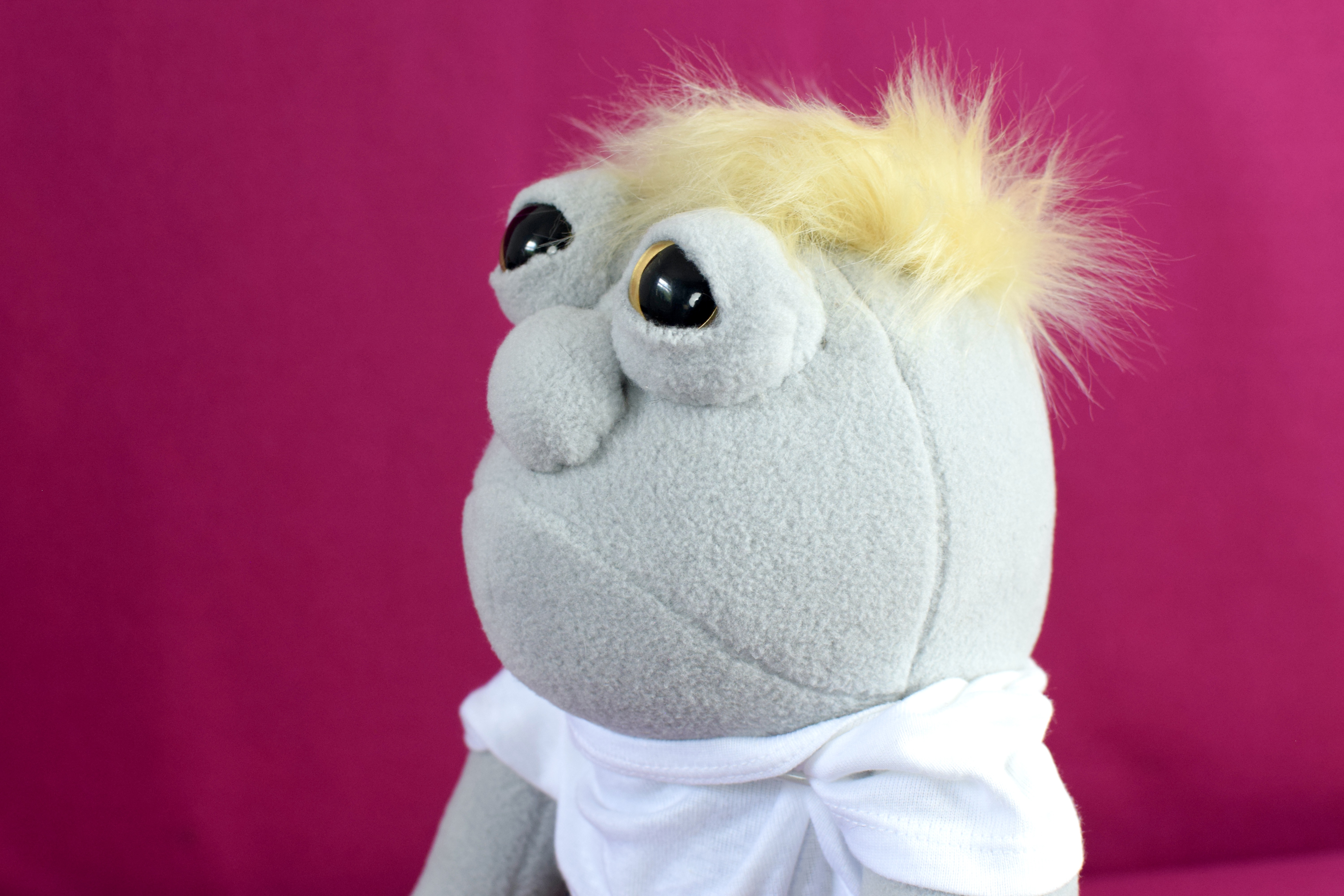
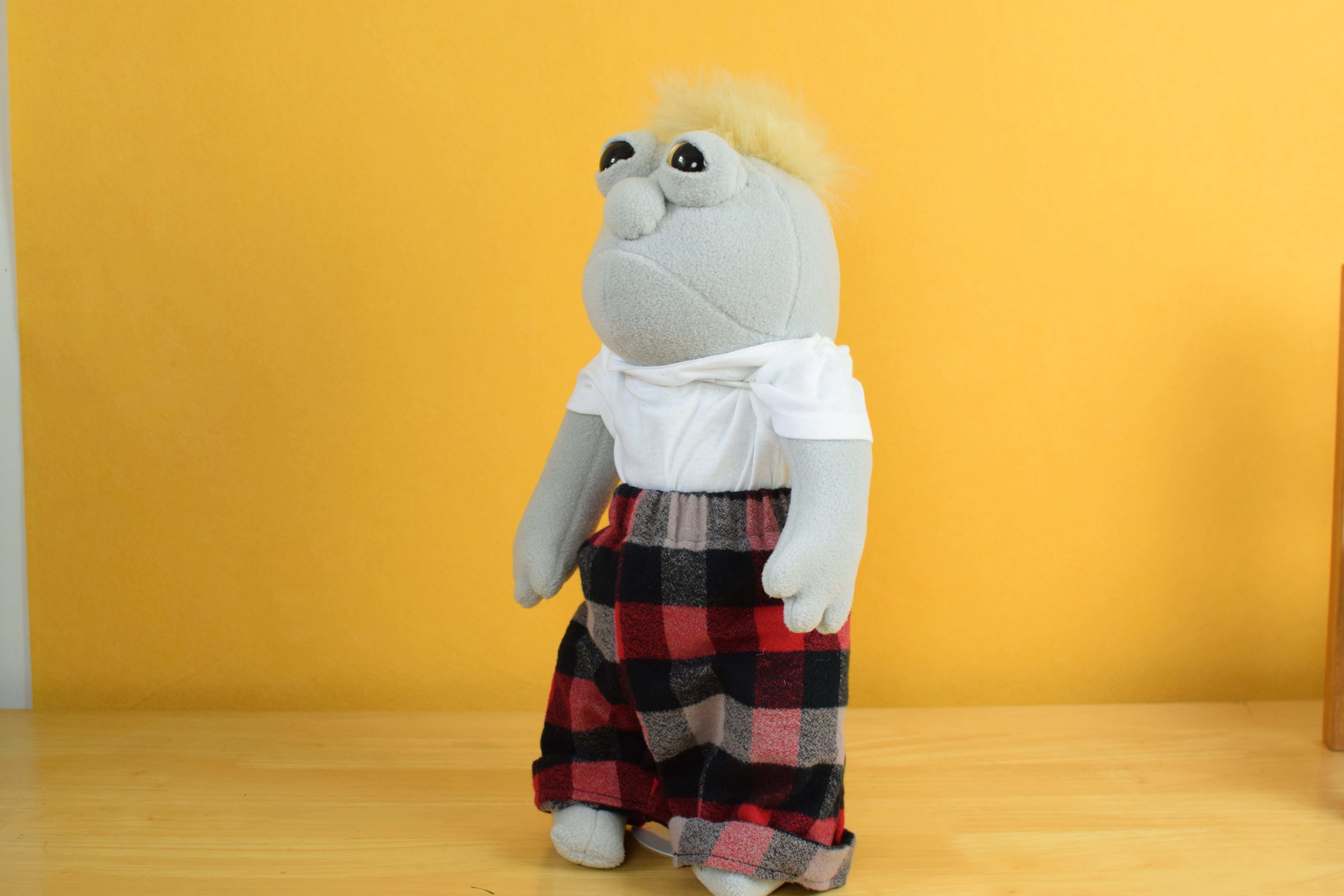
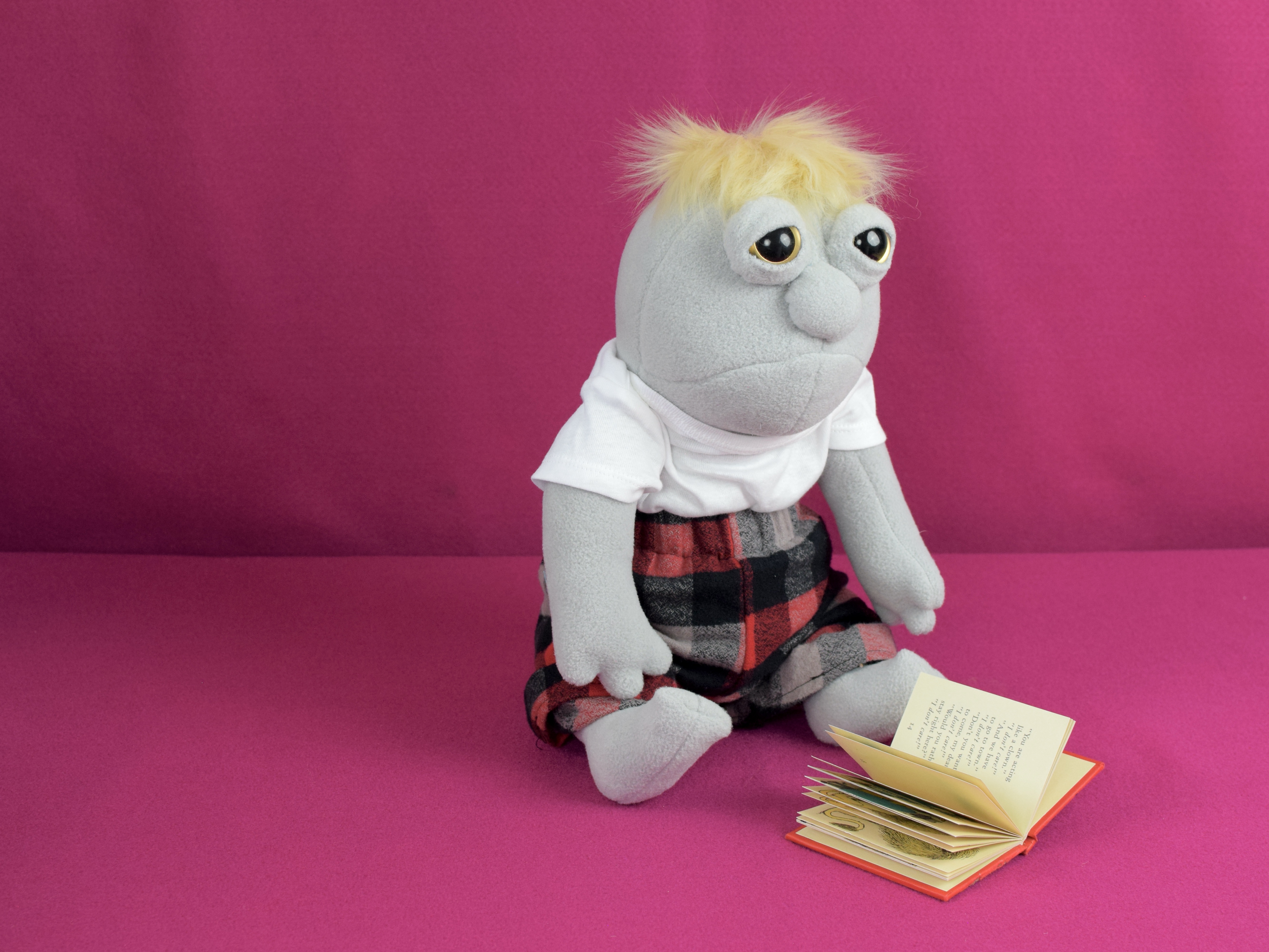
This is Harold, a sad little monster is one of the newest Way Home Creature Nursery babies. He has the same pouty expression as some of my others–but Harold is a little extra melancholy. As I’ve said before, I try to embrace all emotions, so instead of trying to cheer him up, we just let him feel whatever he feels.
This monster doesn’t like to draw attention to himself so he’s most comfortable in these understated yet high quality pajama type pants and a simple white onesie (but, I saw him looking longingly over my shoulder at some loud and bright baby pajamas on my phone, so I’d bet that, once settled into his new home and away from the competition of the other creature babies, he might like some more colorful duds).
Harold will be available for adoption soon–be sure to sign up for my mailing list so that you can get all of the details about the release date!
It isn’t difficult to understand the role that soft toys and dolls play in the lives of children. They help facilitate pretend play, offer a safe and neutral place to act out feelings and provide sensory comforts and companionship. Play is serious business for children and is integral to their development.
But what about adults? All of my customers have been adults who collect soft toys and dolls. My dolls have been considered art dolls, but they’re still soft and fun to hold and pose, which makes them different from a totally rigid doll that you would refrain from handling.
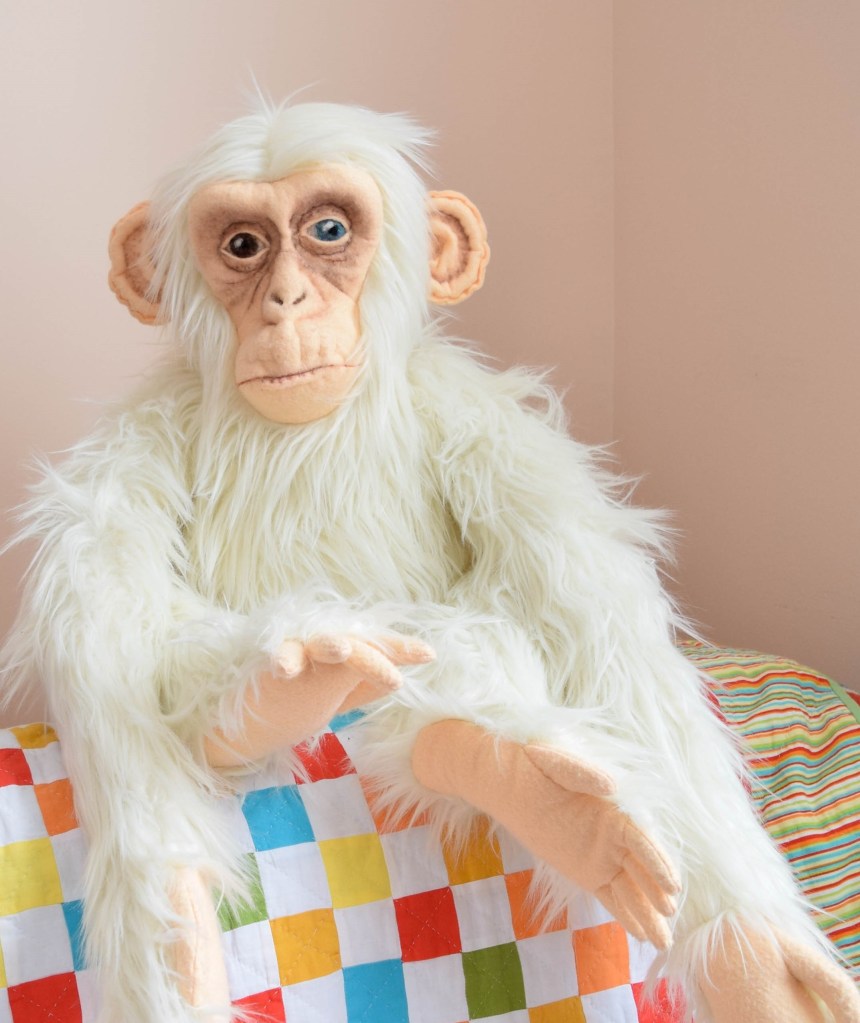
It turns out that there are many reasons adults may collect or just occasionally buy plush toys and cloth dolls. There are many very valid reasons that soft toys can be important for adults, too.
Sensory Comforts
Many adults have one or many plush that they choose for the sensory comfort of the materials and/or the way the doll feels when held or squeezed. This is something that is unique to cloth/textile soft toys as compared to vinyl or rigid sculpture toys. The weight/squish-ability of the toy may be sufficient for some, while others may enjoy a soft toy that has multiple textures. For example, my dolls have a soft body fabric, a hair fabric in a few different textural options and may have a knitted outfit which offers an entirely different tactile experience. We tend to associate the need for sensory stimulation with autistic people, who often enjoy “stimming” or taking sensory breaks, but many other adults also benefit from this. Adults are so often expected to work and thrive in environments (such as a typical office) which are utterly devoid of sensory enrichment when, in fact, such stimuli can help us to regulate and focus. As such, I hear people on Instagram constantly talking about bringing their dolls to work and sometimes actively advocating to reduce the stigma around what are typically considered “childish” objects in “adult” settings.
Play
Adults benefit from play, too! While their play may not be as imitative or exploratory as a child’s, it still engages a different part of the brain and introduces spontaneity and joy into adult life which all too often lacks those things. “Play” for an adult may be a little less colorful than for children and may simply be putting their dolls in funny outfits or taking pictures of their collections. This may seem odd to those who can’t relate, but consider the fact that many adults collect other objects, such as shoes, cars and bags. But adults also collect other toys that have been somewhat arbitrarily elevated to a more mature status (e.g. collectible figurines or antiques). Why? Perhaps if they’re worth more money and are more fragile, we can deem them appropriate toys for adults. Why can’t adults feel equally comfortable with toys that are actually meant to be played with?
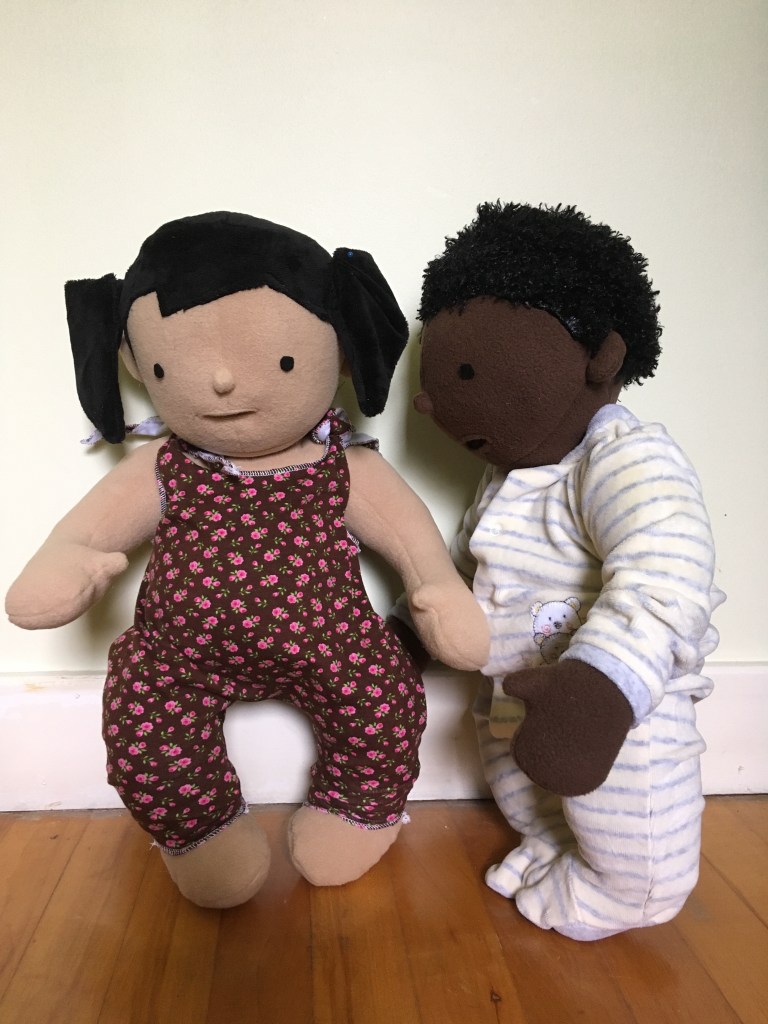
“Adults have been convinced, to our great detriment, that simply because we’ve stopped growing larger, we have stopped growing at all. But the expanse of your emotional life is never fully surveyed, and with a stuffie friend you are free to play in the uncharted space.” -Max Genecov
Trauma and Recovery
Unique from but related to the benefit of play for adults is the topic of trauma. Many adults have experienced trauma in some form. When Adverse Childhood Experiences (ACES) occur, one consequence may be a chronic “fight or flight” state of mind. Sadly, while play can be one of the most healing experiences for those who have experienced ACES, it’s also often overlooked as an offering to survivors in their healing journey. For adults in recovery from various childhood traumas, rediscovering toys and play which others may have had the benefit of enjoying as children can be part of the healing process. A customized handmade doll has even more potential to offer a powerful conduit to recovery. Adults in recovery from trauma may also benefit from the sensory relief as described above as a way of grounding and relaxing. For many adults who may not have had a stable home environment in which to keep and care for toys, the opportunity to pick out cherished items, with no risk of them being taken away or mistreated, may be highly comforting. A “do-over” of sorts.
Grief, loss and memory
Finally, I would be remiss if I didn’t point out the therapeutic role that dolls and plush can play in the process of grief and loss as well as issues such as Alzheimer’s. For mothers who have experienced miscarriages or who are unable to have children, dolls can be extremely comforting. For Alzheimer’s patients, dolls are often used as comforts and to trigger comforting memories. Many people will have customized plush made after the loss of a beloved pet.
All of this being said, you don’t need to have a trauma history, autism or a recent loss to rationalize your love for plush and dolls. It’s not only okay, but more common than most people realize for adults to play with dolls and plush. If you don’t believe me, simply reference (just for starters) the following information from this article: 43 percent of adults still engage with a stuffed animal. 84 percent of men, and 77 percent of women own at least one!
Further reading:
New York Times articles:
https://www.nytimes.com/2018/12/20/reader-center/adults-with-stuffed-animals.html
Both these dolls were some of my early experiments in soft toy making.
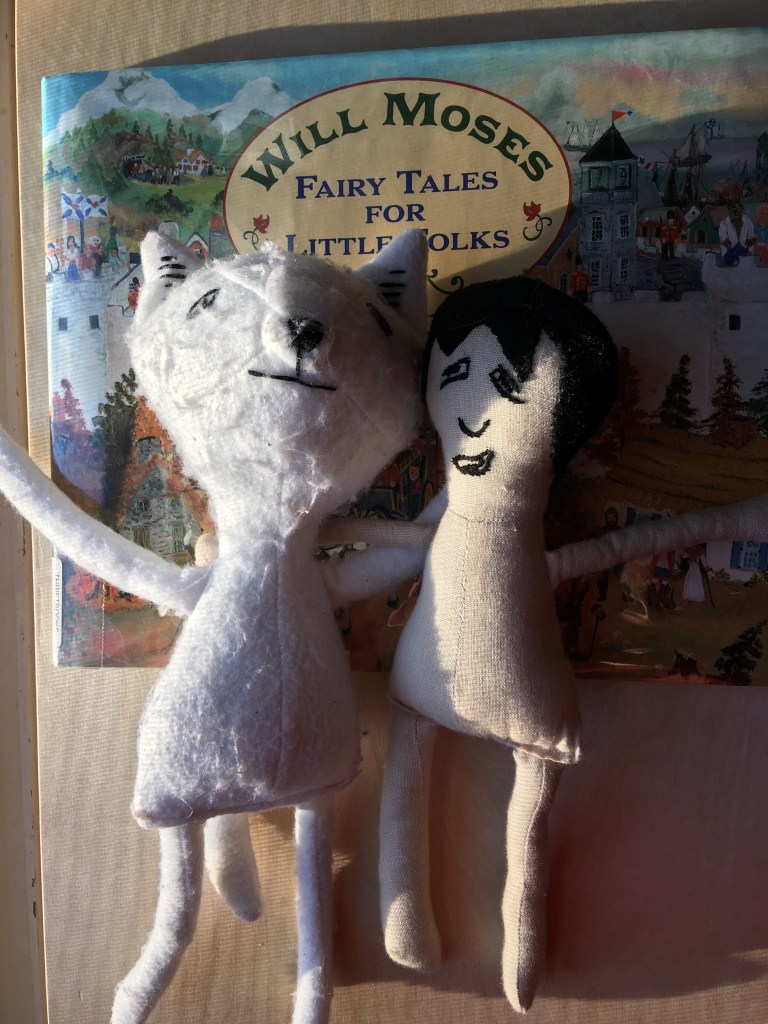
I’m happy with the fox, but I made him in super cheap polyester felt because I didn’t want to spend a lot of money on nice materials for my prototype. So, he hasn’t worn very well and has a lot of pilling. I named him Gary the Arctic fox and made up a jingle: “He’s the Arctic Fox with nary a care, cuz it’s Gary O’Clock somewhere.” My husband added another verse: “Time stops for no man, but the clocks point to this fox.”

I’m also happy with this human doll pattern and its hair, but the face is obviously a total disaster. There are so many problems with the embroidery I’m not even sure where to start. So it’s a pretty strange doll. It looks flustered.
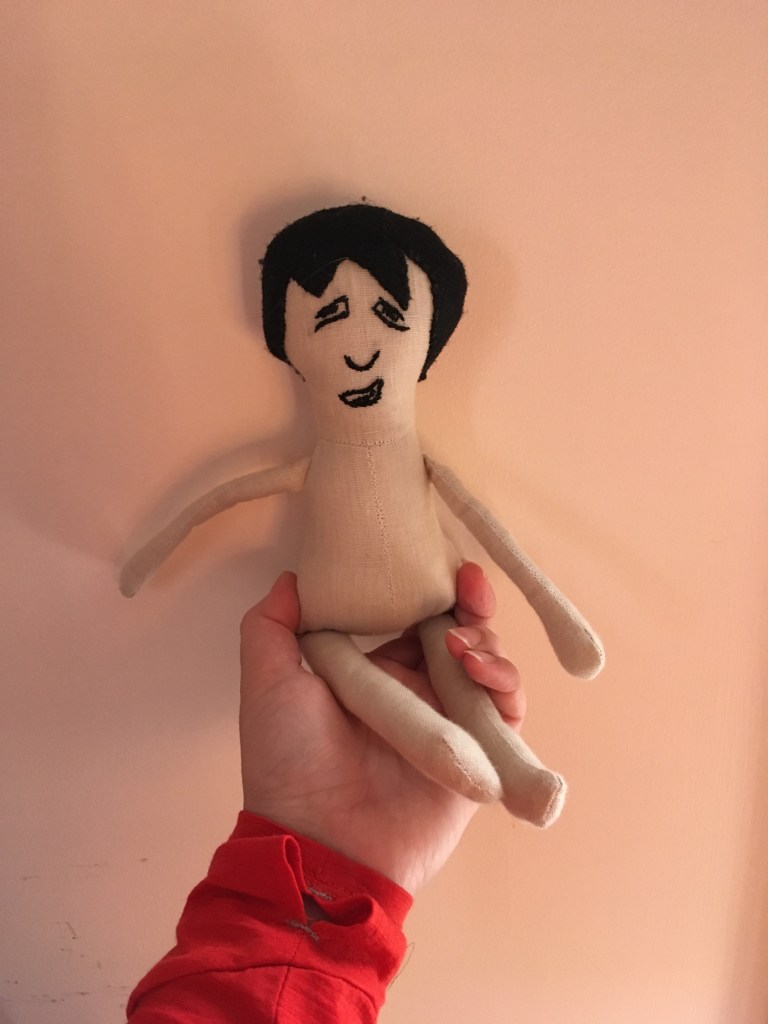
Anyway, both dolls were helpful to test out my patterns and then I sort of tossed them in the toybox. But recently they’ve both been getting a lot of use from my three-year-old.
As I watch her play, I realize that a major reason she likes them so much is that their legs and arms move. One of her favorite games is to make them “walk” along the edge of the couch and then fall to their death (and then, spring back to life and claw their way back up the couch ala The Exorcist).
It’s also easy to hold them with one hand and manipulate the arms in different ways–to clap, wave, shake, etc. Because the arms and legs are stuffed so firmly yet attached so that they’re floppy, they’re really fun to play with. They’re also supremely “fling-able” and fun to flick around by one arm.
My daughter could care less about their features or the poor felt quality. She isn’t bothered by their nakedness. Other children with finer tastes might feel differently. But it’s been an interesting lesson for me in terms of function and beauty being in the eyes of the beholder.
Adult dollmakers often make very fussy, fancy dolls. Dolls that, at 12″, have wardrobes that definitely cost more than mine (we’re talking Liberty of London fabric and mohair sweaters…). These dolls are beautiful and swoon-worthy but there’s something to be said about a doll that really only serves the child, like these little weirdos.
I’d like to make some more of these simple rag dolls. I do think they need clothing, but it doesn’t have to be fancy.
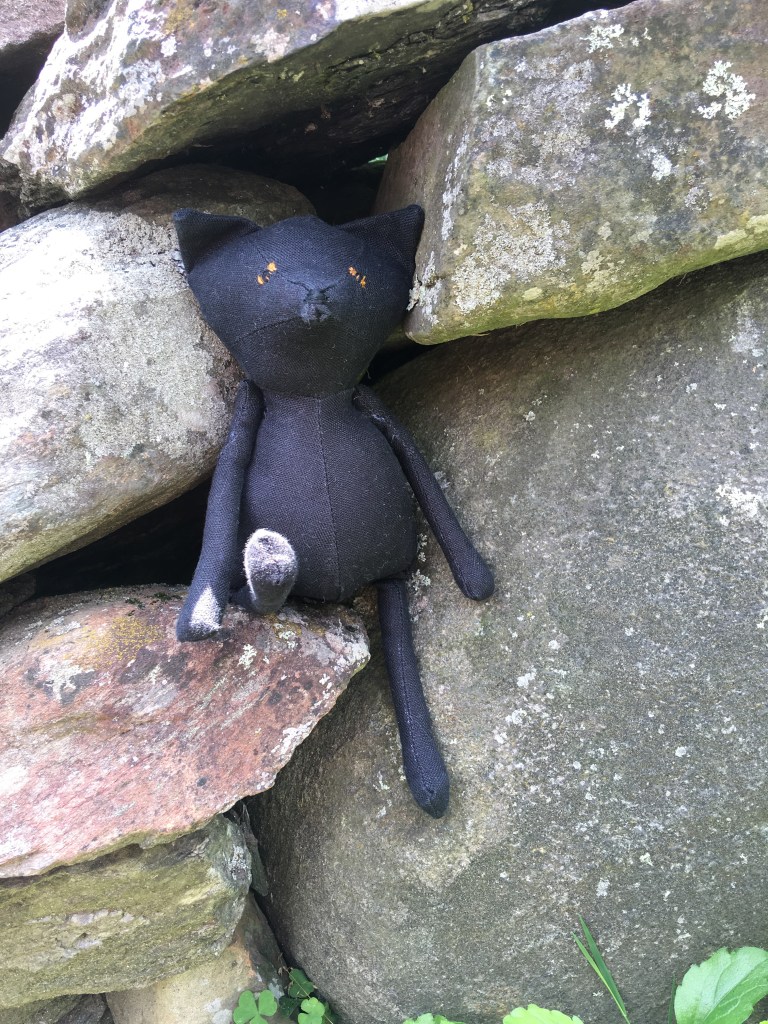
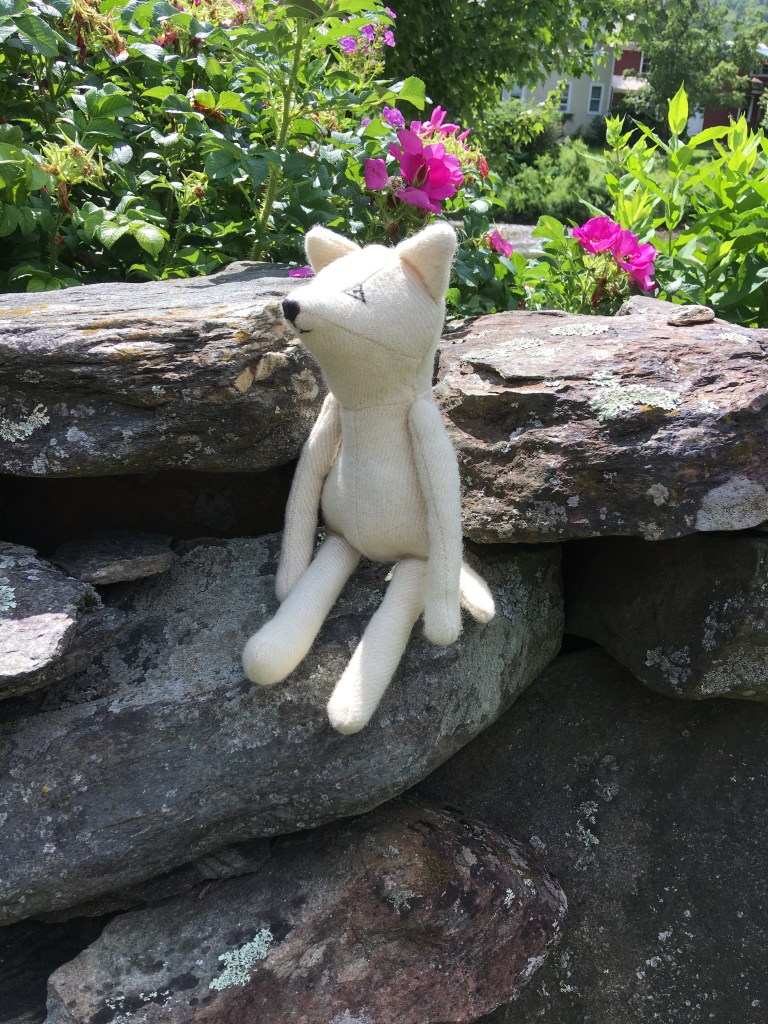
Here are some of Gary’s fox doll cousins (Terry and Larry), in (left) linen and (right) up-cycled wool fabric.
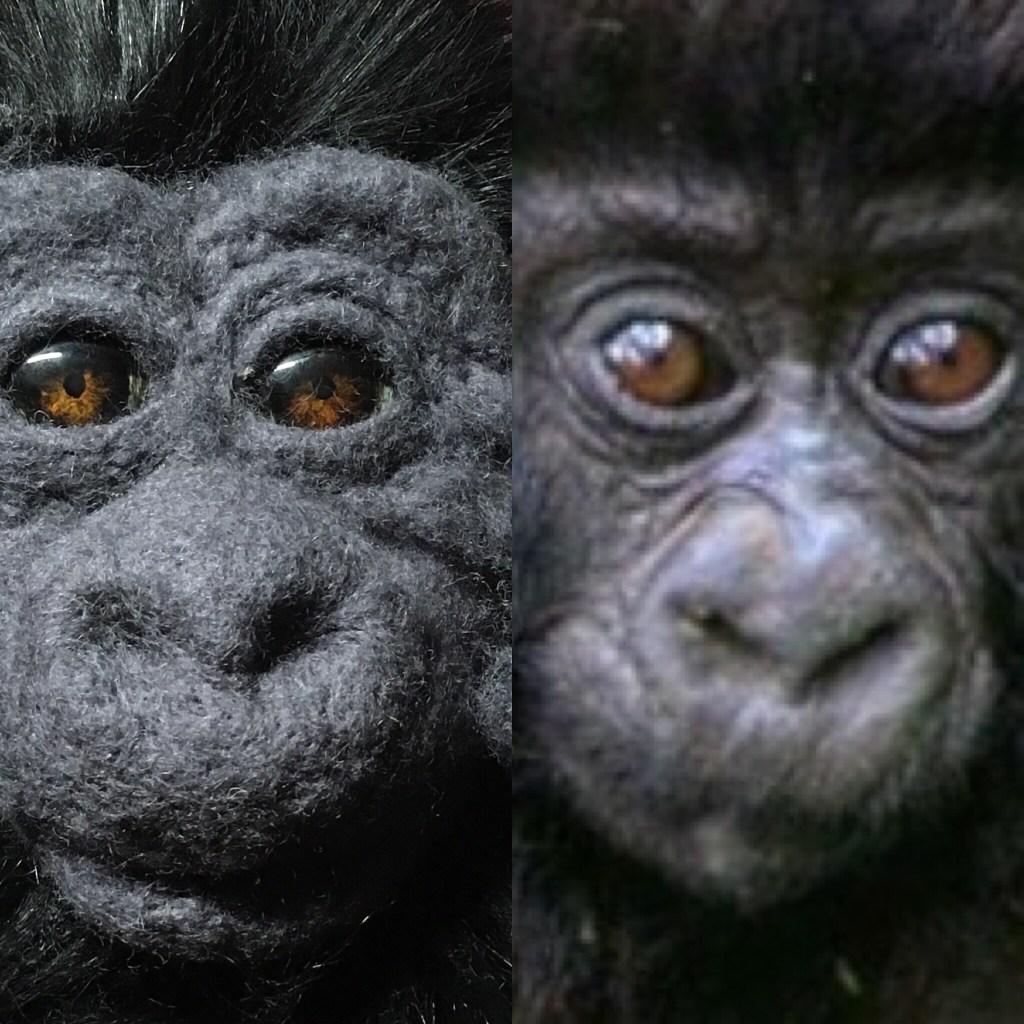
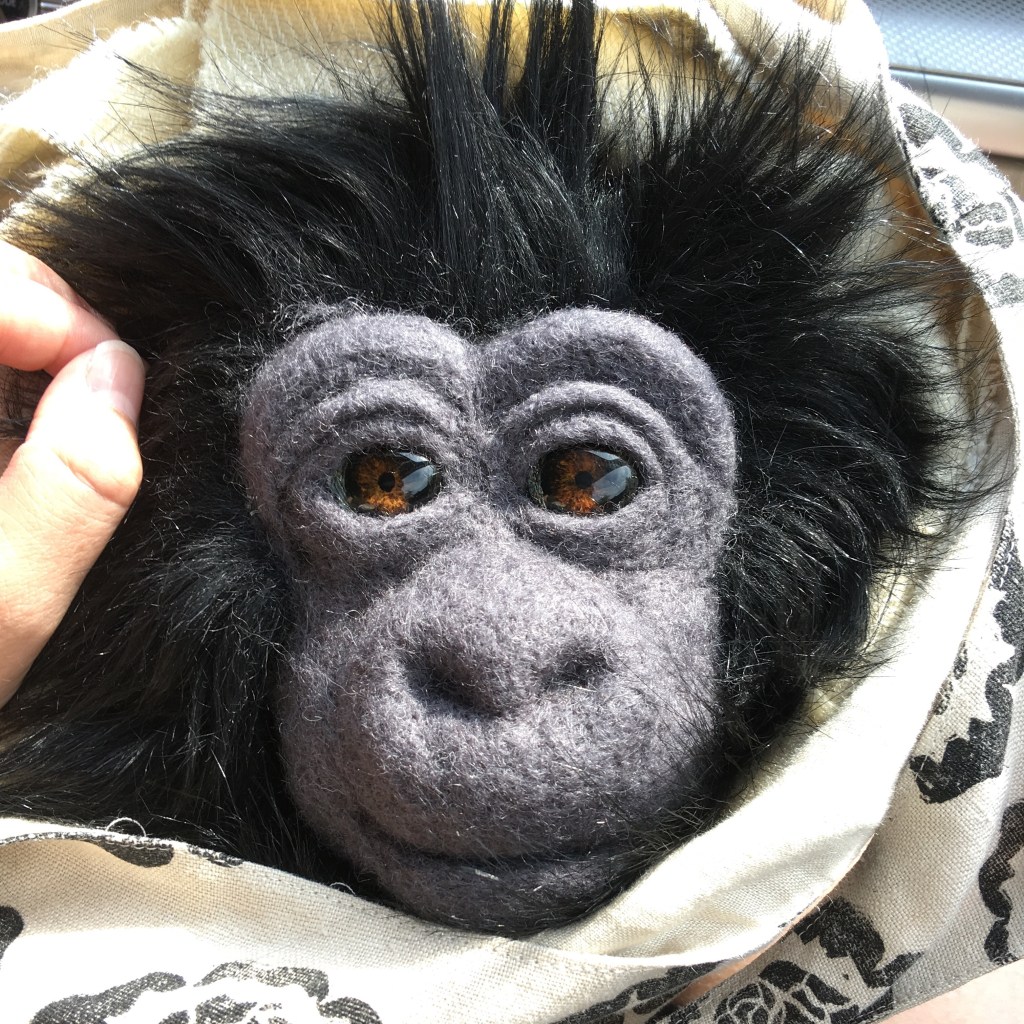
I’ve been working on this sweet baby mountain gorilla. He’s made in the same basic style as my other needle felted and plush apes, but with fabric hands and feet. I also put a new kind of armature in him that I’ve not used before. It makes him totally pose-able which is ever so fun! He’s not quite finished, but I couldn’t wait to share.
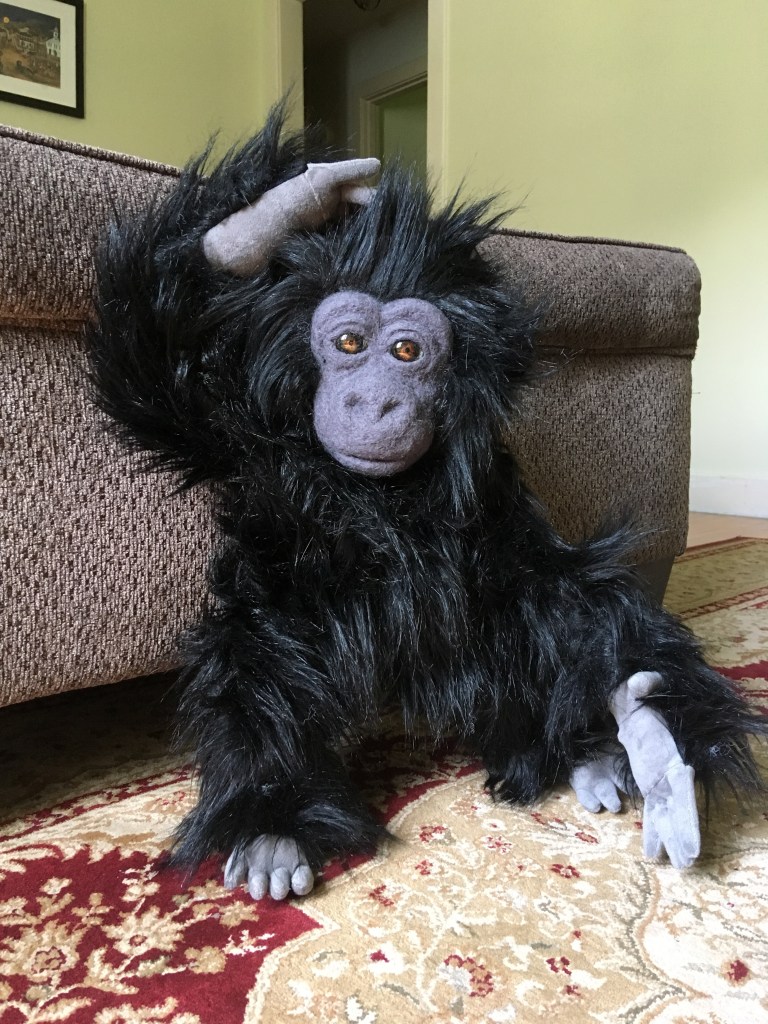
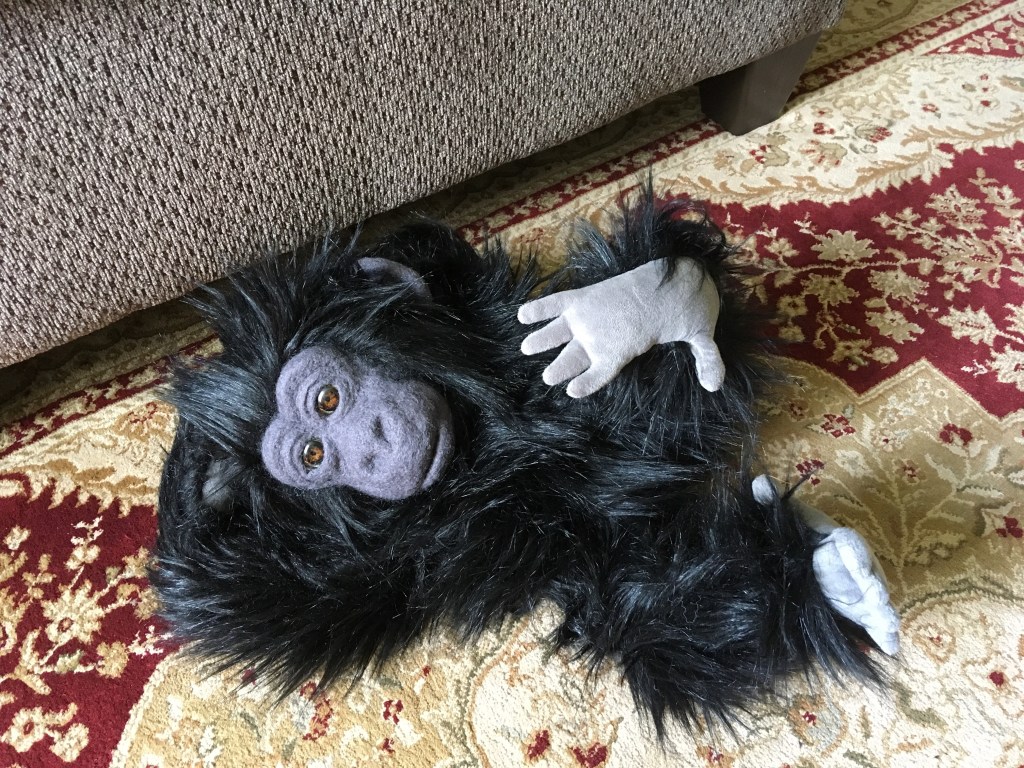
He is about 18-20″ tall from head to foot. When he is finished and available to purchase, I will send updated photos and purchase information to the mailing list. I am not taking reserves or pre-orders for him, but subscribers will be the first ones given an opportunity to buy!
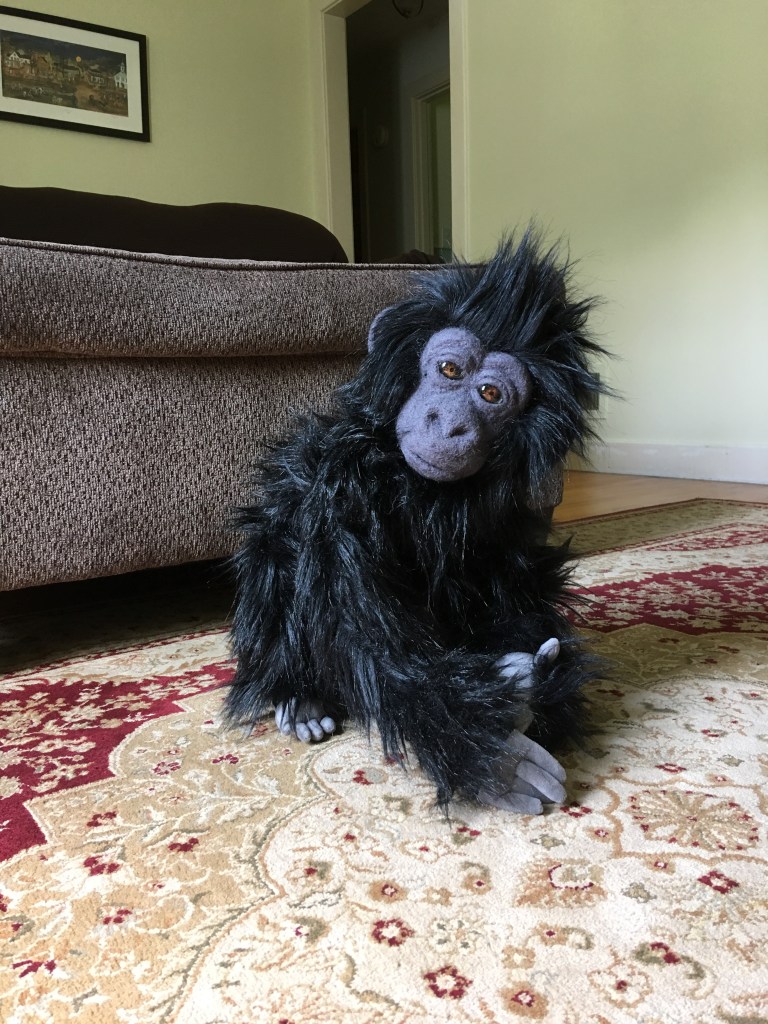
Next on my list after this gorilla baby is another ape in the same style–either an albino gorilla, albino chimp or albino orangutan–I can’t decide!
 Way Home Art