Adults Who Collect and Enjoy Soft Toys

Soft Toys and Dolls Discussion

It isn’t difficult to understand the role that soft toys and dolls play in the lives of children. They help facilitate pretend play, offer a safe and neutral place to act out feelings and provide sensory comforts and companionship. Play is serious business for children and is integral to their development.

But what about adults? All of my customers have been adults who collect soft toys and dolls. My dolls have been considered art dolls, but they’re still soft and fun to hold and pose, which makes them different from a totally rigid doll that you would refrain from handling.
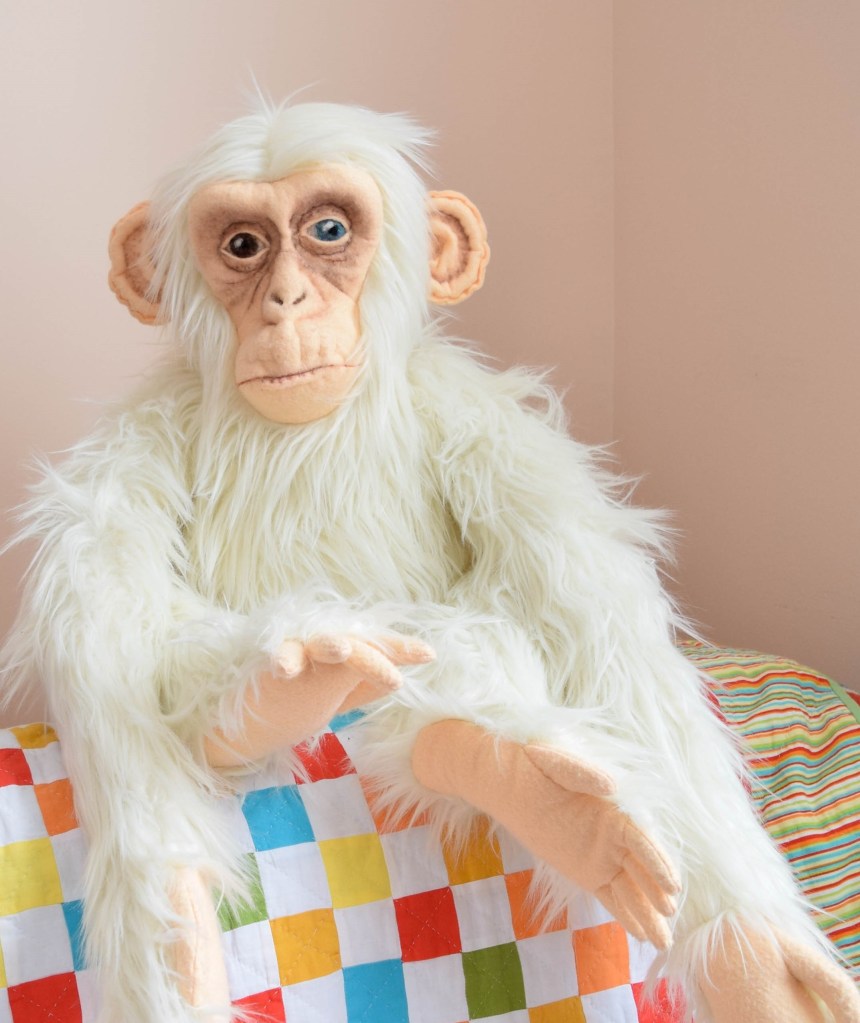
An older creation of mine, Pinky the chimpanzee


It turns out that there are many reasons adults may collect or just occasionally buy plush toys and cloth dolls. There are many very valid reasons that soft toys can be important for adults, too.

Sensory Comforts

Many adults have one or many plush that they choose for the sensory comfort of the materials and/or the way the doll feels when held or squeezed. This is something that is unique to cloth/textile soft toys as compared to vinyl or rigid sculpture toys. The weight/squish-ability of the toy may be sufficient for some, while others may enjoy a soft toy that has multiple textures. For example, my dolls have a soft body fabric, a hair fabric in a few different textural options and may have a knitted outfit which offers an entirely different tactile experience. We tend to associate the need for sensory stimulation with autistic people, who often enjoy “stimming” or taking sensory breaks, but many other adults also benefit from this. Adults are so often expected to work and thrive in environments (such as a typical office) which are utterly devoid of sensory enrichment when, in fact, such stimuli can help us to regulate and focus. As such, I hear people on Instagram constantly talking about bringing their dolls to work and sometimes actively advocating to reduce the stigma around what are typically considered “childish” objects in “adult” settings.

Play

Adults benefit from play, too! While their play may not be as imitative or exploratory as a child’s, it still engages a different part of the brain and introduces spontaneity and joy into adult life which all too often lacks those things. “Play” for an adult may be a little less colorful than for children and may simply be putting their dolls in funny outfits or taking pictures of their collections. This may seem odd to those who can’t relate, but consider the fact that many adults collect other objects, such as shoes, cars and bags. But adults also collect other toys that have been somewhat arbitrarily elevated to a more mature status (e.g. collectible figurines or antiques). Why? Perhaps if they’re worth more money and are more fragile, we can deem them appropriate toys for adults. Why can’t adults feel equally comfortable with toys that are actually meant to be played with?

“Adults have been convinced, to our great detriment, that simply because we’ve stopped growing larger, we have stopped growing at all. But the expanse of your emotional life is never fully surveyed, and with a stuffie friend you are free to play in the uncharted space.” -Max Genecov 
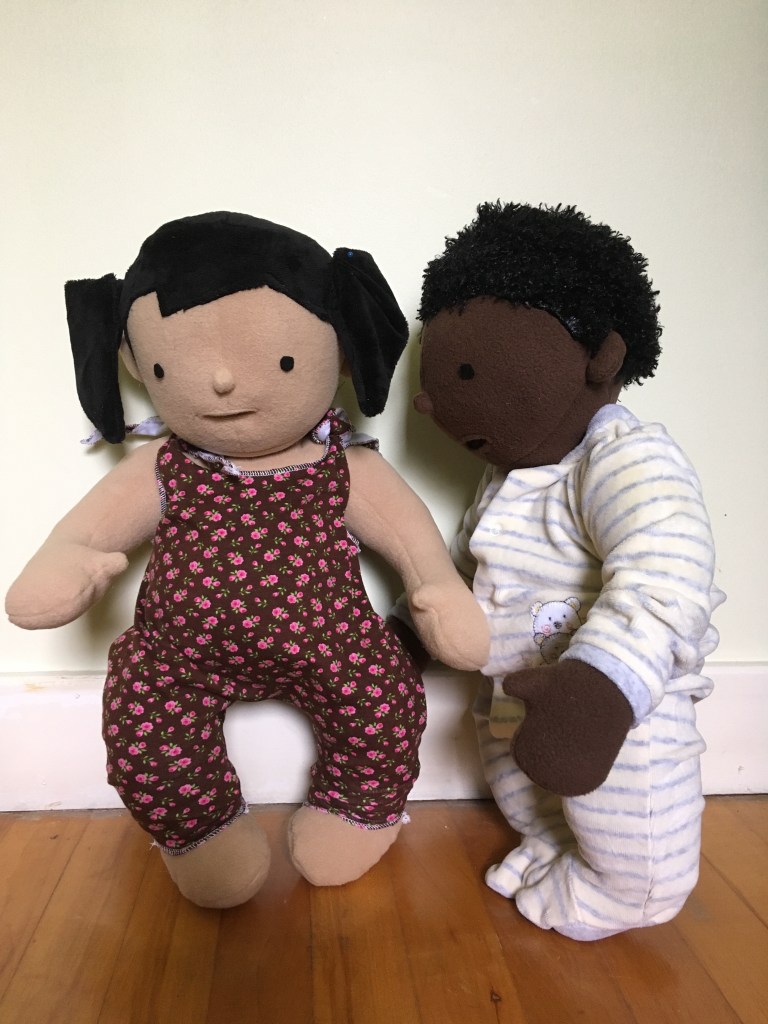
Two Everybuddies having a chat


Trauma and Recovery

Unique from but related to the benefit of play for adults is the topic of trauma. Many adults have experienced trauma in some form. When Adverse Childhood Experiences (ACES) occur, one consequence may be a chronic “fight or flight” state of mind.  Sadly, while play can be one of the most healing experiences for those who have experienced ACES, it’s also often overlooked as an offering to survivors in their healing journey. For adults in recovery from various childhood traumas, rediscovering toys and play which others may have had the benefit of enjoying as children can be part of the healing process. A customized handmade doll has even more potential to offer a powerful conduit to recovery. Adults in recovery from trauma may also benefit from the sensory relief as described above as a way of grounding and relaxing. For many adults who may not have had a stable home environment in which to keep and care for toys, the opportunity to pick out cherished items, with no risk of them being taken away or mistreated, may be highly comforting. A “do-over” of sorts.

Grief, loss and memory

Finally, I would be remiss if I didn’t point out the therapeutic role that dolls and plush can play in the process of grief and loss as well as issues such as Alzheimer’s. For mothers who have experienced miscarriages or who are unable to have children, dolls can be extremely comforting. For Alzheimer’s patients, dolls are often used as comforts and to trigger comforting memories. Many people will have customized plush made after the loss of a beloved pet.

All of this being said, you don’t need to have a trauma history, autism or a recent loss to rationalize your love for plush and dolls. It’s not only okay, but more common than most people realize for adults to play with dolls and plush. If you don’t believe me, simply reference (just for starters) the following information from this article: 43 percent of adults still engage with a stuffed animal. 84 percent of men, and 77 percent of women own at least one!

Further reading:

New York Times articles:

https://www.nytimes.com/2018/12/13/magazine/letter-of-recommendation-stuffed-animals.html?module=inline


https://www.nytimes.com/2018/12/20/reader-center/adults-with-stuffed-animals.html
Soft toys and dolls for autistic children: design considerations and the question of representation

Soft Toys and Dolls Discussion

Edit, 10/25/19: Since publishing this post, I have been more exposed to actual autistic accounts and, in re-reading this, am aware of my ableist/allistic tone in terms of my assumptions about play needing to be a means to an end (neurotypical-like socializing) and the assumption that the play relates back to meaning-making of social interactions. That is, my daughter and other autistic kids can and will use toys however they wish and we can’t try to understand their play from within a neurotypical framework.

I love soft toys and dolls, so I really looked forward to being able to buy a lot of them for my daughter, and joining her in playing with them. Leading up to my daughter receiving her autism diagnosis, when she was around two, we noticed that she wasn’t really doing pretend play. Since then, she actually has started to do more pretend play with dolls and exhibits some nurturing behaviors with her stuffed animals. She often recites conversations she’s heard during the day with her toys (this is echolalia). She has also been handing us the monkey puppet and saying, “my turn with the monkey” which translates to, “I want you to use the monkey” [to interact with whatever toy she’s holding].

Although she still doesn’t engage with baby dolls or soft toys exactly the same way other kids her age might, I believe that they play an important role for her. In fact, I think they may even be more important to her social development than they would be to a neurotypical kid; they provide a safe and neutral way for her to make sense of the communication she’s trying to figure out in her every day life. She needs this extra “practice” with reciprocity and interaction. I, of course, am always ready to join her and have tried to see it the way she does rather than through my old ideas about play.

I recently found myself thinking about soft toys and neurodiverse children. For my daughter, as mentioned above, they have emerging importance and usefulness in practicing or rehearsing communication exchanges. I also think they have sensory value. I think she finds it reassuring to carry around different toys, especially if they can be easily held with one hand. I also think she enjoys the soft feel, but she doesn’t seem partial to certain types of fabric. I do notice that she seems to enjoy those with limbs that are easy to fling around. 

What would a soft toy designer want to keep in mind if designing for autistic children or adults? I have tried researching the topic and surprisingly little has come up.  One mother found an Ask Amy doll for her daughter which, while pretty standard in appearance, is an interactive doll and helped her daughter learn a lot of new skills. This, of course, is not a soft toy at all.  The appearance and feel of the doll took a back seat to its technological offerings.  There’s Lulladoll which isn’t that interesting in terms of design, but it mimics a heart beat and can be soothing for many children.  This Lottie Doll comes with glasses and headphones to help with overwhelming sensory stimuli. The inspiration for this doll was “a little boy with a passion for all things space-related, who just happens to be autistic.” And there is the soft doll version of the Sesame Street character Julia who is autistic. In this case, the connection to autism is really just limited to the character and autism doesn’t appear to have been a consideration in the design (read this review –I concur with the author’s opinion).

Otherwise, when you search for autism doll, you often get an American Girl-looking doll with clothing that’s made of puzzle piece fabric. If you haven’t already picked up on this, the presence of autism in the doll making and soft toy world seems limited to: 1) a very literal representation of (one) autistic child, 2) a toy that has high sensory value–almost like a baby toy– which sort of takes away from its identity as a doll, 3) something that’s almost like a robot, or 4) a doll covered in puzzle piece fabric. As expected, companies seem interested in claiming that they have something to offer autistic kids, but the results are disappointing to me. The Lottie Doll seems successful, but only for kids who happen to identify with the one individual it was inspired by.

The Lottie Doll example leads us to the crux of the issue: if autism is a spectrum–nay, a three-dimensional color wheel–where each child has a unique constellation of preferences and characteristics, can you design “for” them? Even more so than other disabilities, autism is difficult to identify by particular features or characteristics that can translate to certain accessories or looks (e.g. deaf children with a hearing aid or cochlear implant). Besides, even with a disability that is associated with specific physical features, it isn’t necessarily that simple. There was a really interesting conversation in one of the doll making groups that I’m part of regarding the making of a cloth baby doll with Down Syndrome. One dollmaker said that she focused on customizing the dolls to have accessories or features that the children (recipients) themselves felt made them different–for example, thick glasses, surgery scars. She did not focus on giving them shorter necks or different eye shapes. She pointed out that those features are what others think of as being noticeable about the child with Down Syndrome, but not necessarily what feels representative to the child. She also mentioned changing certain things about the construction of the doll and their clothing to make them easier to handle for the children but also with different opportunities to develop motor skills (e.g. large buttons rather than Velcro).  This really comes down to a bigger discussion about representation and inclusivity. This is where the independent, handmade market really can meet the needs of (at least some) children in a way that the commercial industry cannot.

As for the sensory features, sizing, fabric choices and other functions of the doll, I wonder if that’s also too dependent on the individual’s preference or if there are general features that would be appealing to most autistic children and adults? Some might love a really soft and silky feeling material like minky, while for others that may be overwhelming. Some might like a heavily weighted doll. Some might like a bright, colorful, detailed face and others might like something more minimalist. Personally, I have my own extremely specific preferences when it comes to the design, expression, proportions and fabric choice of soft dolls and toys, which is why I started making them myself.

When considering designing for the neuro-diverse, taken-for-granted perspectives on play are up for debate. For example, Waldorf/Steiner-style dollmaking is all about a simple, almost blank face because they believe this encourages the child to come up with their own ideas about how the doll feels and to develop empathy and imagination. But, if the child already struggles with reading facial expressions and with pretend play, does this still hold true? Is a highly expressive, cartoony commercial doll actually better than a simple doll? The answer is likely not straightforward, but it’s an interesting question to consider.

Perhaps I’ve already made it too complicated. This article is about a young adult with autism who carries his stuffed bear everywhere as a comfort object. In this case, the value of the bear probably has little to do with its design. It’s just a simple, classic plush friend: easy to form an attachment do, inherently comforting and with great power to help cope with daily stressors, simply because it is a soft toy.

Unlikely Favorites

Soft Toys and Dolls Discussion

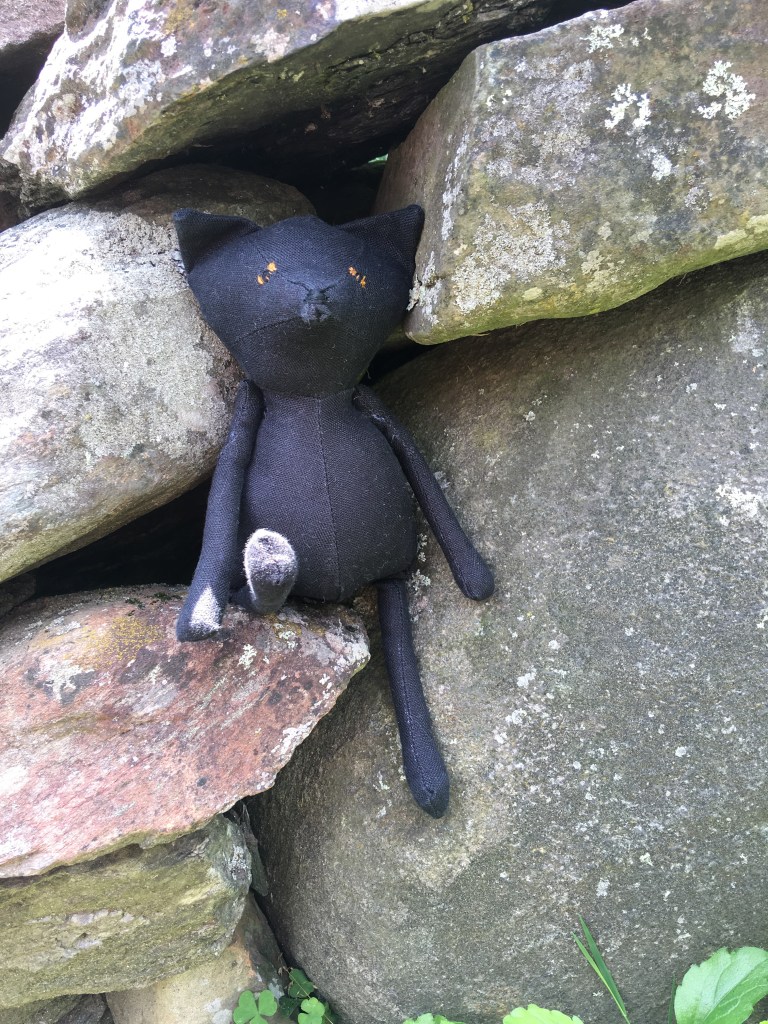
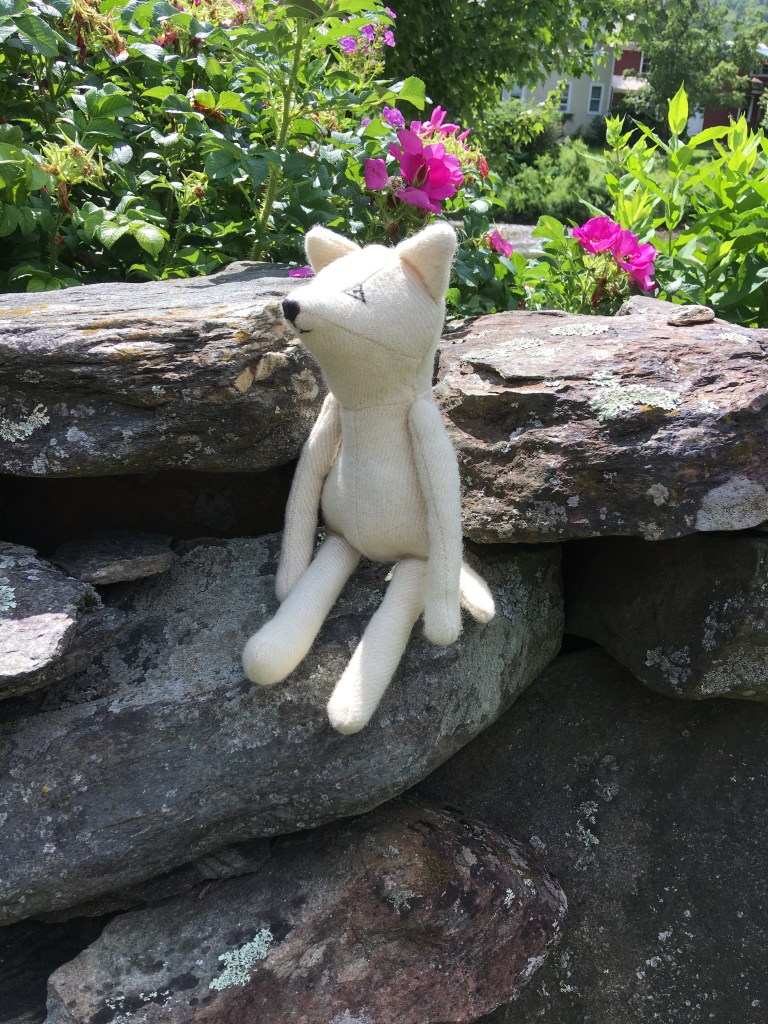
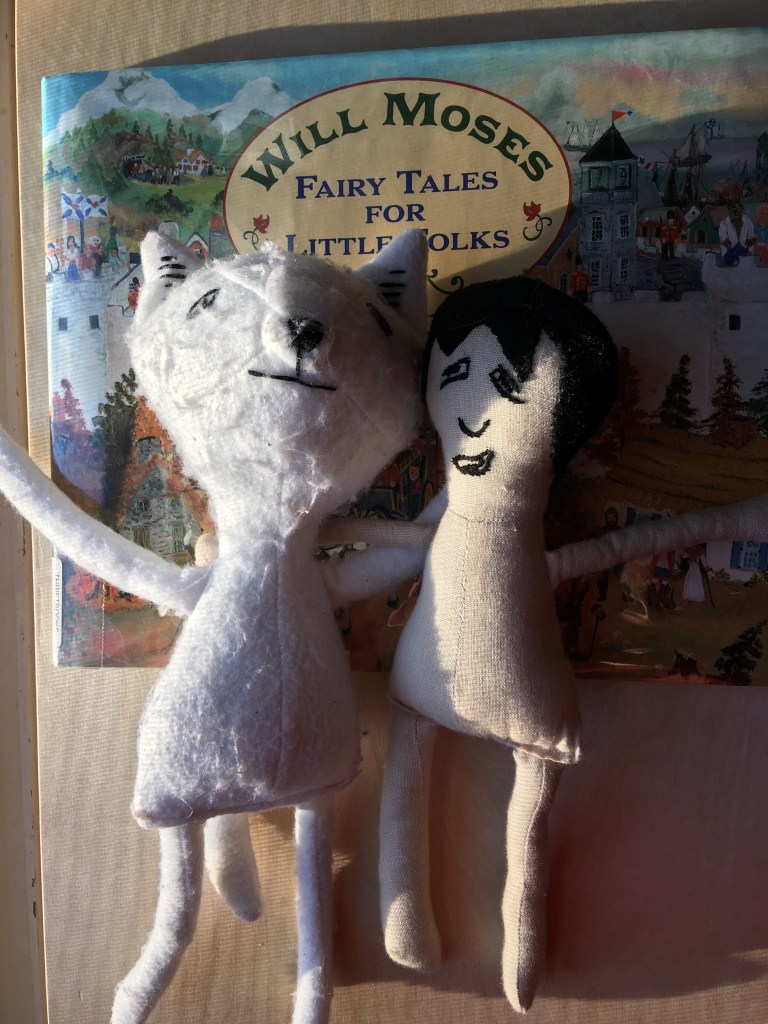
Both these dolls were some of my early experiments in soft toy making.

I’m happy with the fox, but I made him in super cheap polyester felt because I didn’t want to spend a lot of money on nice materials for my prototype. So, he hasn’t worn very well and has a lot of pilling. I named him Gary the Arctic fox and made up a jingle: “He’s the Arctic Fox with nary a care, cuz it’s Gary O’Clock somewhere.” My husband added another verse: “Time stops for no man, but the clocks point to this fox.”

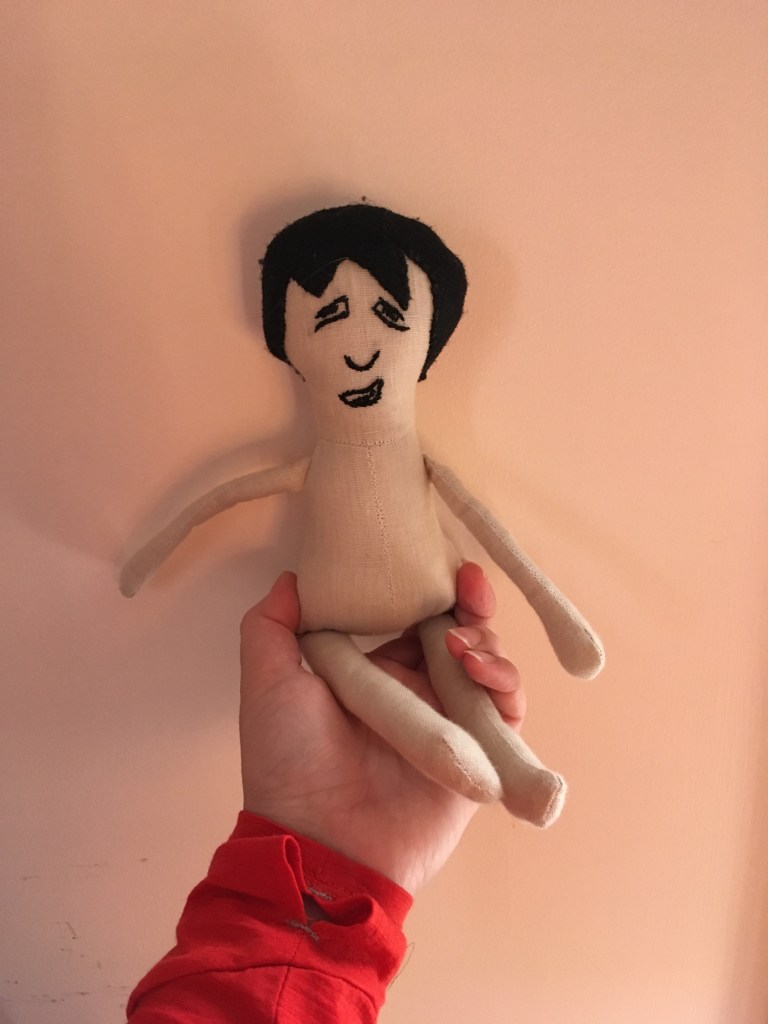
I’m also happy with this human doll pattern and its hair, but the face is obviously a total disaster. There are so many problems with the embroidery I’m not even sure where to start. So it’s a pretty strange doll. It looks flustered.

Anyway, both dolls were helpful to test out my patterns and then I sort of tossed them in the toybox. But recently they’ve both been getting a lot of use from my three-year-old.

As I watch her play, I realize that a major reason she likes them so much is that their legs and arms move. One of her favorite games is to make them “walk” along the edge of the couch and then fall to their death (and then, spring back to life and claw their way back up the couch ala The Exorcist).

It’s also easy to hold them with one hand and manipulate the arms in different ways–to clap, wave, shake, etc. Because the arms and legs are stuffed so firmly yet attached so that they’re floppy, they’re really fun to play with. They’re also supremely “fling-able” and fun to flick around by one arm.

My daughter could care less about their features or the poor felt quality. She isn’t bothered by their nakedness. Other children with finer tastes might feel differently. But it’s been an interesting lesson for me in terms of function and beauty being in the eyes of the beholder.

Adult dollmakers often make very fussy, fancy dolls. Dolls that, at 12″, have wardrobes that definitely cost more than mine (we’re talking Liberty of London fabric and mohair sweaters…). These dolls are beautiful and swoon-worthy but there’s something to be said about a doll that really only serves the child, like these little weirdos.

I’d like to make some more of these simple rag dolls. I do think they need clothing, but it doesn’t have to be fancy.

Here are some of Gary’s fox doll cousins (Terry and Larry), in (left) linen and (right) up-cycled wool fabric.

Bear in the Woods

Artwork

I periodically get to thinking about bears a lot. My husband and I actually saw one bounding across the road recently and I have a novel I’ve been working on for ten years that features bears as well.

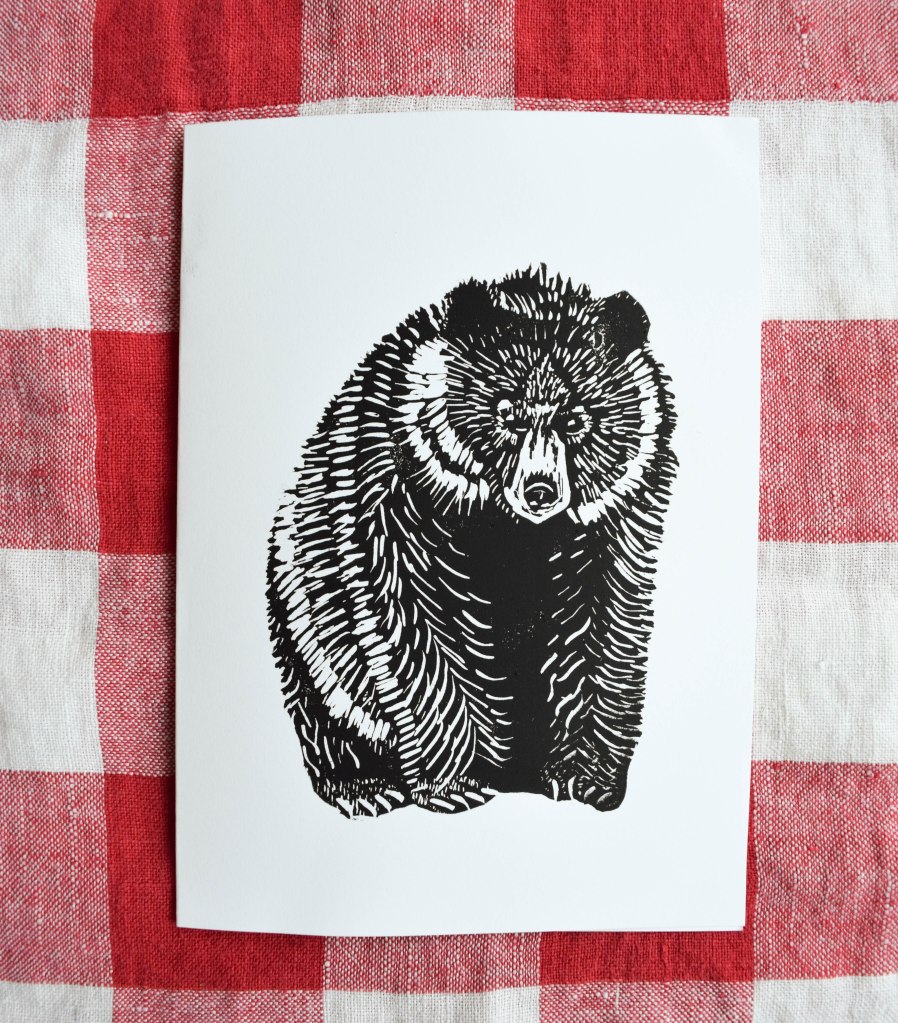
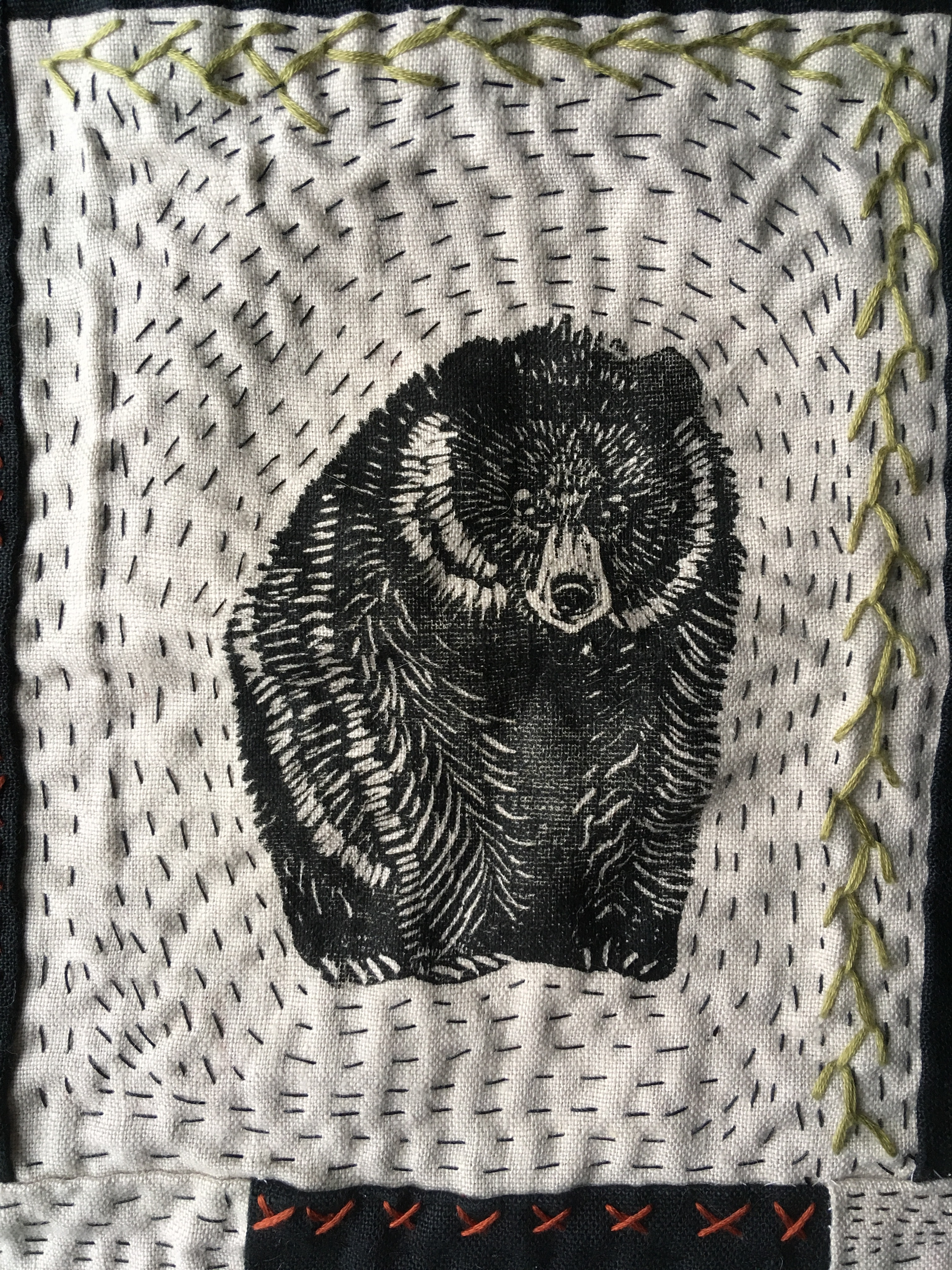
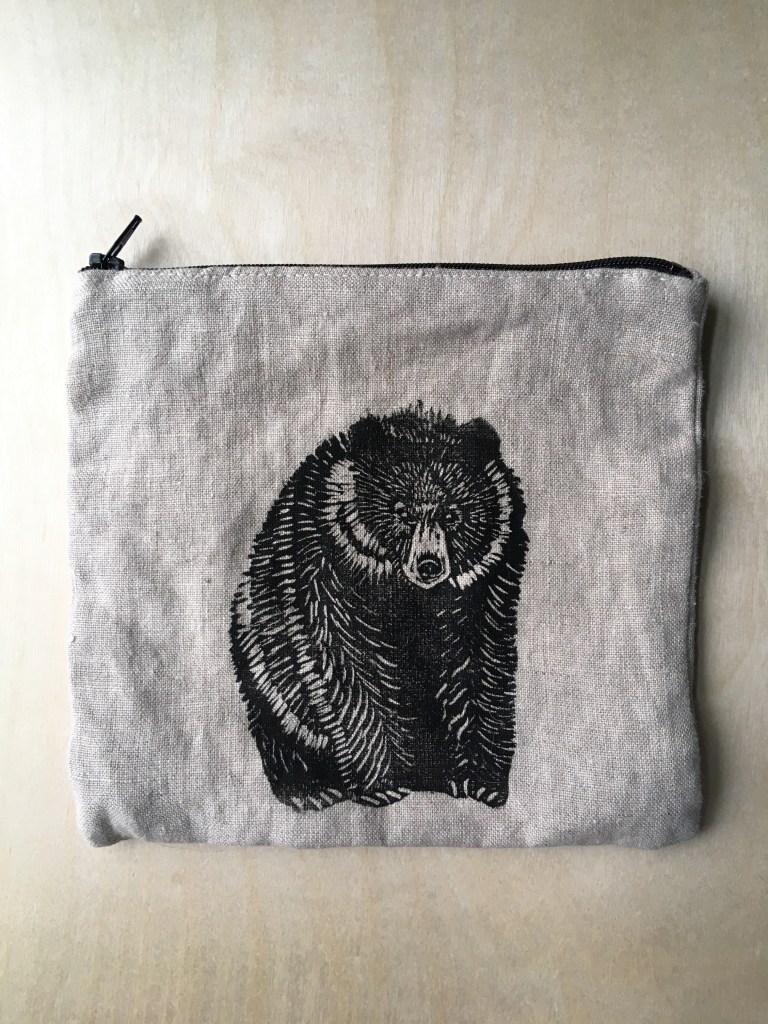
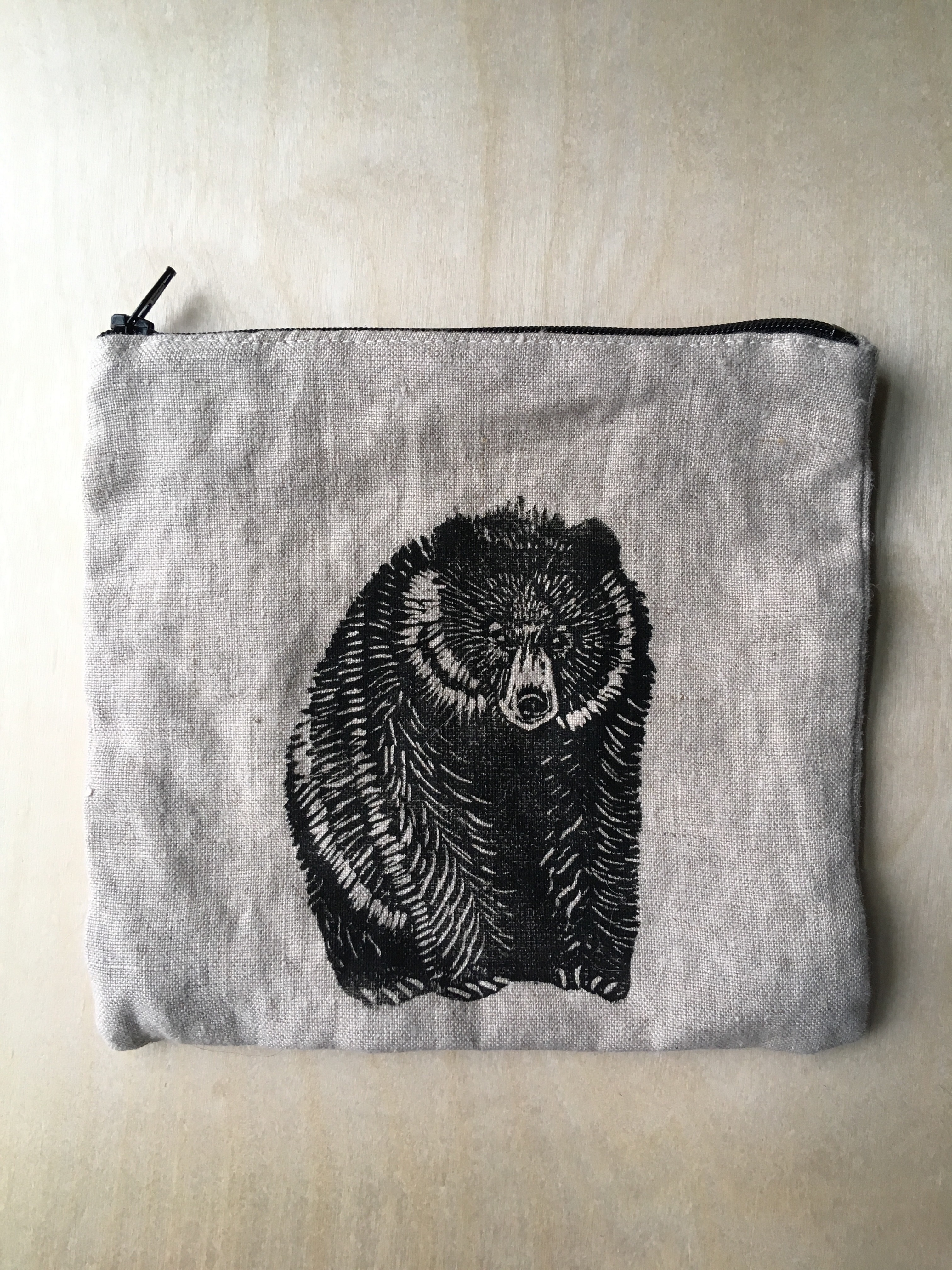
After my daughter was born I did a lot of hand-carved linocuts and block prints. This particular bear was one of my favorites and I printed it many times on many different surfaces.

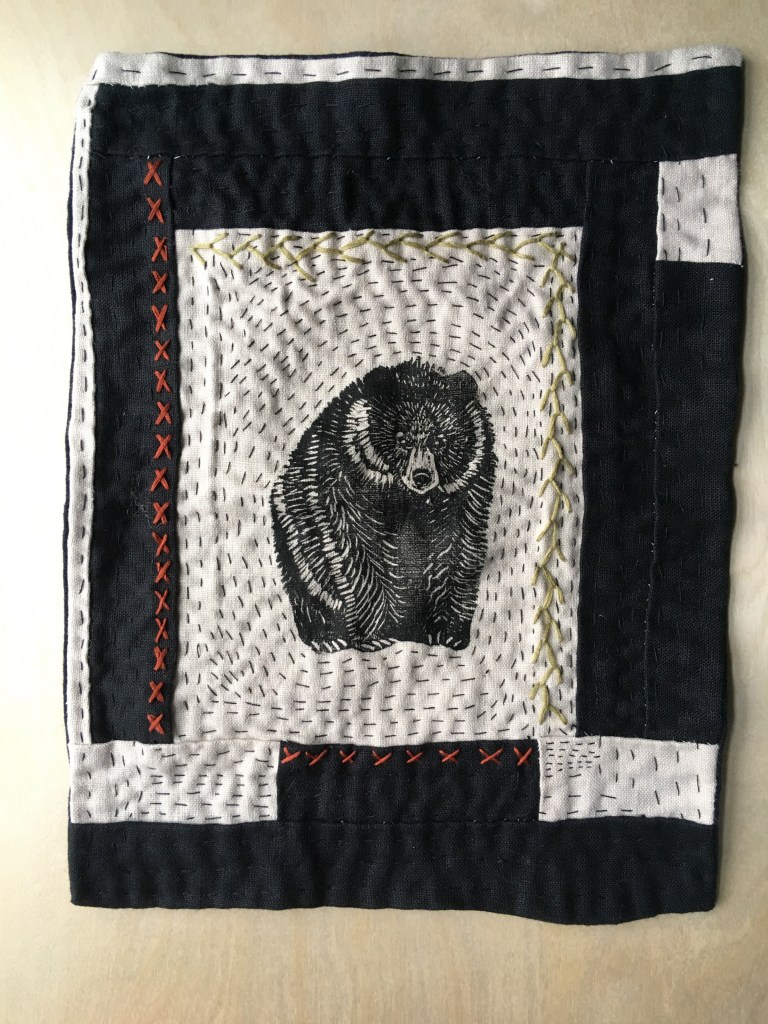
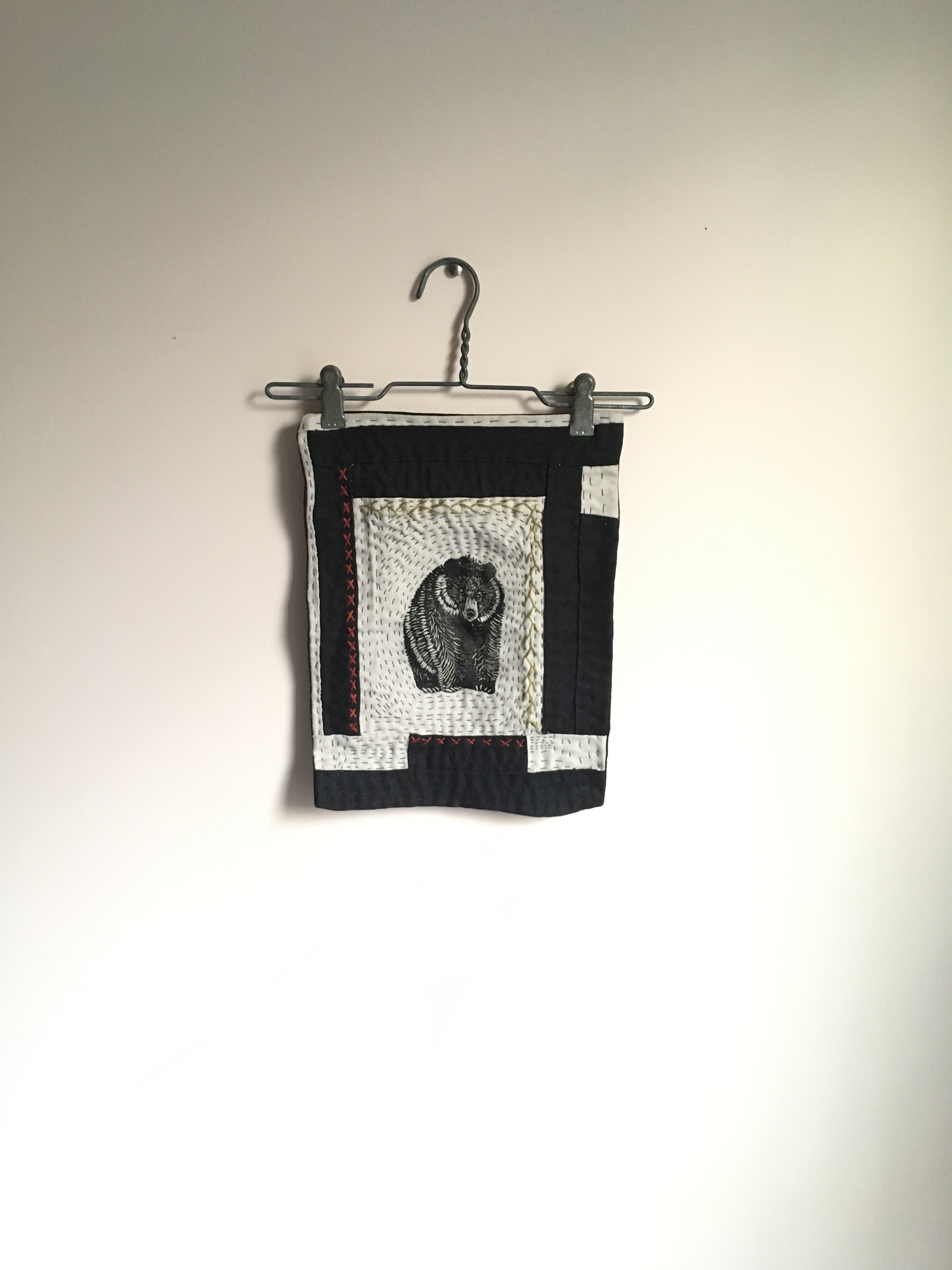
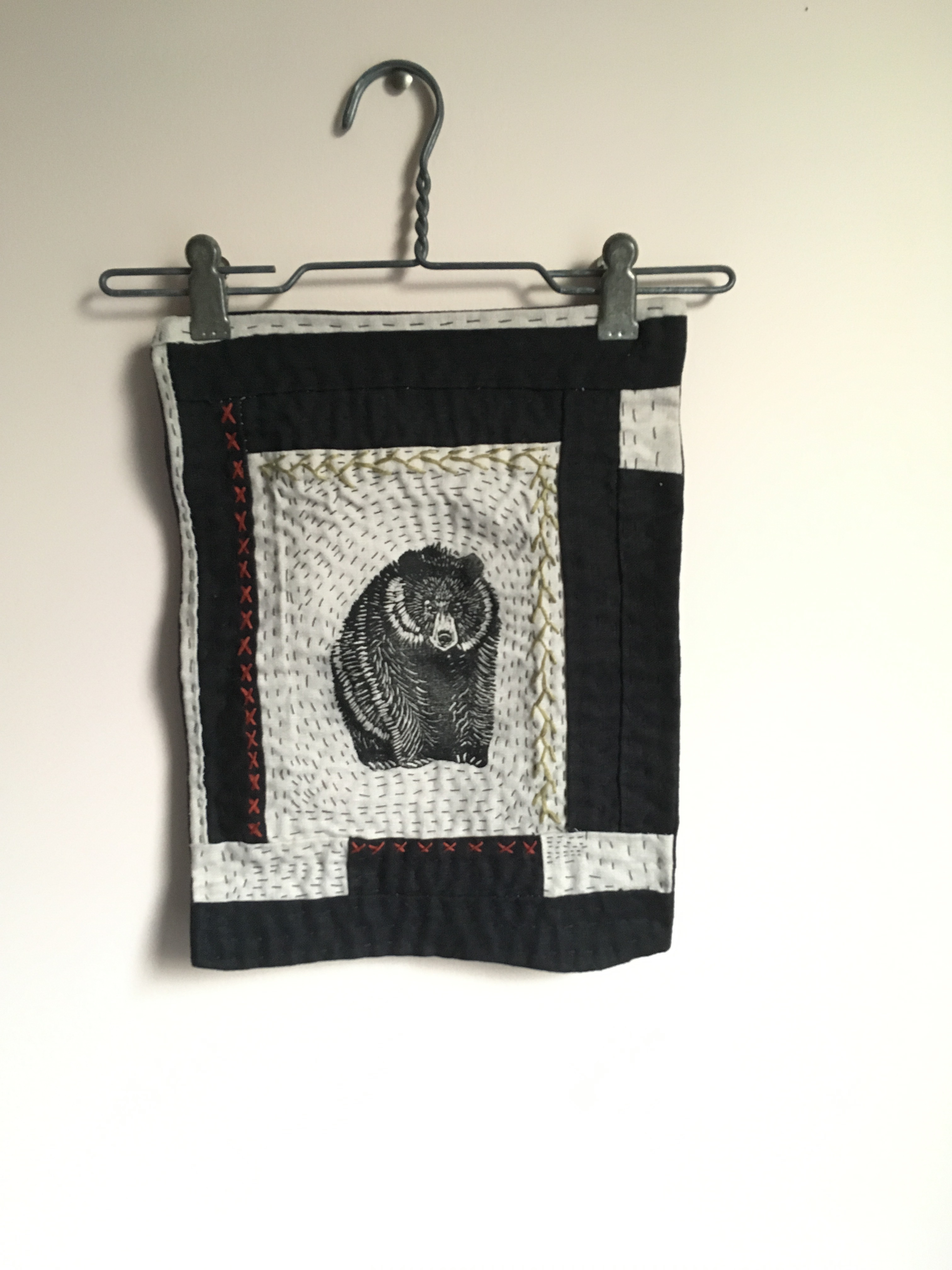
This quilt flag features the bear printed on linen and surrounded by embroidery and sashiko style hand quilting. I haven’t been doing much carving, printing or quilting lately but I keep thinking I’ll get back to it.

This quilt flag is available to purchase right here:

Bear Quilt Flag

$72.00

And so are two handsewn, lined linen zipper pouches with the same print!

Bear block print zipper pouch

$35.00

Realistic baby chimpanzee doll

Apes and Animals

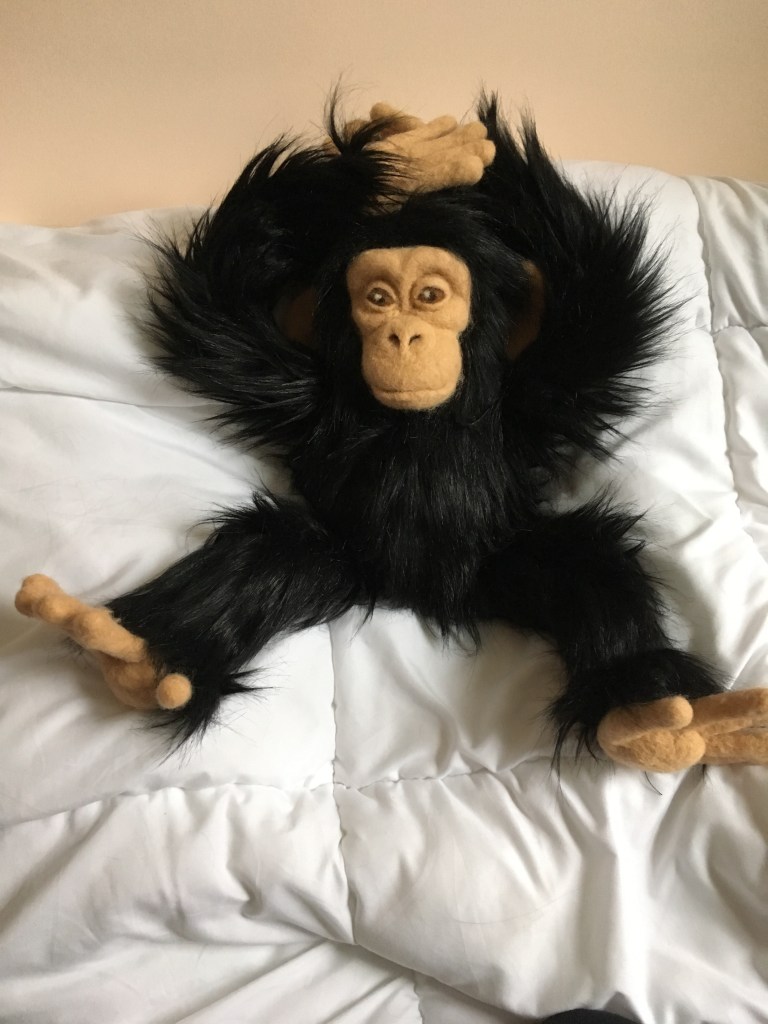
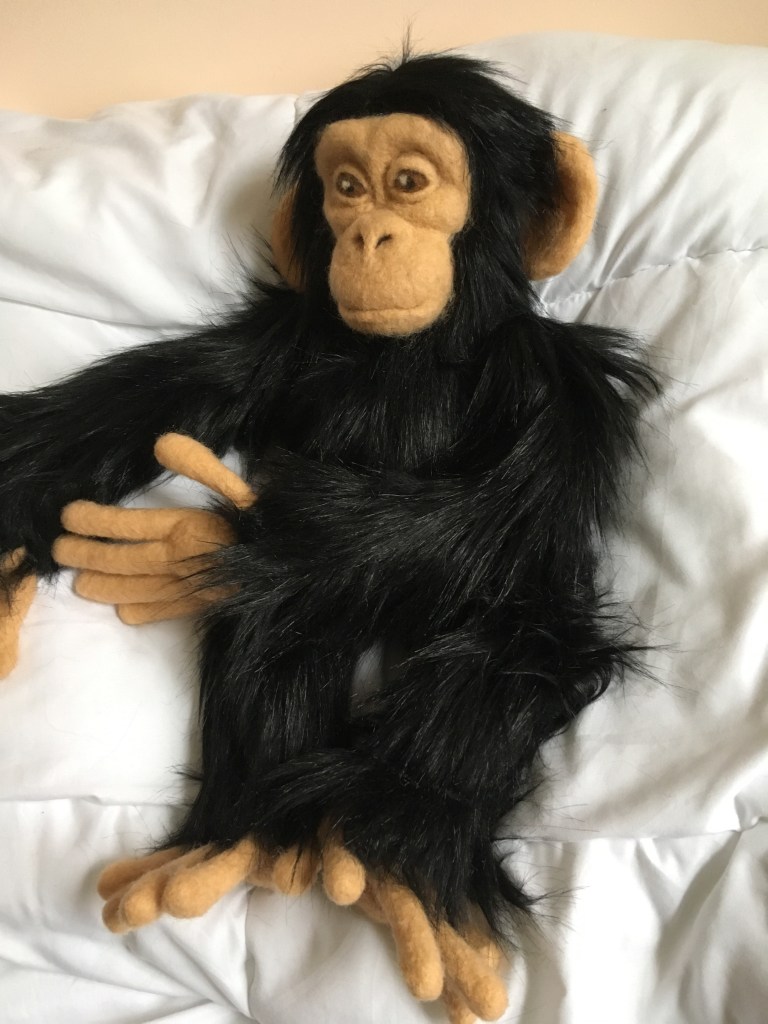
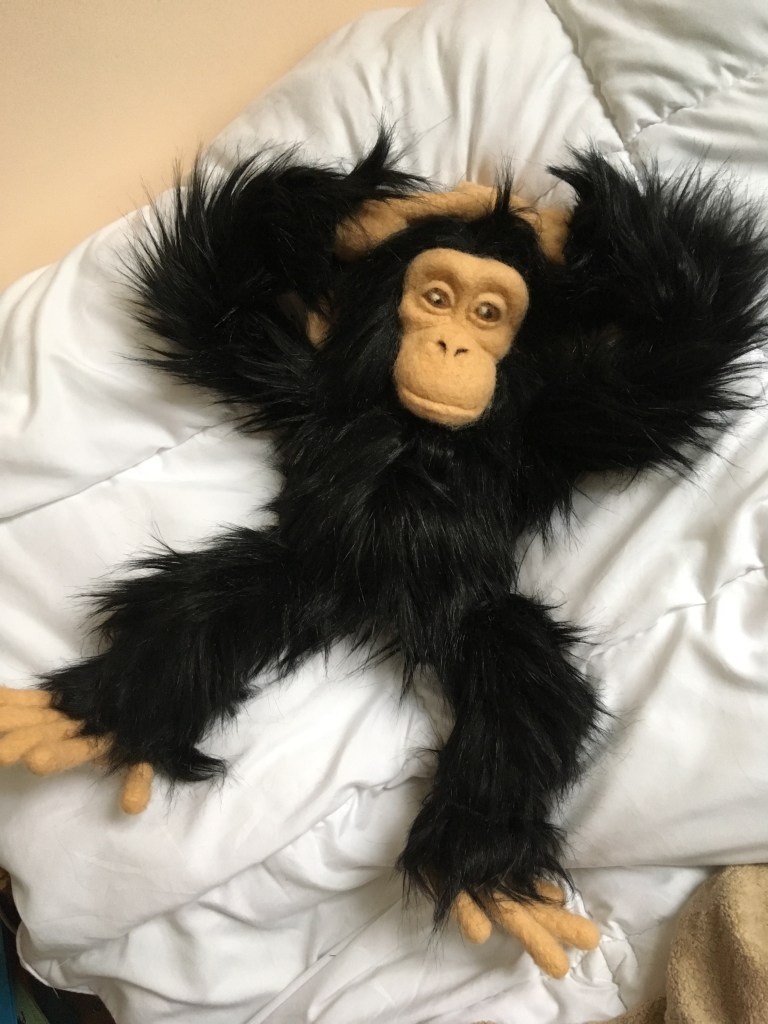
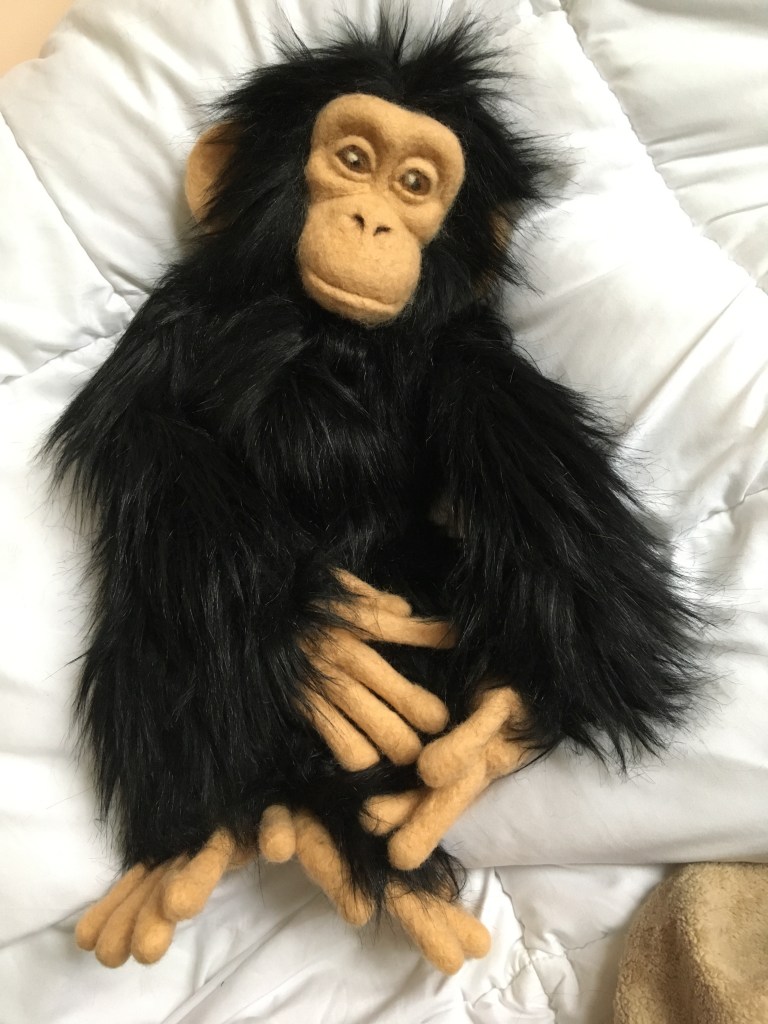
I wanted to take a moment to highlight one of my favorite dolls which was made to order for a lovely customer back in the spring. This is my chimpanzee baby doll, made with luxurious faux fur fabric and a highly detailed face made by hand with the needle felting technique.

The ears, hands and feet are also made with wool. The baby is the same size as a real baby chimp and is lightly weighted with floppy arms.

This is the kind of ape doll I dreamed of owning as a child. It is so fun to hold and cuddle. The techniques I use result in a doll that is not fragile and even though I don’t make these dolls for children, I feel that as an adult collector, the lack of fragility still really improves the appeal of the doll. While you won’t be dragging it around or throwing it across the room (I hope!) it’s really amazing to be able to hold and pose these dolls and not have to worry about them breaking or coming apart.

This style of doll is available in any ape species. If you’d like one of your own, make sure you’re signed up for my mailing list. Subscribers get first dibs when new babies are available and are the first notified if/when I have made to order slots available.